Lapis lazuli is a rock rather than a single mineral, made mostly of lazurite with flecks of golden pyrite and white calcite. Mined in Afghanistan for thousands of years, it is traditionally kept for truth and clear speech, and it is softer than most people expect.
Key takeaways
- Lapis is a rock, not a mineral: mostly lazurite, with pyrite flecks and white calcite.
- It is soft at 5 to 5.5 on the Mohs scale and porous, so it needs more care than a quartz.
- Traditionally tied to the throat centre and kept for saying what you actually mean.
- The Afghan Sar-e-Sang mines have supplied it for several thousand years.
- Ground lapis produced ultramarine, once more valuable by weight than gold.
What lapis lazuli actually is
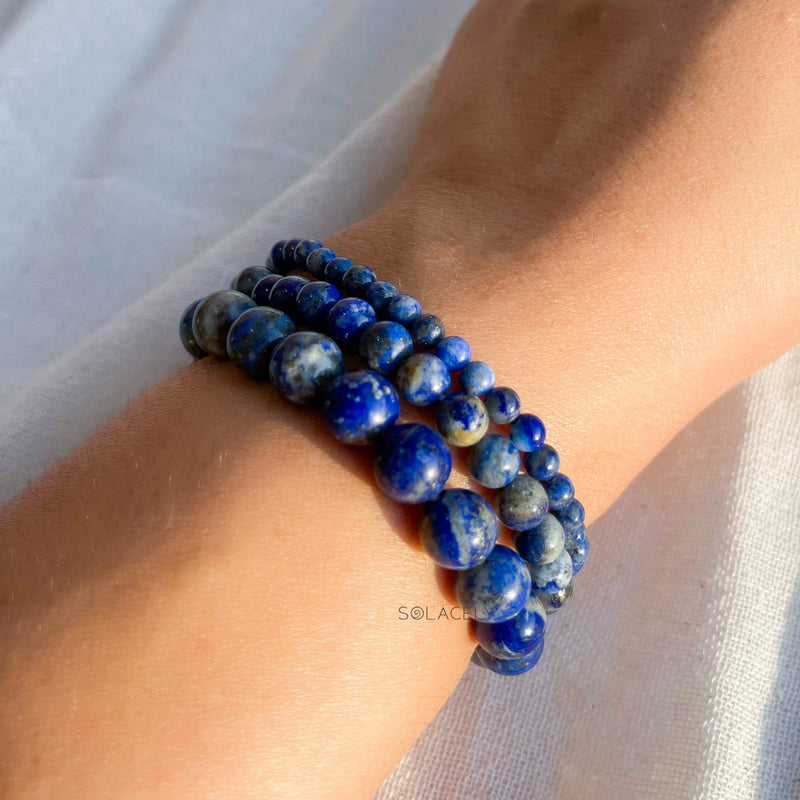
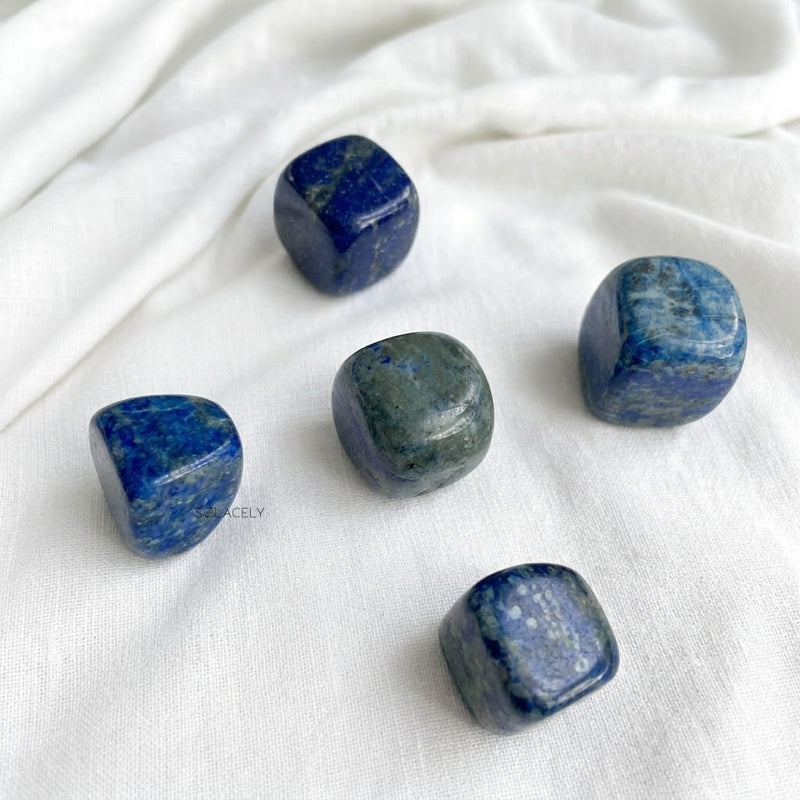
Lapis is unusual among the stones people collect because it is a rock rather than a single mineral. Its deep blue comes from lazurite, the golden flecks are pyrite, and the white veining that runs through cheaper material is calcite.
Those three components are what determine quality. The most prized material is an even, saturated blue with a scattering of pyrite and very little calcite. Heavy white veining lowers the price considerably, though plenty of people prefer the look of it.
Geology.com describes lapis lazuli as a metamorphic rock valued as a gem since antiquity, and its softness follows from that mixed composition. At 5 to 5.5 on the Mohs scale it is a good deal more delicate than the quartz family that dominates most collections.
A stone with a documented history
Lapis has one of the best documented histories of any stone, which is unusual in a field where a great deal of the lore is modern. The Sar-e-Sang mines in the Badakhshan province of Afghanistan have produced it for several thousand years and are still working today.
From there it travelled remarkably far. Lapis appears in Egyptian burial goods, in Mesopotamian jewellery, and across the ancient trade routes into Europe. The scale of that distribution, from a single remote mountain source, is genuinely striking.
Its most famous use came later. Ground and purified, lapis produced ultramarine, the intense blue pigment of medieval and Renaissance painting, which at points was more valuable by weight than gold and was reserved for the most important passages of a picture.
What lapis lazuli is kept for
The traditional association is with truth and clear speech, and it belongs to the throat centre in chakra practice. That gives it a more specific brief than most blue stones, which tend to be described simply as calming.
In practice it is reached for before a difficult conversation rather than for general ease. People keep it for the situations where the hard part is saying the actual thing rather than saying anything at all: raising a problem, declining something, or being straight about what they want.
That makes it a natural companion to stones kept for confidence rather than a duplicate of them. For the wider group at the same centre, crystals for the throat chakra covers what else belongs there.
How lapis is used
| When people reach for it | How it is kept | Practical note |
|---|---|---|
| Before a difficult conversation | Held for a few slow breaths | The most common use by a wide margin |
| Writing something honest | Kept beside the desk | Visible at the moment of drafting |
| Presenting or teaching | Pendant, worn at the throat | The traditional placement for the centre |
| Daily wear | Earrings or a pendant | Avoid rings; the stone is too soft |
| On a shelf | Tumbled or raw piece | The pyrite flecks show best in daylight |
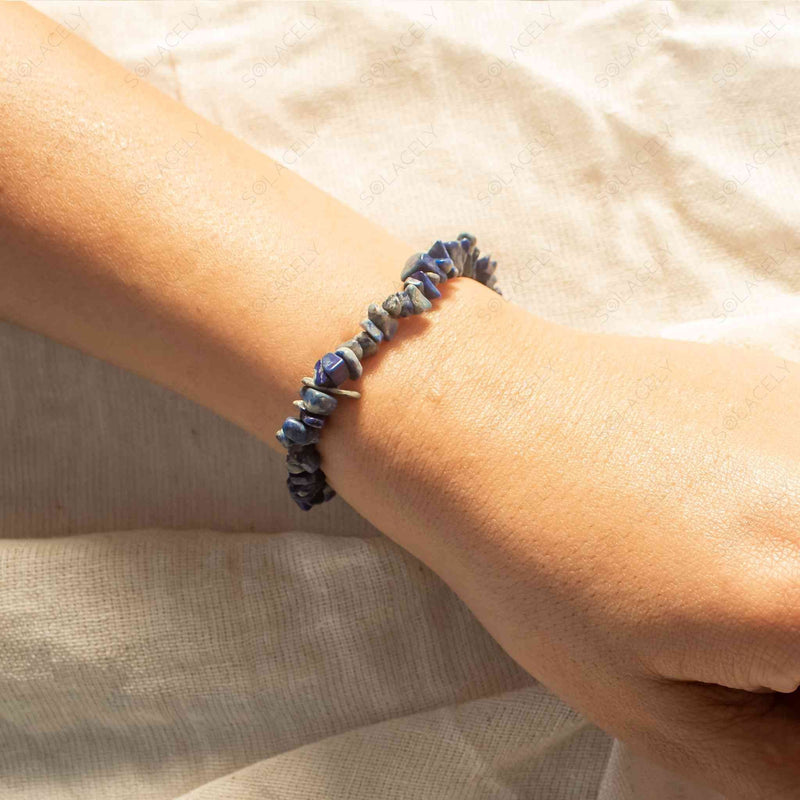
The format advice is worth taking seriously here. A lapis ring worn every day will be visibly scuffed within a year, while a pendant of the same material will look unchanged for decades.
Buying lapis well
Two things are worth asking about, and both are ordinary trade questions rather than anything adversarial.
The first is dyeing. Lapis is porous, so lower grade material with heavy calcite is sometimes dyed to even out the blue. It is a long established practice and the result is stable with dry handling, but it should be disclosed and it should be reflected in the price. A simple question to the seller covers it.
The second is composition. Look at the balance of pyrite and calcite in the piece in front of you. Golden flecks are part of lapis's character and most people want to see them. White calcite veining is a matter of taste, and since it lowers the price, a piece with visible veining can be excellent value if you like the look.
Beyond that, buy the format that matches how you will use it. Lapis is not a stone to put in a ring you never take off, and the money is better spent on a well cut pendant that will survive.
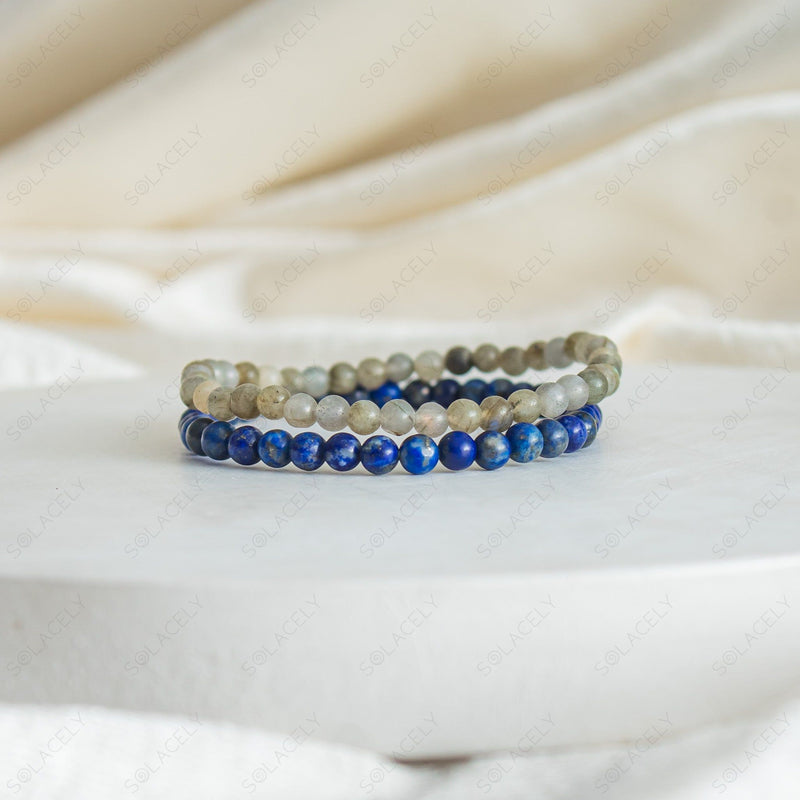
Size is worth thinking about too. Lapis reads well small, because the pyrite flecks give even a modest stone plenty to look at, and a smaller pendant is far less likely to catch on a collar or a bag strap. For a stone this soft, that matters more than a dramatic size does. If clarity of thought rather than speech is what you are after, crystals for overthinking covers a different set.
Care and cleansing
Lapis needs more care than most, and the reasons are softness and porosity rather than anything unusual.
Clean it with a barely damp cloth and dry it immediately. Never soak it, never use an ultrasonic or steam cleaner, and keep perfume, hairspray, cosmetics and household cleaners well away. A porous stone takes those in and the damage does not come out.
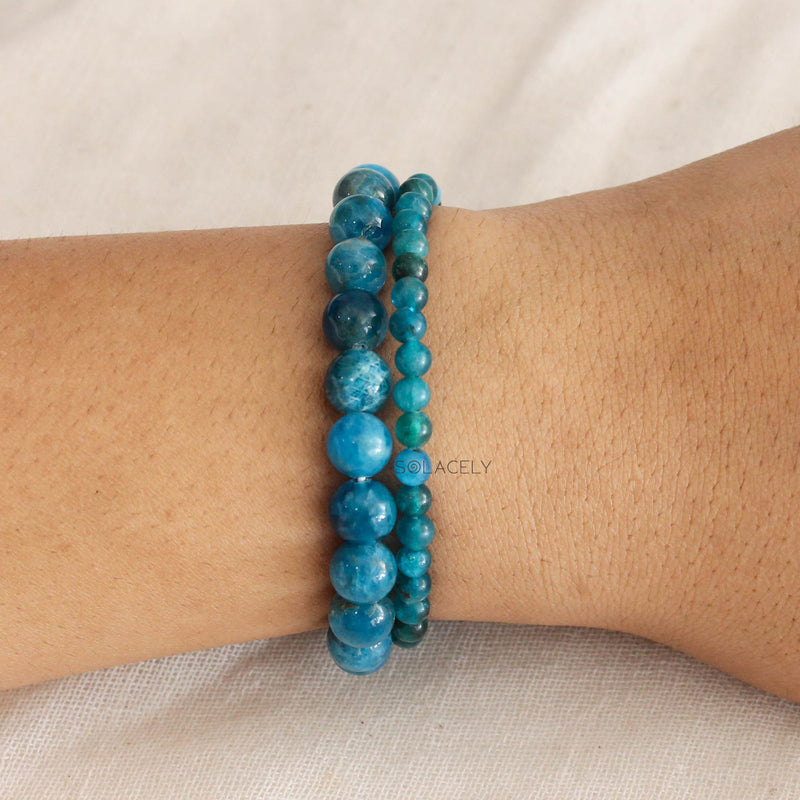
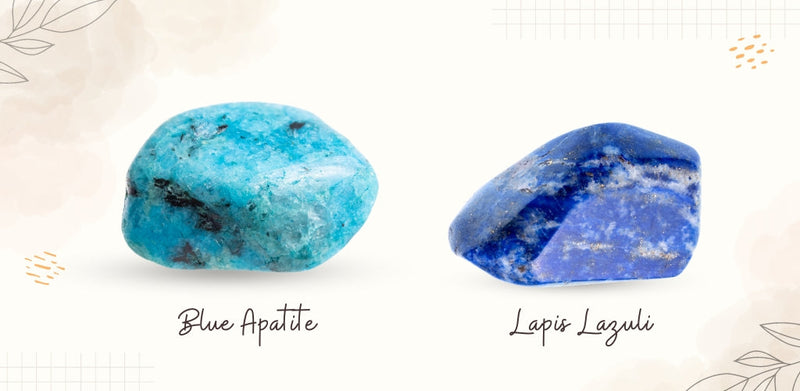
Store it separately. At 5 to 5.5 on the Mohs scale, quartz, garnet and most of a collection will scratch it, so give it a soft pouch of its own. For energetic cleansing, moonlight or sound suit it and neither involves water. For a related blue pairing, see blue apatite and lapis lazuli.
Who this stone suits
It suits people who already know what they want to say and struggle to say it. That is a narrower profile than most blue stones are marketed to, and it is the one where lapis genuinely fits.
It suits less well anyone wanting something hard wearing and low maintenance. If a stone is going to live on a hand and take knocks, sodalite offers a similar blue at a similar price with a little more tolerance, and quartz family stones more still.
What lapis offers that almost nothing else does is the weight of its history. Wearing a stone that came from the same mountain that supplied Egyptian workshops and Renaissance painters is a real pleasure, and unlike a great deal of crystal lore, that part is documented rather than invented.
The properties described here reflect traditional and cultural belief around crystals. They are offered for reflection and wellbeing and are not medical advice, a diagnosis, or a treatment for any condition. If you are managing a health concern, please speak with a qualified healthcare professional. Keep small stones away from young children, and never place crystals in drinking water.
Sources
Written by Chetena Sharma. Reviewed by the Solacely editorial team.
Frequently asked questions
About the author


Written by Chetna Sharma, crystal healing practitioner and co-founder of Solacely. Chetna has worked with healing crystals for over a decade and curates Solacely's protective stone collection.