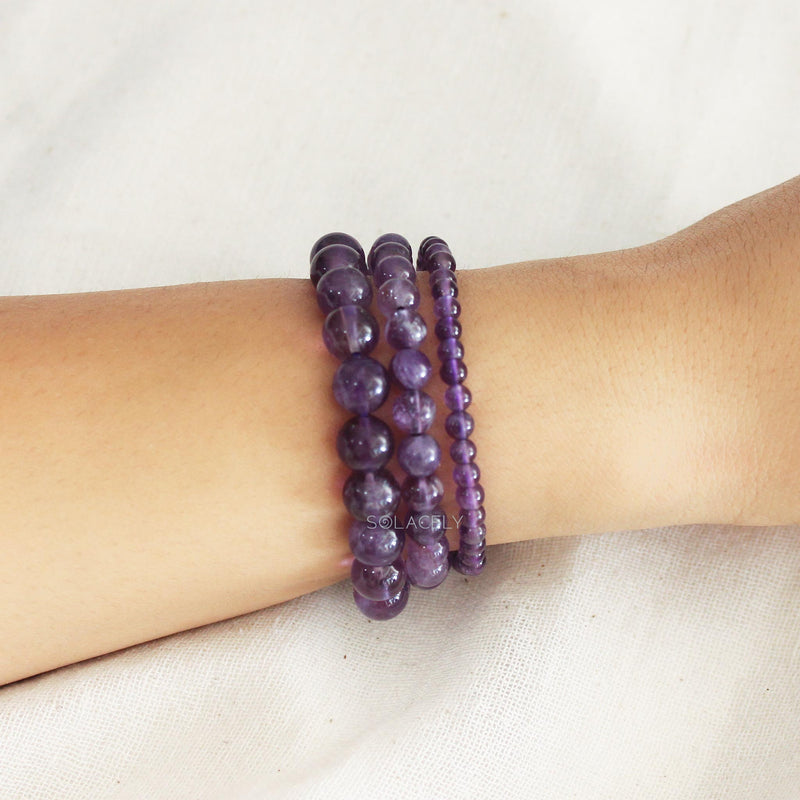
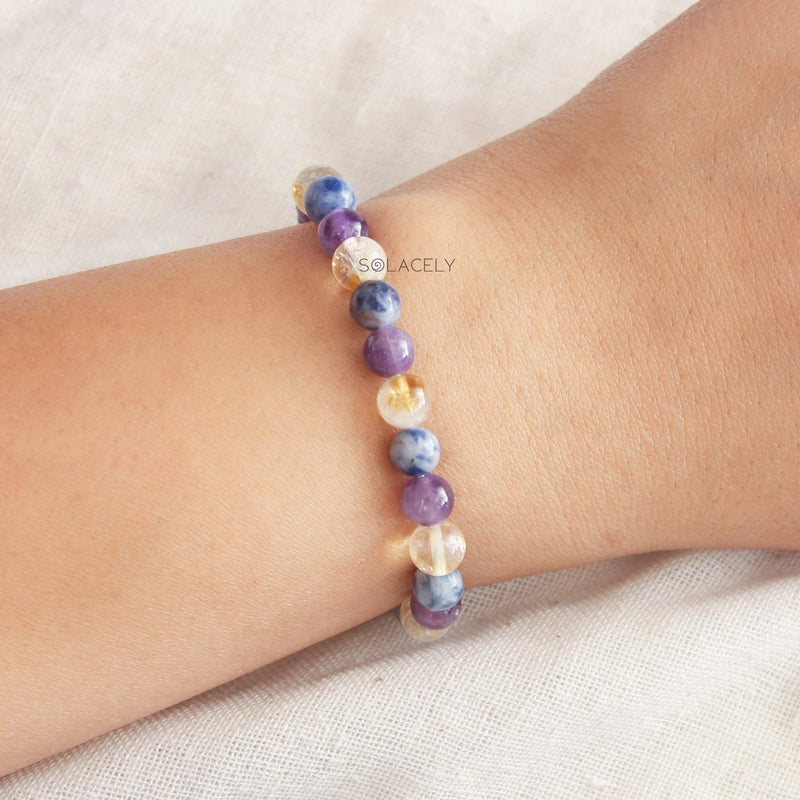
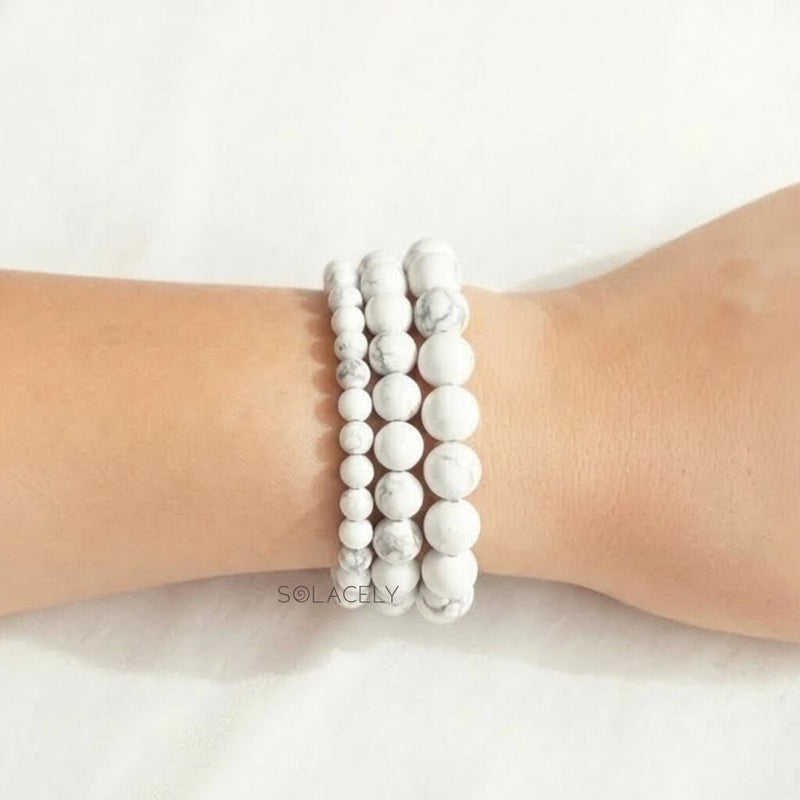
Amethyst and howlite are the traditional stones for a racing critical mind, black tourmaline for the sense of carrying other people's mood, and rhodonite for criticism aimed at yourself. Each is kept for a different pattern, and matching the stone to yours is what makes the practice useful.
Key takeaways
- Match the stone to the pattern: howlite and amethyst for racing thoughts, black tourmaline for absorbed mood, rhodonite for self-criticism.
- Keep the stone where the loops happen, usually the bedside or the car, not the desk.
- Naming the loop is the traditional first step, and the stone marks the moment.
- Citrine and green aventurine are added for the turn back toward something else.
- Persistent low mood lasting weeks deserves a doctor's attention.
Work out which pattern you have
Negative thinking covers several quite different experiences, and they take different responses.
- Rumination. Chewing the same past event repeatedly, usually at night.
- Catastrophising. Running forward to the worst outcome and living there.
- Self-criticism. A running commentary you would never use with a friend.
- Absorbed mood. Coming home flattened by other people rather than by your own thoughts.
The last is a different thing from the first three, which is why traditional practice sends it to a different stone.
The stones and what each is kept for
| Stone | Pattern it is chosen for |
|---|---|
| Howlite | Racing thoughts, especially at bedtime |
| Amethyst | Rumination and difficulty switching off |
| Lepidolite | Emotional swings alongside the thoughts |
| Rhodonite | Self-criticism and self-forgiveness |
| Black tourmaline | Carrying other people's mood home |
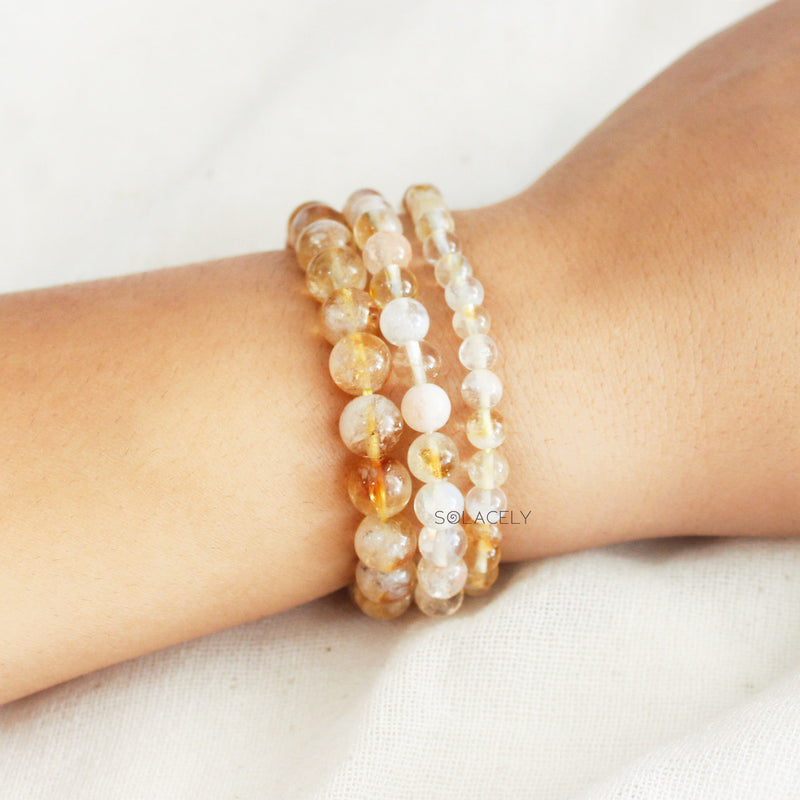
| Citrine or green aventurine | Turning toward something lighter |
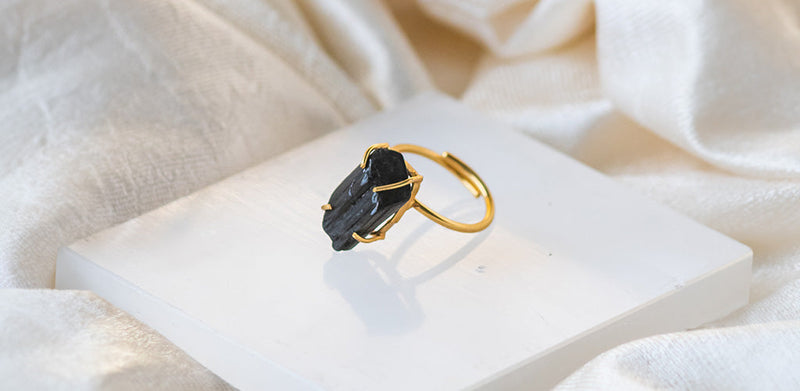
Black tourmaline is the most reached-for of the group. Its traditional framing is the boundary, so it suits the situation where what you are carrying started with someone else. Our black tourmaline for negativity guide covers that use in depth.
The interruption practice
- Notice. The loop's power is that it runs unobserved. Catching it is most of the work.
- Name it. "I am looping about the meeting." Naming turns an experience into something you can look at.
- Touch the stone. A physical marker for the noticing, which is what the tradition gives you the object for.
- Change your state. Stand up, go outside, put music on.
- Redirect rather than argue. Debating the thought keeps you inside it.
Our crystals for anxiety and panic attacks guide covers the same technique for acute moments.
Placement matters as much as the stone
Most people put their crystals where the crystals look good. Put them instead where the loops actually occur.
For most people that means the bedside table, because rumination peaks in the twenty minutes after the lights go out. For others it is the car. For a smaller group it is the desk, particularly after a difficult message arrives.
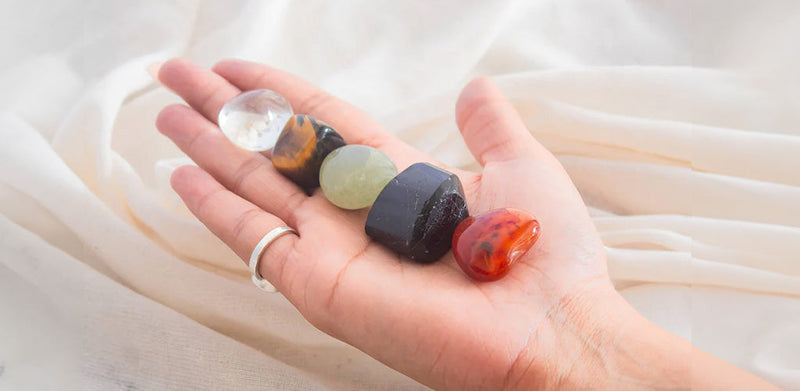
Buy an inexpensive tumbled stone and put it where you need it, rather than keeping one beautiful piece somewhere you will never reach for it at eleven at night. Our crystals for anxiety and stress guide covers the daytime version.
Turning toward the other direction
Interrupting a loop leaves a gap, and the gap wants filling. This is where the positivity stones come in: citrine, green aventurine and sunstone are traditionally kept less to stop the negative than to give attention somewhere else to go.
Practically that means pairing. One stone for the interrupt, one for the redirect, often in different places since the two problems occur at different times. Our crystals for positive energy and luck guide covers the redirect side, and crystals for emotional healing covers the longer-term work.
When to reach for support as well
If low mood has lasted more than two weeks without lifting, if you have lost interest in things you used to enjoy, if sleep or appetite have changed markedly, or if the thoughts include harming yourself, that deserves a doctor's attention. Those conditions are common and very treatable, and a crystal practice sits alongside that care.
Crystal practices are traditional and complementary. They do not treat depression, anxiety or any mental health condition and are not a substitute for professional care. If your mood has been low for weeks or you are having thoughts of harming yourself, contact a qualified healthcare professional or a crisis line immediately.
Sources
- National Institute of Mental Health, Anxiety Disorders
- NCCIH, Relaxation Techniques: What You Need To Know
Written by Chetena Sharma. Reviewed by the Solacely editorial team.
Frequently asked questions
About the author


Written by Chetna Sharma, crystal healing practitioner and co-founder of Solacely. Chetna has worked with healing crystals for over a decade and curates Solacely's protective stone collection.