The crystals kept for the sacral chakra are carnelian, orange calcite, sunstone and tiger's eye. In chakra practice the sacral centre sits below the navel and is associated with creativity, pleasure and emotional flow, which is why warm orange stones are placed with it.
Key takeaways
- Carnelian, orange calcite, sunstone and tiger's eye are the four stones most kept for the sacral centre.
- The sacral chakra, svadhisthana, sits below the navel and is associated with creativity and emotional flow.
- Carnelian is the primary stone and the most practical, durable at 7 on the Mohs scale.
- Orange calcite is much softer at around 3, so it belongs on a shelf rather than a wrist.
- The colour correspondence is orange, which is why the group is so visually consistent.
What the sacral chakra is
In the chakra system the sacral centre, svadhisthana in Sanskrit, is the second of the seven and sits just below the navel. It is traditionally associated with creativity, pleasure, emotional flow and the capacity to want things.
Its colour is orange, and that correspondence is the whole reason the stones kept for it look so consistent. Where the root centre takes deep reds and blacks and the solar plexus takes yellows, the sacral takes the warm orange band between them.
People turn to it when creative work has dried up, when things feel joyless rather than difficult, or when they notice they have stopped wanting anything in particular. Those are the recurring reasons, and they shape which stones get recommended. For the centre above it, see crystals for the solar plexus.
Carnelian, the primary sacral stone
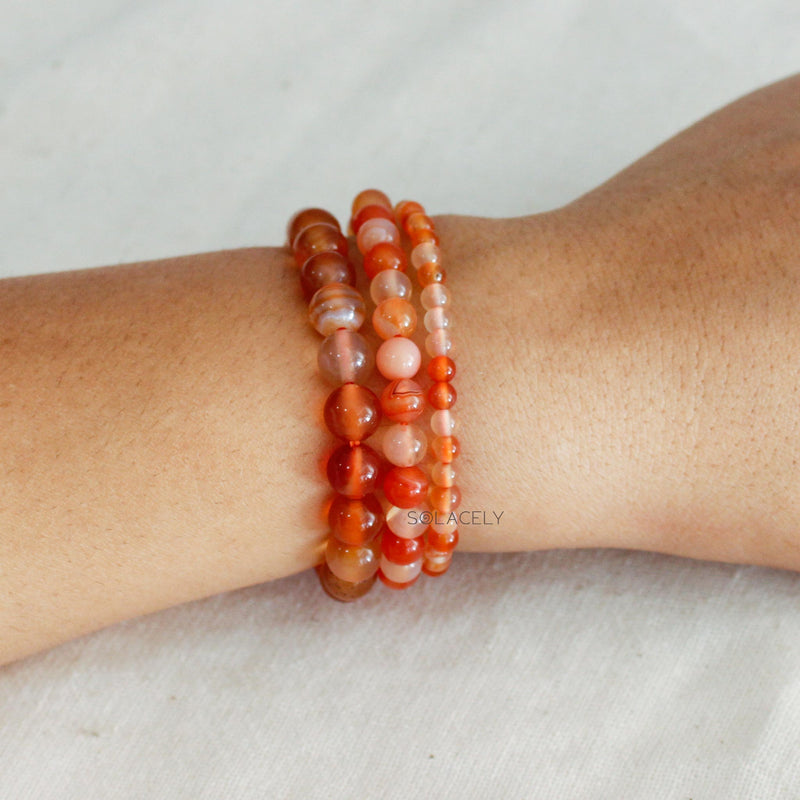
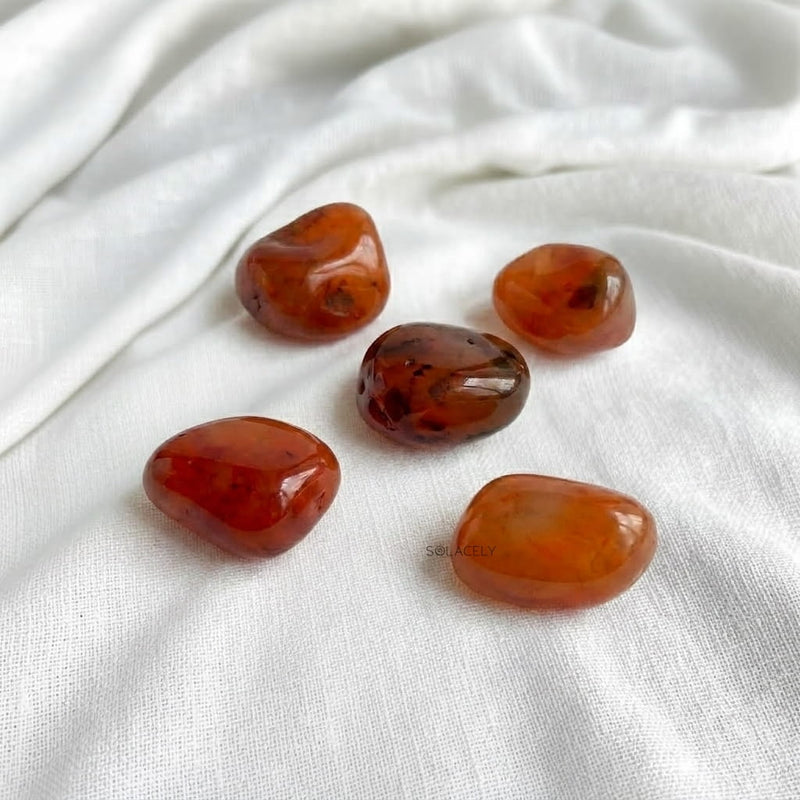
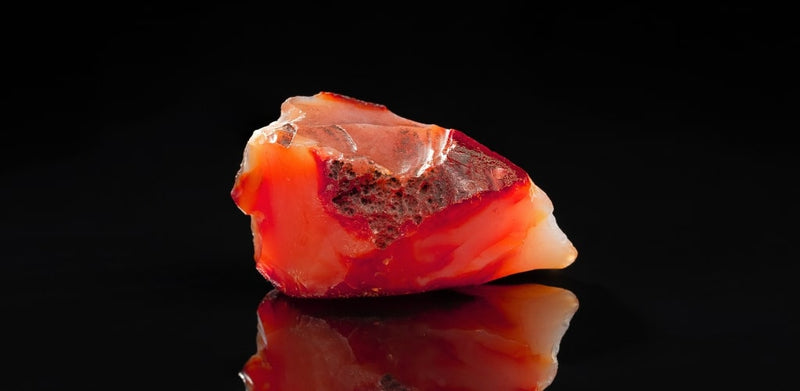
Carnelian is the stone most associated with this centre and the one worth owning first. It is a chalcedony, a quartz made of crystals too fine to see individually, coloured orange to reddish brown by iron, and it has been worn for thousands of years.
Traditionally it is kept for creativity, courage and physical vitality, which lines up closely with what the sacral centre is said to govern. In practice people reach for it when the difficulty is starting something rather than knowing what to do.
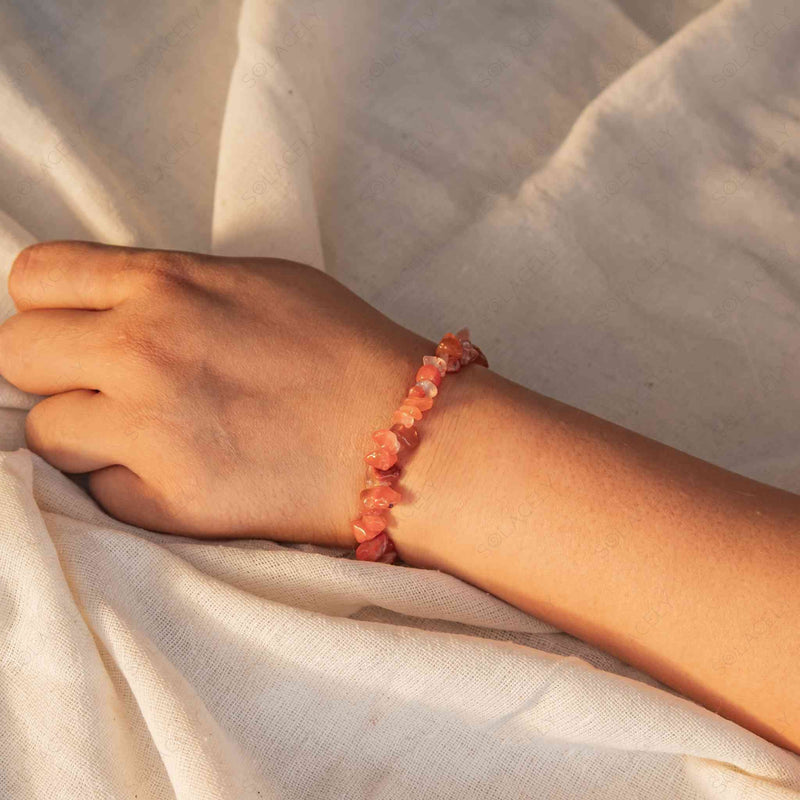
It is also the most practical of the four. At 7 on the Mohs scale it handles daily wear in a bracelet, pendant or ring without complaint, which means it can simply stay with you rather than living on a shelf. The carnelian guide covers it fully.
Orange calcite, sunstone and tiger's eye
Orange calcite is the gentlest of the group, a soft glowing orange that looks almost lit from inside. It is traditionally kept for easing a creative block and for restoring some pleasure to things, and it is very inexpensive, which makes it a lovely first crystal.
It is also soft, at around 3 on the Mohs scale, and being a carbonate it does not enjoy water or anything acidic. That makes it a display stone: a tumbled piece on a shelf or a desk rather than something worn.
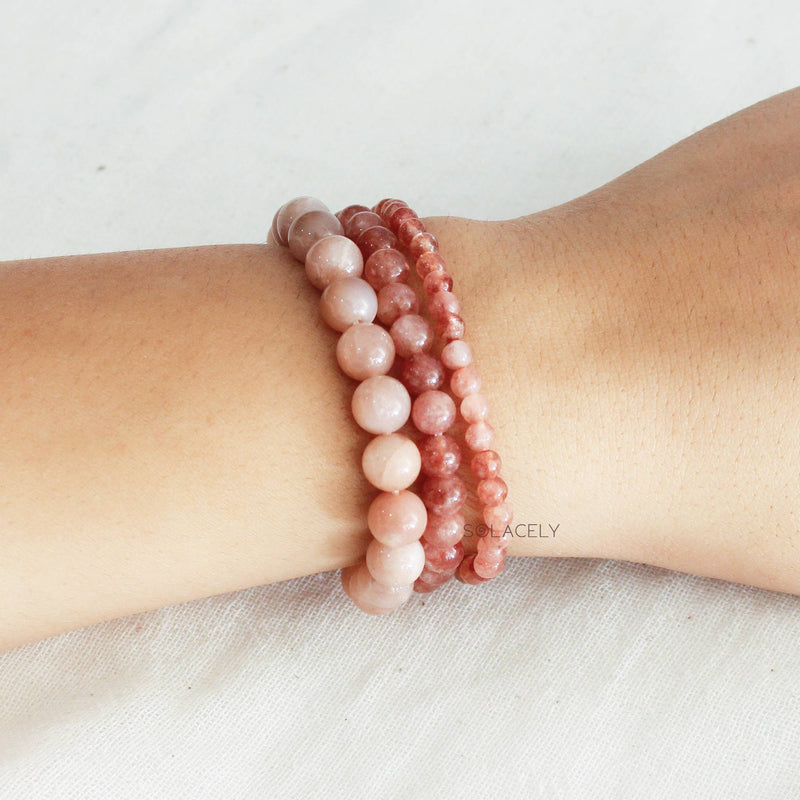
Sunstone brings the warmth and the flash, kept for optimism and for being willing to be seen. Tiger's eye is the steadier option, its golden banded sheen traditionally linked to willpower and follow-through, which makes it the choice when the sacral difficulty is finishing rather than starting.
Choosing among the four
| Stone | Traditionally kept for | Hardness | Best format |
|---|---|---|---|
| Carnelian | Creativity, courage, starting | 7 | Anything, including daily jewellery |
| Orange calcite | Easing a block, restoring pleasure | Around 3 | Shelf or desk piece, kept dry |
| Sunstone | Optimism, warmth, visibility | 6 to 6.5 | Bracelet, where movement shows the flash |
| Tiger's eye | Willpower, follow-through | 7 | Pocket stone or bracelet |
| Red jasper | Grounding the same centre | 7 | Palm stone, for a steadier version |
Start with carnelian and add only if there is a specific gap. Orange calcite is the natural second because it does something different, and the two together cover both the starting and the enjoying.
How sacral chakra stones are used
The practices are simple and mostly involve placement rather than anything elaborate.
- Lying down. A tumbled stone placed just below the navel, which is the traditional position for this centre.
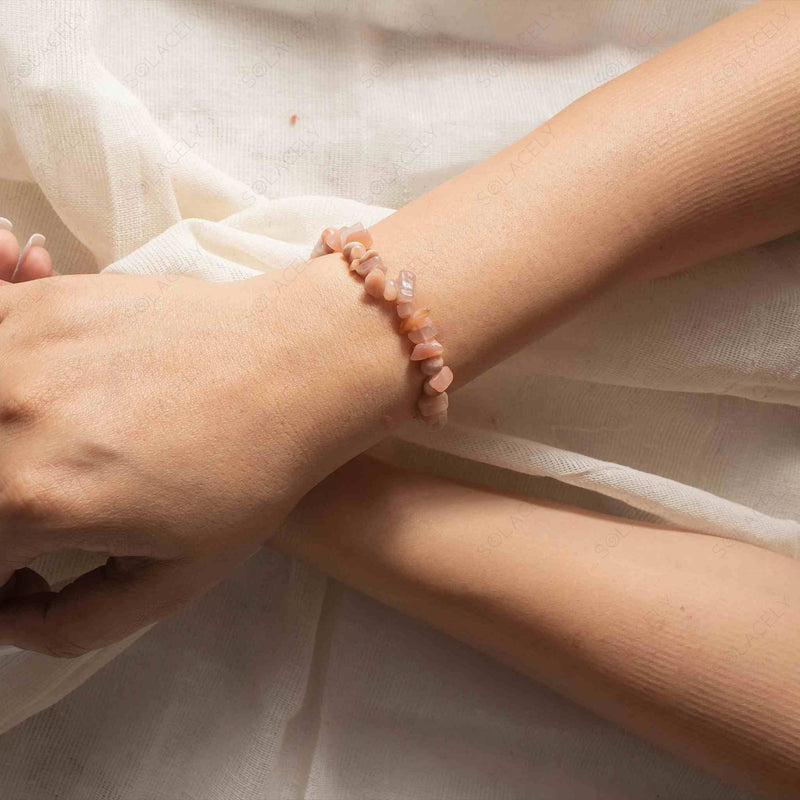
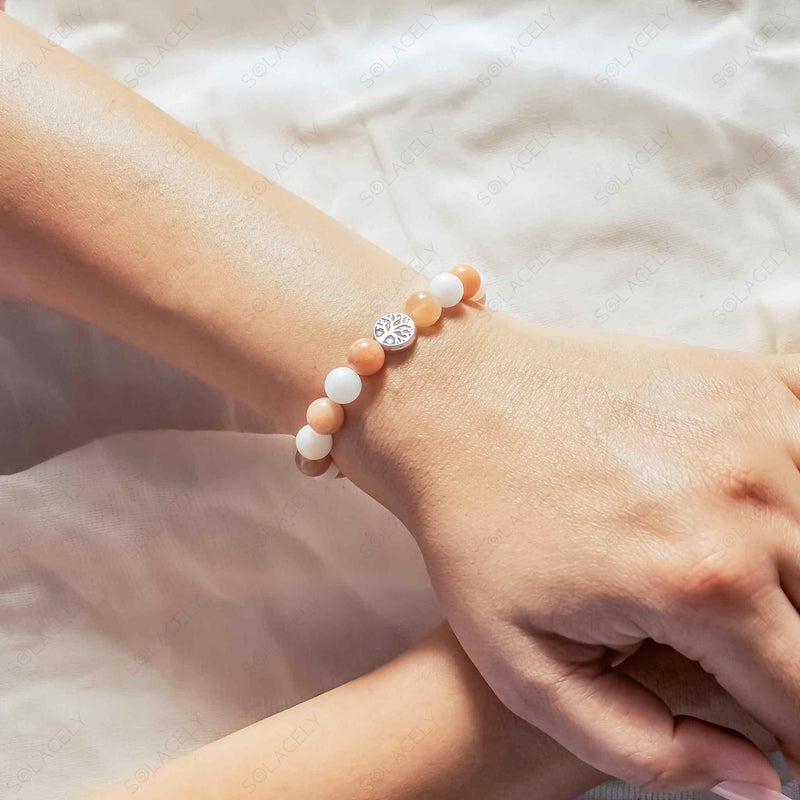
- Worn. Carnelian on a wrist or at the hip, so the intention travels with you.
- In a creative space. Orange calcite on the desk or shelf where you make things.
- Held before starting. A few slow breaths with carnelian in the palm before beginning a session.
If creative work specifically is the reason you are here, crystals for creativity and art covers a set organised by where the work stalls, and crystals for artists takes the same approach for a studio.
Building a chakra set
Working with one centre at a time is far more useful than assembling all seven at once. A full seven stone set looks lovely and tends to mean nothing in particular, because no single stone is attached to a specific intention.
If you are drawn to the sacral centre, the honest question is what has actually gone quiet: making things, enjoying things, or wanting things. Those point to different stones, and picking on that basis gives the practice somewhere to go.
Two stones is a good working set. Add a third only when the situation changes, and let each one keep its own job rather than blurring into a general orange intention. For the wider chakra picture, crystals for the crown chakra covers the opposite end of the system.
Caring for the set
Carnelian and tiger's eye are both easy. Warm water, mild soap, a soft brush and a full dry suits them, and both are hard enough to share a pouch with most of a collection.
Sunstone needs a little more care as a feldspar: no ultrasonic or steam cleaning, and stored away from harder quartz beads. A weekly wipe keeps the flash bright, since that effect depends on a clean surface.
Orange calcite is the one to be gentle with. Keep it dry, dust it with a soft cloth rather than washing it, and store it away from everything harder. Carnelian will mark it easily if the two share a box. For energetic cleansing, moonlight or sound suit all four, and none of them need salt.
Choosing the stones
With carnelian, the range runs from a light apricot through vivid orange to a deep brownish red, and all of it is properly carnelian. Warming stone to bring out colour is one of the oldest practices in the gem trade and entirely stable, so simply pick the shade you would most like to wear.
With orange calcite, the pleasure is in the glow. Look for a piece where light seems to sit inside the stone rather than bouncing off it, and check the edges for chips, since soft material picks those up in transit. It is inexpensive enough to be genuinely choosy.
With sunstone, tilt the piece under a light and watch the flash travel across the surface. That shifting quality is what you are buying, and a stone that stays flat as you turn it will look flat on the wrist too.
Why orange for this centre
The colour correspondences in the chakra system are consistent enough that they make choosing stones straightforward, and orange belongs to the sacral centre across essentially every modern source.
That consistency is genuinely useful in practice. It means you can walk into a shop, look at the warm orange shelf, and know you are in the right area without needing to memorise a list. Carnelian, orange calcite and sunstone all sit there, and so do amber and orange aventurine if you come across them.
It also means the group holds together visually, which matters more than it sounds. A small set that looks like a set, in one warm colour family, reads as deliberate on a shelf rather than as an accumulation.
The properties described here reflect traditional and cultural belief around crystals and the chakra system. They are offered for reflection and wellbeing and are not medical advice, a diagnosis, or a treatment for any condition. If you are managing a health concern, please speak with a qualified healthcare professional. Keep small stones away from young children, and never place crystals in drinking water.
Sources
Written by Chetena Sharma. Reviewed by the Solacely editorial team.
Frequently asked questions
About the author


Written by Chetna Sharma, crystal healing practitioner and co-founder of Solacely. Chetna has worked with healing crystals for over a decade and curates Solacely's protective stone collection.