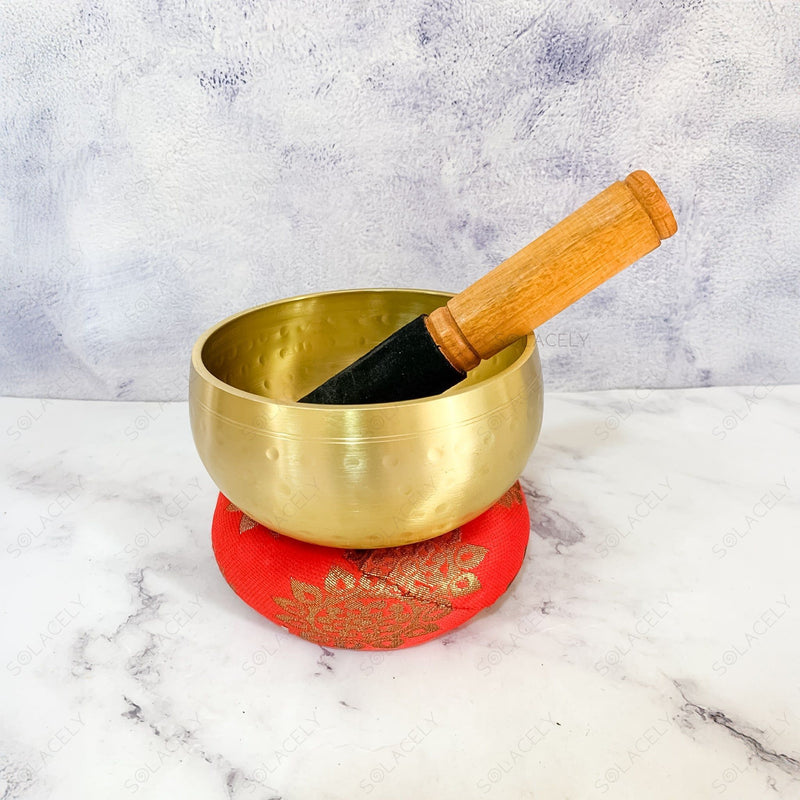
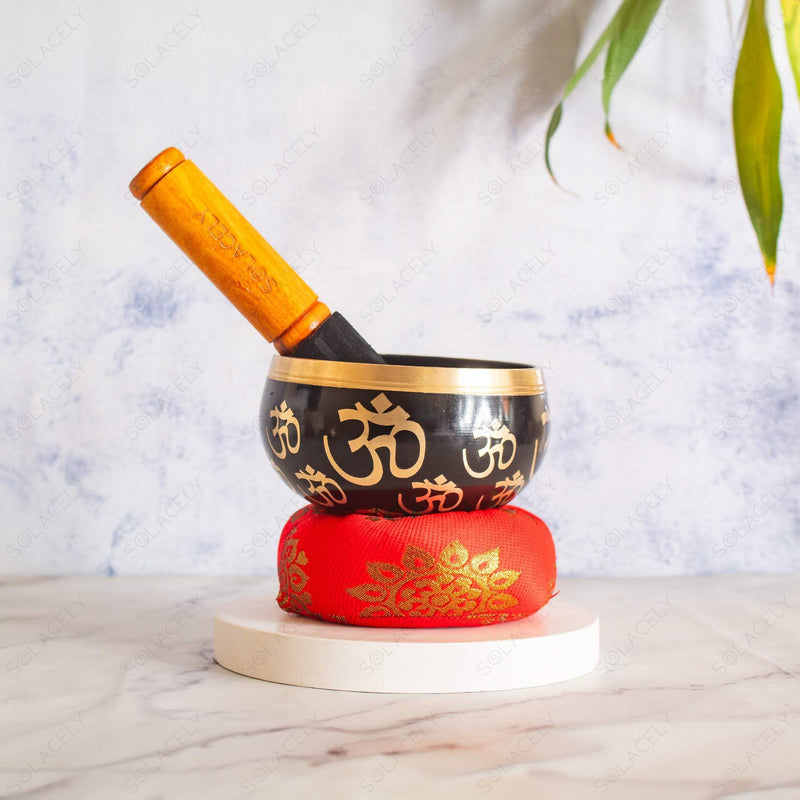
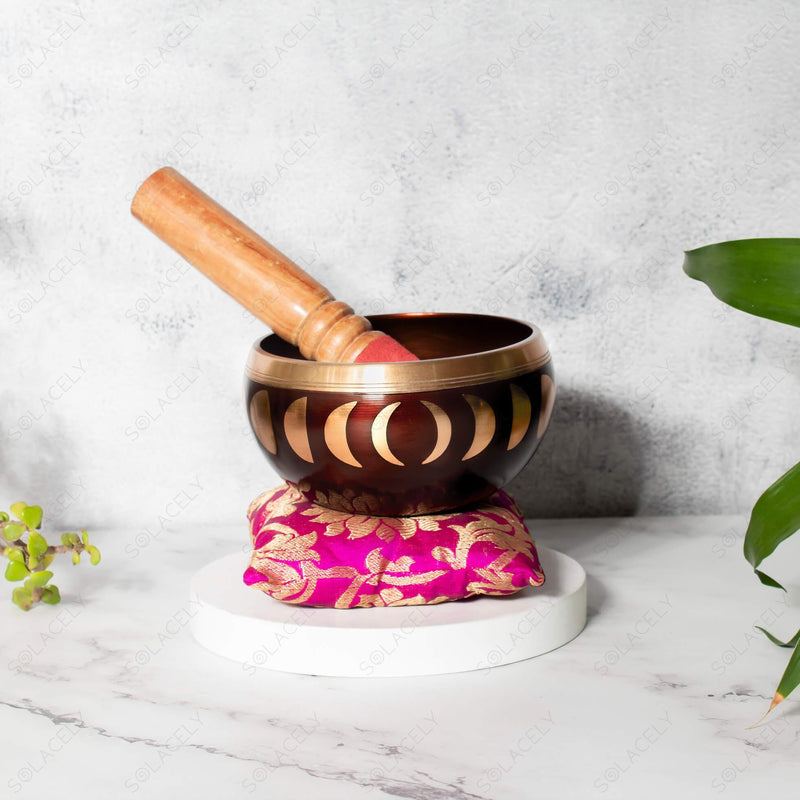
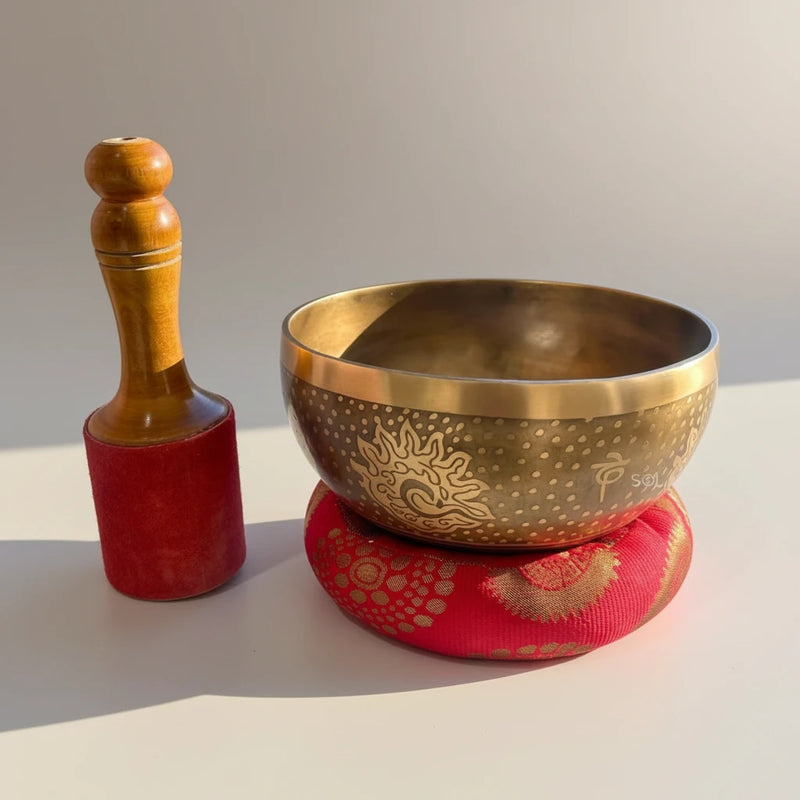
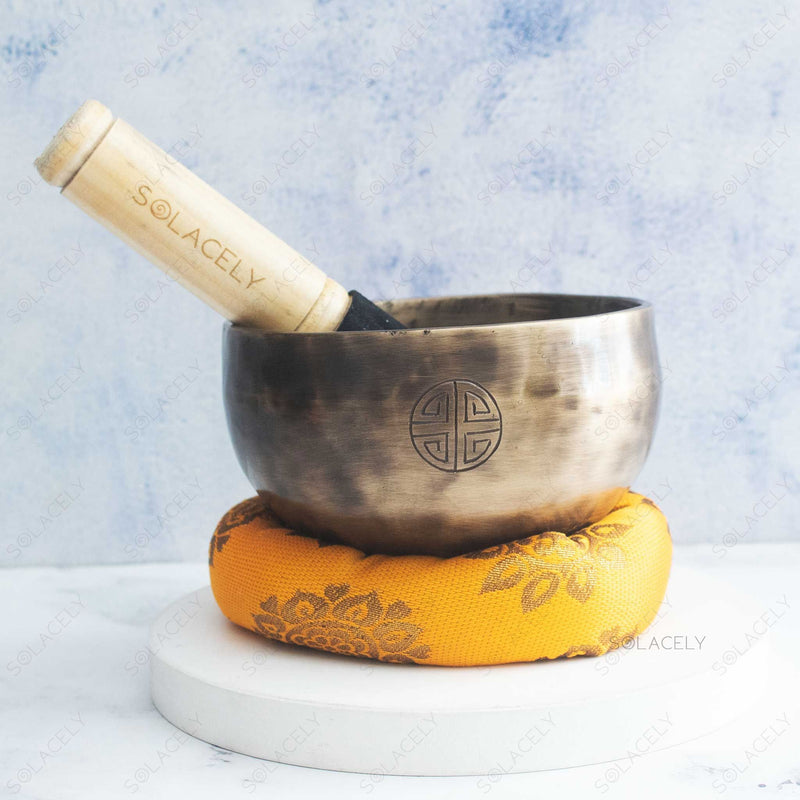
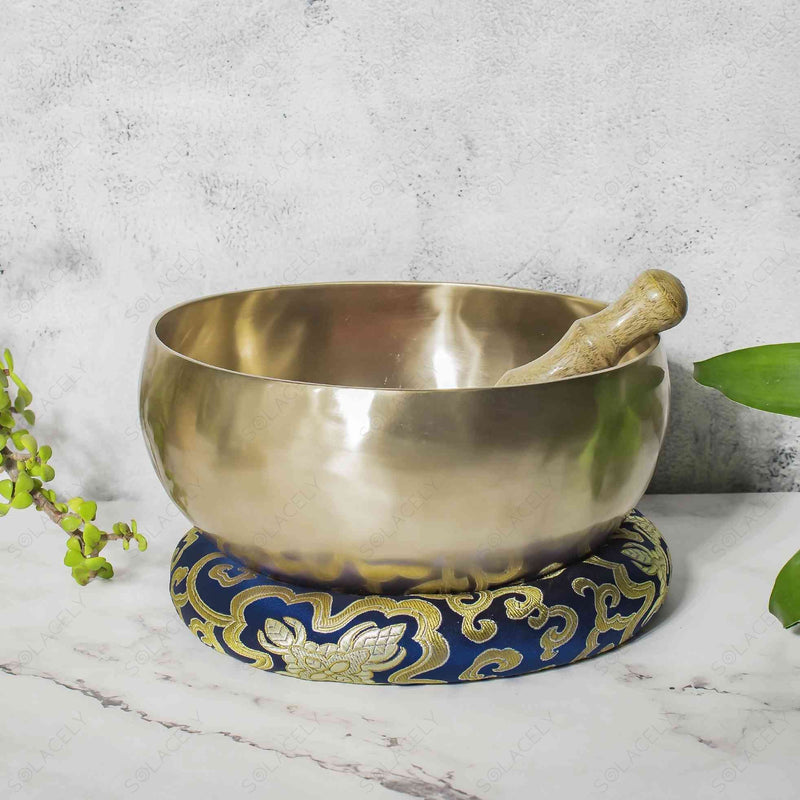
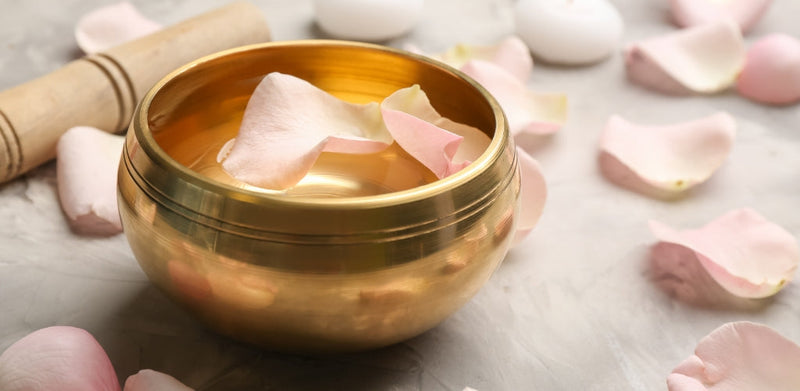
A Tibetan singing bowl is a metal bowl, usually a bronze alloy of copper and tin, that produces a sustained, layered tone when you strike its side or run a mallet around its rim. Rooted in the Himalayan region of Tibet, Nepal, and northern India, it's used today for meditation, yoga, sleep wind-downs, and sound relaxation. This guide covers what it is, what it's made of, how to play it, and what its benefits honestly are.
Key Takeaways
- A Tibetan singing bowl is an inverted bell made from a copper-tin bronze alloy that rings with a warm, overtone-rich tone when struck or rubbed around the rim.
- You play it two ways: strike the outer wall once for a single bell-like note, or press a mallet against the rim and circle slowly to build a continuous singing tone.
- People use them for meditation, yoga, sleep routines, chakra and grounding work, and group sound baths, wherever a steady sound helps the mind settle.
- The relaxation many feel is plausible and partly documented, but the science is early: a small 2017 study and NIH guidance support mind-body calm, not cures.
- A usable Tibetan bowl is an affordable buy, with large handmade and antique-style bowls climbing several times higher.
What is a Tibetan singing bowl?
A Tibetan singing bowl is a bowl-shaped metal instrument, an inverted bell, that rings with a long, resonant tone when struck or when a mallet is drawn around its rim. Unlike a hand bell you swing, it sits upright on a cushion and vibrates in place, and the note can hold for many seconds. That long, steady sound is exactly what makes it suit slow, quiet practice.
The name points to its home. These bowls come from the Himalayan belt across Tibet, Nepal, and northern India, where metal bowls have long been part of everyday and ritual life. You'll see them sold as 'Tibetan,' 'Himalayan,' or 'Nepali' bowls, and the labels overlap more than most sellers admit. If you're curious about how much of the backstory is documented and how much is modern legend, our guide to the history of the singing bowl untangles the two honestly.
It helps to place the Tibetan bowl inside the wider family. The broad category is the singing bowl, which splits into metal bowls (the Tibetan or Himalayan kind) and crystal quartz bowls. The Tibetan bowl is the metal one: warmer, more portable, usually cheaper, and full of the layered overtones people find so grounding. That's the instrument this guide is about.
What is a Tibetan singing bowl made of? The metal and alloy
Most Tibetan singing bowls are made from bronze, an alloy of copper and tin, sometimes with small amounts of other metals. You'll often hear them marketed as 'seven-metal' bowls, said to contain gold, silver, iron, and more, but that claim is mostly romantic. What matters for the sound is a well-worked copper-tin alloy, hammered or cast into a bowl that rings freely.
The phrase 'seven metals' ties each metal to a planet in old cosmology: gold for the sun, silver for the moon, and so on. It's a lovely story, and it sells bowls, but tests on real bowls rarely find precious metals in any meaningful amount. Treat 'seven-metal' as folklore, not a spec sheet. A good bronze bowl needs no mythical ingredients to sing beautifully.
How the bowl is formed matters more than its exact recipe. Traditional bowls are hand-hammered from a heated bronze disc by a team working in rhythm, which leaves faint hammer marks and gives each bowl a slightly different voice. Cheaper bowls are machine-cast or spun, which is fine for a clean beginner tone but tends to sound more uniform. If you like the idea of a bowl with visible craft and its own character, our guide to the handmade singing bowl explains what the hammering does to the tone and why no two ring alike.
How does a Tibetan singing bowl make sound?
A Tibetan bowl makes sound through ordinary acoustics, not magic. When you strike or rub it, the rim flexes in a standing-wave pattern, parts moving outward while others move inward, and that vibration pushes the surrounding air into sound waves. The bowl rings at its natural resonant frequencies: a fundamental tone plus a stack of higher overtones, which is why a metal bowl sounds so rich and layered rather than like a single clean pitch.
According to Encyclopaedia Britannica, resonance is the tendency of a system to oscillate with greater amplitude at certain frequencies, and a standing wave forms when a vibration is confined so that fixed points of maximum and minimum motion appear. That's a precise description of what's happening around a bowl's rim. Physicists have even studied it directly: a 2011 paper by Terwagne and Bush examined the acoustics of Tibetan bowls, including why a bowl part-filled with water throws up tiny droplets as it sings. The effect is measurable, not mystical, and knowing that takes nothing away from how good it feels to hear.
How to play a Tibetan singing bowl: strike and rim
There are two core techniques. Striking means tapping the outer wall once with a padded mallet to release a single, bell-like tone. Rimming, also called rubbing, means pressing the mallet against the outside of the rim and circling it slowly to build a continuous singing note. Most beginners get a clean strike within minutes, while the rim takes a little patience.
Here's a simple way to start:
- Rest the bowl flat on its cushion, on a stable surface. Don't clamp a large bowl in a tight grip; let it sit and breathe.
- To strike, hold the mallet like a pen and tap the outer wall about two-thirds up from the base. Let the tone ring out fully before you touch it again.
- To rim, hold the mallet upright and press its padded or wooden side firmly against the outside of the rim.
- Move it in smooth, unhurried circles, using your whole arm rather than just the wrist. Keep steady contact and even pressure.
- When you hear the tone begin to build, ease off slightly and keep the circle going. Speed up gently if it starts to fade.
- To stop cleanly, rest a soft palm on the rim and let the vibration settle.
Two mistakes trip up almost everyone. Going too fast produces a rattle instead of a hum, and pressing too lightly never gets the tone started. Slow and firm wins. A wooden mallet gives a brighter, quicker sing; a suede or felt-wrapped mallet gives a softer, warmer one. Once you can strike and rim comfortably, a structured routine helps you actually use the bowl, which is what our walkthrough of Tibetan singing bowl meditation is for.
What people use Tibetan singing bowls for
People use Tibetan singing bowls for meditation, yoga, sleep wind-downs, chakra and grounding practice, and group sound baths. The common thread is a steady, enveloping tone that gives the mind something soft to rest on. The relaxation many people feel is real; the point of the bowl is simply to hold your attention gently while the rest of you slows down.
For meditation, the classic use is a single strike to open a sitting and another to close it, with the long decay of the tone naturally lengthening the breath. Some people rim the bowl continuously for a few minutes as a focus anchor instead. The broader practice of using tuned sound this way is what we cover in our overview of sound healing, which keeps the claims grounded rather than grand.
In movement and rest, the bowl earns its place too. Many teachers close a class with a bowl, which is why we wrote a guide to using a singing bowl for yoga. Others play one before bed as part of a screen-free wind-down, covered in singing bowl for sleep. And in energy-work traditions, bowls of different pitches are matched to the body's centres, which is the idea behind singing bowl chakra balancing. None of these need you to believe anything in particular; a beginner can simply enjoy the sound and see what settles.
The honest benefits of Tibetan singing bowls
The honest benefit is relaxation. Many people report feeling calmer, less tense, and more focused after using a singing bowl, and that's plausible and partly supported by research. What the evidence does not support is any claim that a bowl cures illness, 'detoxes' the body, or heals disease. Keep expectations curious and calm rather than clinical, and the bowl becomes a genuinely useful tool.
What does the science actually say? A small 2017 observational study by Goldsby and colleagues, published in the Journal of Evidence-Based Complementary and Alternative Medicine, reported that participants felt less tension, anger, and fatigue and improved mood after a singing-bowl sound meditation. It's an encouraging result, but it was preliminary: no proper control group and a modest sample, so it can't prove cause and effect. More broadly, the U.S. National Center for Complementary and Integrative Health (NIH/NCCIH) notes that meditation and mind-body relaxation can genuinely help many people manage stress and anxiety. So the calm you feel is believable, and part of it is the meditation and slow breathing the bowl encourages, not the metal itself.
Here's a fair summary of the common claims:
| Claim | Honest status |
|---|---|
| Helps you relax and unwind | Well supported; most people feel it |
| Aids focus in meditation | Plausible; the tone anchors attention |
| Eases stress and mild anxiety | Some support via mind-body relaxation (NIH) |
| Improves sleep onset as a wind-down | Reasonable as a calming ritual, not a cure |
| Cures disease or 'detoxes' the body | Not supported; avoid these claims |
How to choose and care for a Tibetan singing bowl
To choose a Tibetan bowl, match size and note to your use, then trust your ear over the label. Beginners meditating alone are well served by a small-to-medium bowl of roughly 10-15 cm with a warm, forgiving tone. People running group sessions lean toward larger bowls with more volume and a deeper note. Tap any bowl before buying: a good one sings freely for several seconds and sounds clean, not buzzy.
A 'seven-metal' or 'antique' tag tells you little; the tone and the sustain tell you everything. Bigger bowls give deeper, longer notes, smaller ones give higher, brighter ones. Care is simple: keep the bowl dry, dust it, and store it where it can't be knocked over. An occasional wipe with a soft, dry cloth is enough for a metal bowl, and if it needs a wash, a little warm water and mild soap, dried fully afterwards, is fine. Don't scrub away the darkened patina on an antique-style bowl, since that colour is part of its character and its sound.
On price, here's an honest picture. Solacely's own bowls sit in the entry-level to mid-range band, and the wider market spreads out in both directions from there.
| Tier | Price tier | What you get |
|---|---|---|
| Entry | Entry level | Small metal bowl (3-4 in), machine or lightly finished |
| Mid | Mid range | Handmade metal bowl (4-6 in), fuller layered tone |
| Premium | Premium | Large or antique-style hand-hammered bowls |
| Sets | Premium | Matched multi-bowl kits with mallets and cushions |
A Tibetan bowl is one of those rare wellness buys with almost no running cost. Once you own the bowl, the mallet, and a cushion, the practice is free forever. That makes even a mid-range bowl a thoughtful, long-lived gift for Diwali, a wedding, or a housewarming (griha pravesh), especially for a friend easing into meditation.
Sources
- Encyclopaedia Britannica — Resonance (vibration), the tendency of a system to oscillate with greater amplitude at certain frequencies
- Encyclopaedia Britannica — Standing wave (physics), fixed points of maximum and minimum vibration in a confined medium
- Goldsby TL, et al. (2017), Effects of Singing Bowl Sound Meditation on Mood, Tension, and Well-being, Journal of Evidence-Based Complementary & Alternative Medicine
- U.S. National Center for Complementary and Integrative Health (NIH/NCCIH) — Meditation and mindfulness for stress and well-being
Frequently asked questions
About the author


Written by Chetna Sharma, crystal healing practitioner and co-founder of Solacely. Chetna has worked with healing crystals for over a decade and curates Solacely's protective stone collection.