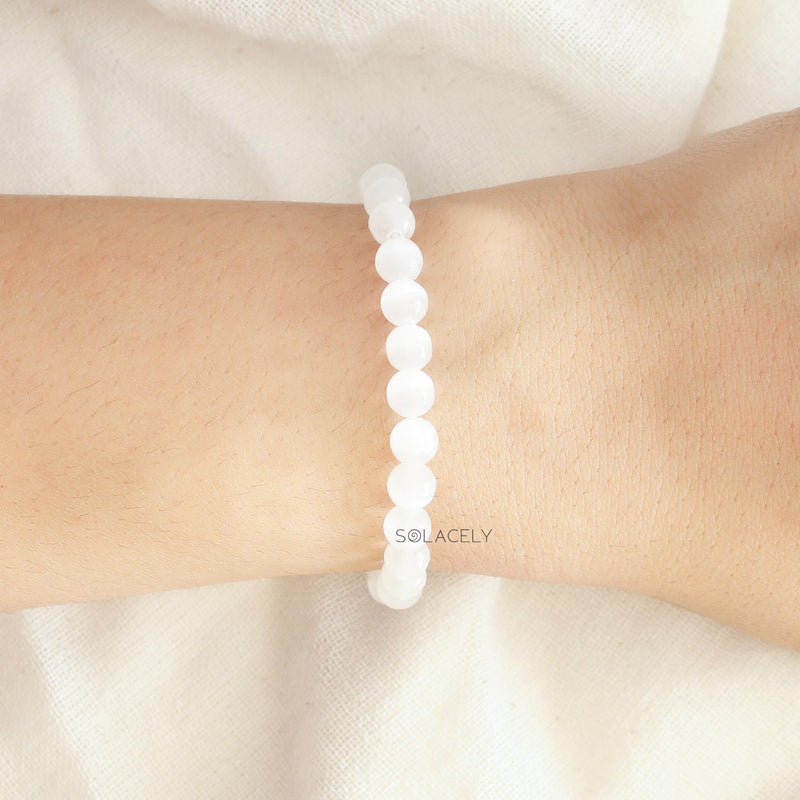
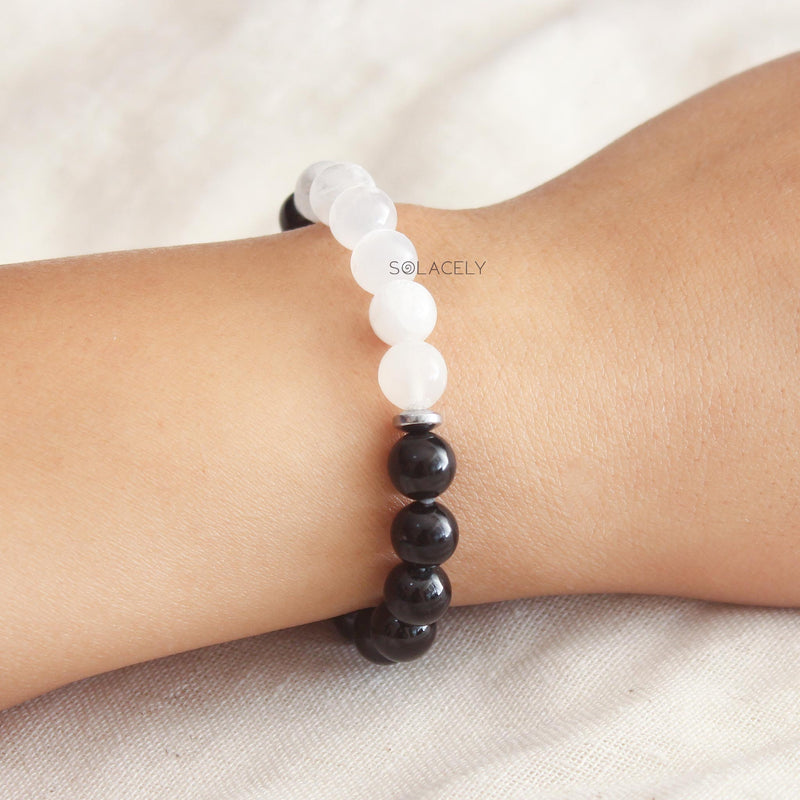
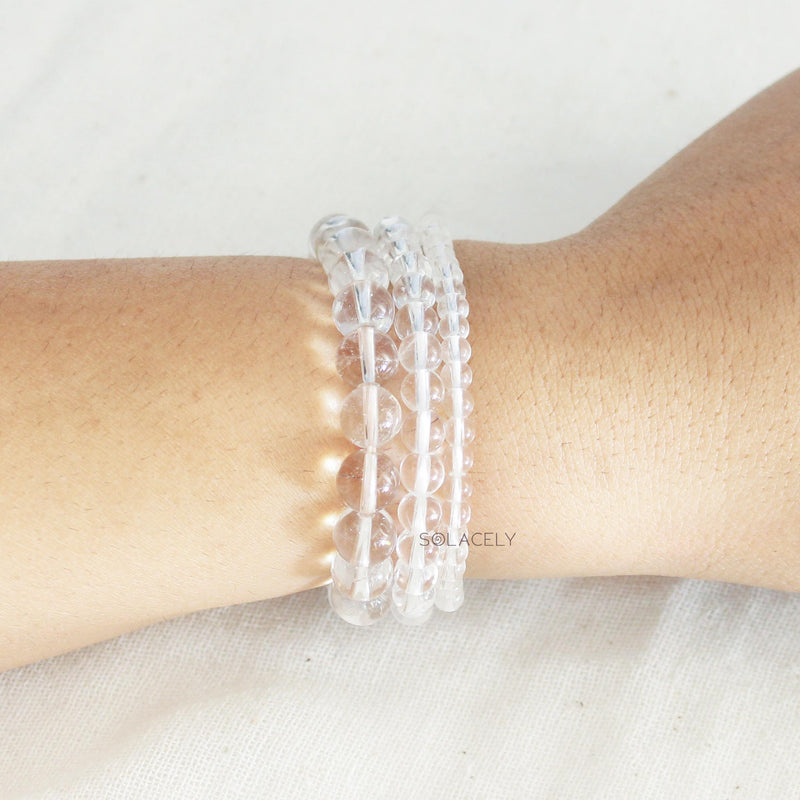
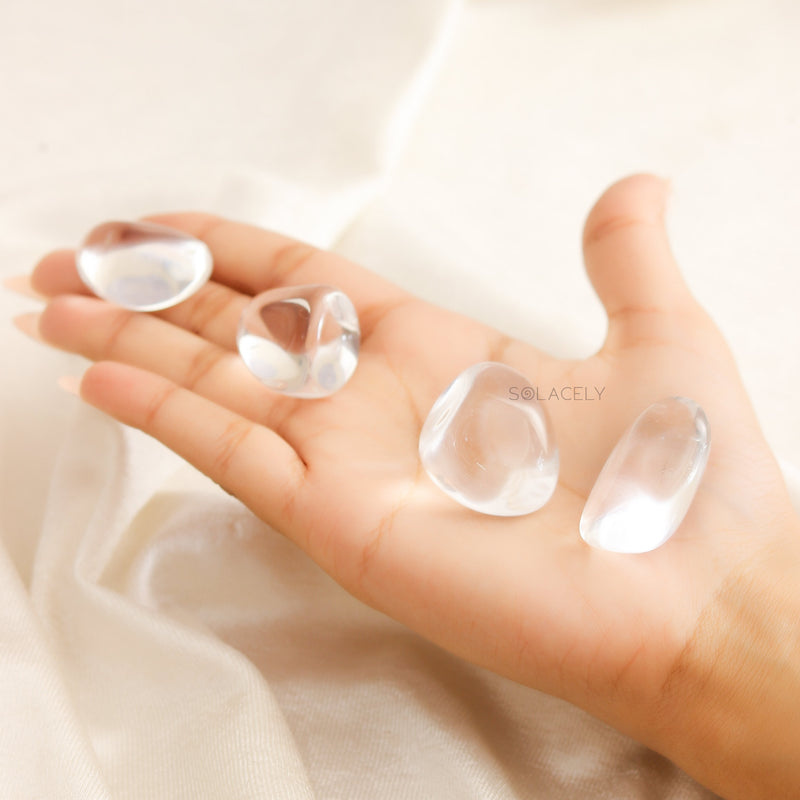
Selenite is a crystalline form of gypsum, a soft calcium sulfate mineral with a satin sheen and a pale, luminous white. It is traditionally kept for clarity, calm and clearing a space, and it is the stone most people reach for when they want to cleanse their other crystals.
Key takeaways
- Selenite is a crystalline variety of gypsum, calcium sulfate with water bound into its structure.
- Gypsum defines hardness 2 on the Mohs scale, so selenite is one of the softest stones you will ever put on a shelf.
- It is water soluble. Never soak it, never rinse it, and never leave it in a steamy bathroom. Wipe it with a dry cloth instead.
- Selenite is the crystal world's favourite cleansing tool because it works dry, with no water, salt or long hours of sun involved.
- Its name comes from Selene, the Greek moon goddess, and it is long associated with clarity, peace and the crown chakra.
- Satin spar, desert rose and gypsum flower are all names for different habits of the same mineral.
What is selenite?
Selenite is gypsum in crystalline form. Gypsum is hydrous calcium sulfate, one of the most widespread sulfate minerals on Earth, and it forms where shallow seas and salt lakes evaporate and leave their dissolved minerals behind. Selenite is the clear to translucent version of that mineral, and its softness and water content shape everything about how you look after it.
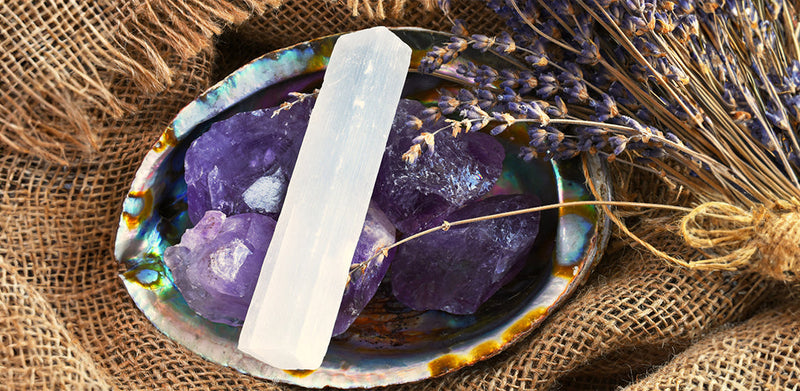
The stone reaches shops under several names, all of them the same mineral wearing a different habit. Selenite proper is the clear, tabular, sometimes glassy crystal. Satin spar is the fibrous form with a silky, moving band of light down its length, which is what most towers, wands and charging plates are cut from. Desert rose grows in flattened rosettes with sand caught between the blades, and gypsum flower describes the curling, petal-like clusters.
Hardness is the number worth remembering. Gypsum is the reference mineral for the number 2 on the Mohs hardness scale, meaning it sits second from the bottom of the whole ten point range. A fingernail is a shade above it. Quartz, which covers a huge share of the crystal shelf, is a 7, so almost anything you own will mark a piece of selenite if the two knock together.
The most spectacular selenite on record came out of the Naica mine in Chihuahua, Mexico, where a flooded chamber held translucent gypsum beams several metres long. Commercial material is far more modest and comes largely from Morocco and Mexico, arriving as towers, spheres, plates, wands and rounded beads.
Selenite meaning
Selenite takes its name from Selene, the Greek goddess of the moon, chosen for the soft, moonlit glow the polished stone gives off. Its meaning follows that image closely: light, clarity and a clean slate. It is the stone people reach for when a space, a routine or a head feels cluttered.
Where a grounding stone is described as an anchor, selenite is described as an open window. It carries a long association with the crown chakra, with quiet awareness and with the sense of standing slightly above a situation rather than tangled in it. Many people keep a piece specifically for the moment before a decision, when the useful thing is not more information but a little more space around the question.
It also has a strong reputation as a stone of peace in a shared home. A tower on a hallway table, a plate by the front door, a pair of pieces on either side of a bed: these placements come from the idea that selenite settles the tone of a room rather than doing anything dramatic. That gentle, undemanding character is why it is so often the first stone recommended to someone building their first small collection, alongside the other starter pieces covered in our guide to crystals for beginners.
Selenite benefits and properties
Selenite is traditionally kept for mental clarity, calm and the sense of a room being freshly aired. People use it as a meditation stone, a bedside stone and a doorway stone, and they use it as a working tool for looking after the rest of their collection. The benefits described are mostly about lightness and space rather than intensity.
The qualities most often named are these:
- Clear thinking. Held or kept in view, selenite is used as a cue to slow down and separate one problem from the next.
- Calm in the room. Towers and plates are placed in hallways, bedrooms and offices as a quiet reset for the atmosphere of a space.
- Deeper meditation. Its association with the crown chakra makes it a common companion for still, silent sitting practice.
- Emotional release. People reach for it during periods of letting go, when the intention is to stop carrying something rather than to solve it.
- Cleansing other crystals. This is the practical benefit that keeps a plate in almost every collection, and it is covered in full below.
- Gentle pairing. Selenite is the classic partner stone, added to bracelets and grids to lift whatever it is placed beside.
Physically, the properties that matter to a buyer are hardness, water solubility and that silky optical effect. Satin spar owes its moving band of light to a dense bundle of parallel fibres, the same structure that gives a cat's eye stone its line. Hold a wand under a lamp and turn it: the light travels along the piece as you move it. That effect is the reason satin spar is polished into towers and wands rather than faceted like a harder gem.
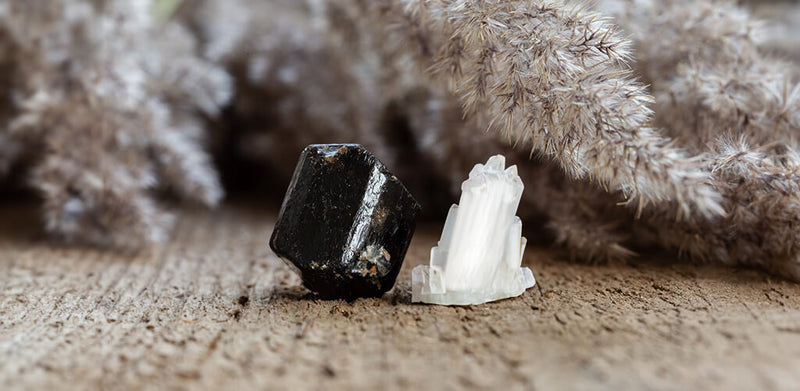
Selenite is also one of the easiest stones to pair. It sits beautifully next to amethyst for evening practice, next to clear quartz for focus, and next to black tourmaline for a grounding and clearing combination, which is why the black tourmaline and selenite pairing turns up so often in bracelets. If you want the softer, more reflective version of the same idea, the amethyst and selenite combination leans towards rest and intuition.
How to cleanse other crystals with selenite
Selenite is used to cleanse other stones because it does the job completely dry. There is no rinsing, no salt, no long spell in the sun and no smoke, which makes it the safest option for anything soft, porous, water sensitive or fade prone. A plate, a slab or a large tumbled piece will do.
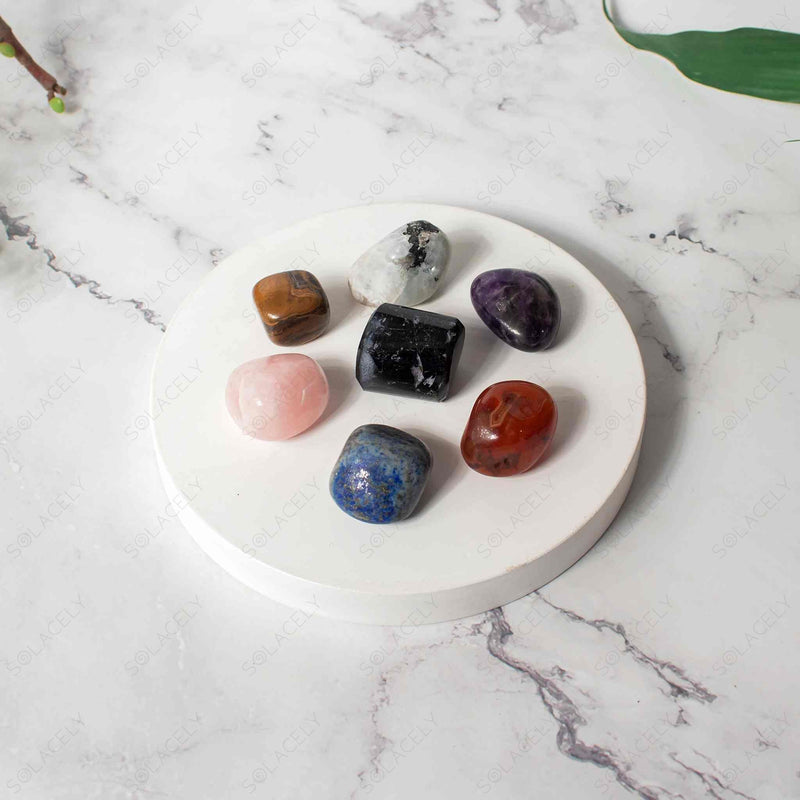
The method is as simple as it sounds. Lay your crystals directly on a selenite plate, or arrange them in a ring around a tower, and leave them for a few hours or overnight. Some people set an intention as they place each piece, others simply leave the plate on a shelf and rotate their bracelets through it at the end of the week. Both approaches are common and neither needs any equipment beyond the selenite itself.
It earns its place most with the stones that cannot take the usual treatments. Malachite, lapis lazuli, pyrite, turquoise and angelite all dislike water. Amethyst and citrine lose depth of colour after long stretches in strong sun. Opal can craze if it is heated or allowed to dry out. Any of those can sit on selenite instead with nothing to worry about. The wider chakra stones guide sets out which pieces tend to want cleansing most often in a working set.
A few practical notes. Keep the plate itself dry, because it is subject to exactly the same water rule as every other piece of selenite. Wipe it with a dry cloth when dust builds up. Keep it away from the edge of a shelf, since a fall onto tile will chip it. And do not stack heavy spheres on a thin plate, because gypsum at hardness 2 will not thank you for the pressure.
How to care for selenite
Selenite needs dry care, without exception. It is water soluble, so soaking, rinsing, steam and salt water baths will dull the polish and eventually eat into the surface. Ultrasonic cleaners are out for the same reason. Wipe the stone with a dry or barely damp cloth, dry it at once, and keep it away from humid rooms.
In practice that means the bathroom shelf is the wrong home for a selenite tower, and a windowsill that gathers condensation is not much better. Take selenite bracelets off before washing up, showering, swimming or applying hand cream and perfume. If a piece does get splashed, pat it dry straight away rather than leaving it to air.
Storage matters every bit as much. At hardness 2 selenite picks up scratches from almost everything else in a jewellery box, so give it its own pouch or a lined compartment. Keep selenite beads on their own strand or beside other soft stones rather than sandwiched between hematite or tiger's eye. Fibrous satin spar wands can also split along their length if they are dropped or squeezed hard, so handle towers by the body rather than the tip.
| Method | Selenite | Why |
|---|---|---|
| Soaking or rinsing in water | Avoid | Gypsum is water soluble, so the surface dissolves and goes chalky |
| Salt water bath | Avoid | Same problem, plus salt lodges in the fibres |
| Ultrasonic or steam cleaner | Avoid | Heat and moisture together are hardest on soft, hydrous minerals |
| Smoke from sage or palo santo | Fine | Completely dry and takes a minute |
| Sound from a bowl or chime | Fine | No contact with the stone at all |
| A night in moonlight | Fine | The traditional choice, given the name |
| Long spells in strong sunlight | Keep it brief | Pale stones are happier out of hot, direct glare all day |
Charging follows the same dry logic. Moonlight is the usual choice and a short spell of soft early light is fine. Hold the piece, set your intention, then put it back where you actually use it. Repeat whenever the stone feels like it has been through a heavy few weeks.
Choosing and placing selenite at home
Choose selenite by the form that suits where it will live and by the finish you like looking at. Towers and lamps are display pieces, plates are working tools for the rest of your collection, wands suit hands-on practice, and beads keep the stone in contact with the skin through the day. All of them are the same mineral, so the choice is entirely about use and shape.
Finish varies more than colour. Some pieces are milky and almost opaque, others are close to translucent and glow when a lamp sits behind them. Satin spar shows a bright silky band, while clearer selenite can be nearly glassy. Neither is better. Hold a few if you can, because the light response of selenite is most of the reason people keep it, and a photograph rarely captures it.
For placement, the traditional spots are the hallway, the bedside table and the desk. A pair of towers either side of a doorway is a familiar arrangement, as is a plate set where you empty your pockets so bracelets land on it at the end of the day. Keep pieces back from edges and away from radiators and windows that steam up. Selenite also sits at the heart of the wider family of pale stones kept for clarity and calm, which we cover in our guide to white crystals.
Crystals are kept for comfort, focus and ritual. They are not a treatment for any physical or mental health condition, and nothing here replaces advice from a qualified professional or any care that has already been arranged for you. Selenite is a soft, water soluble form of gypsum, so keep it out of water and never use it in drinking water or crystal elixirs. Small beads and chips are a choking and strangulation risk, so keep them away from babies and young children.
Sources
Written by Chetena Sharma. Reviewed by the Solacely editorial team.
Frequently asked questions
About the author


Written by Chetna Sharma, crystal healing practitioner and co-founder of Solacely. Chetna has worked with healing crystals for over a decade and curates Solacely's protective stone collection.