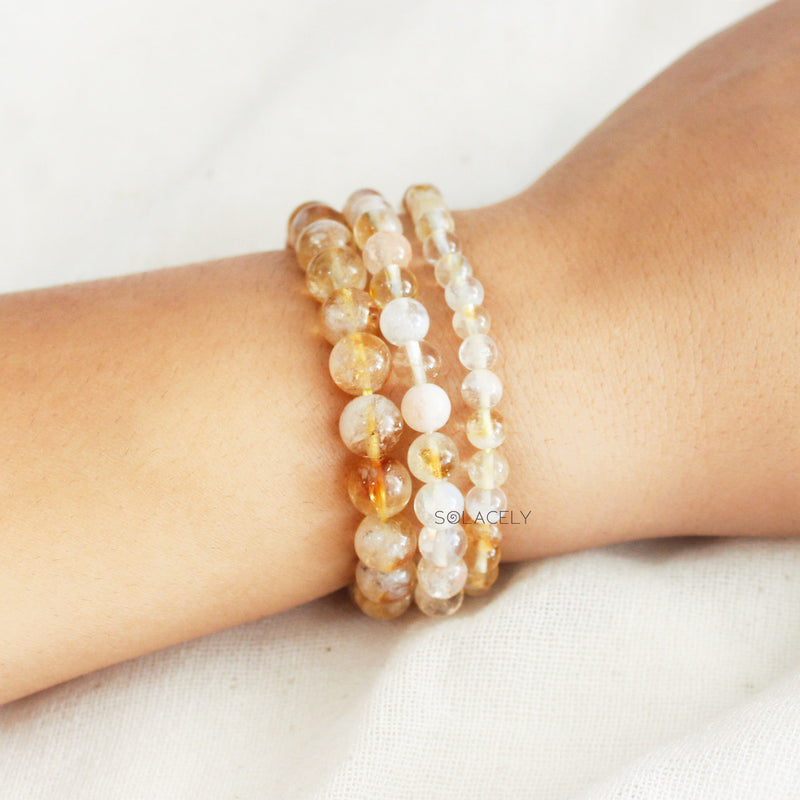
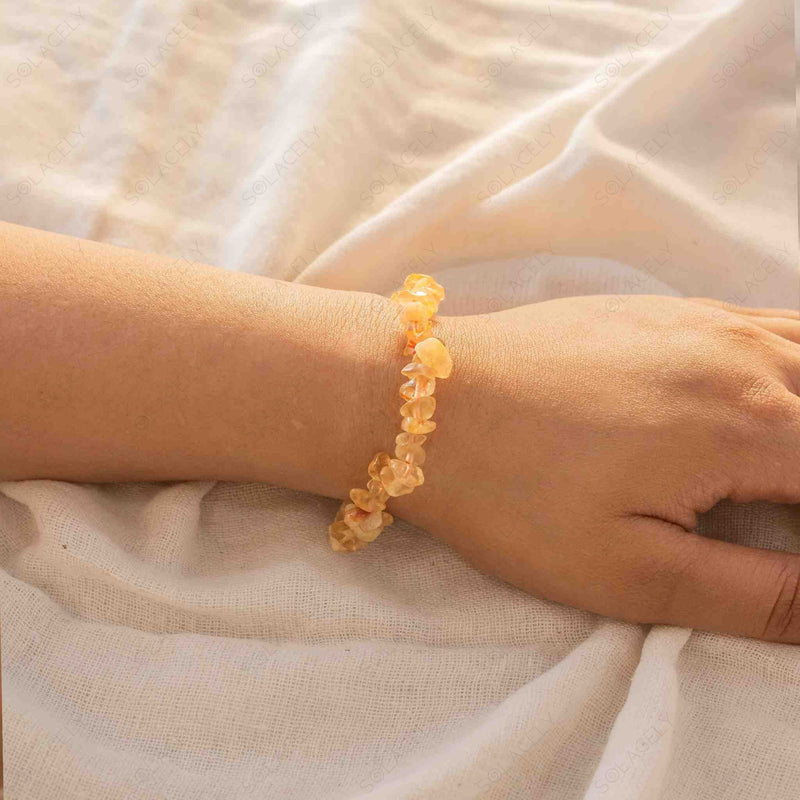
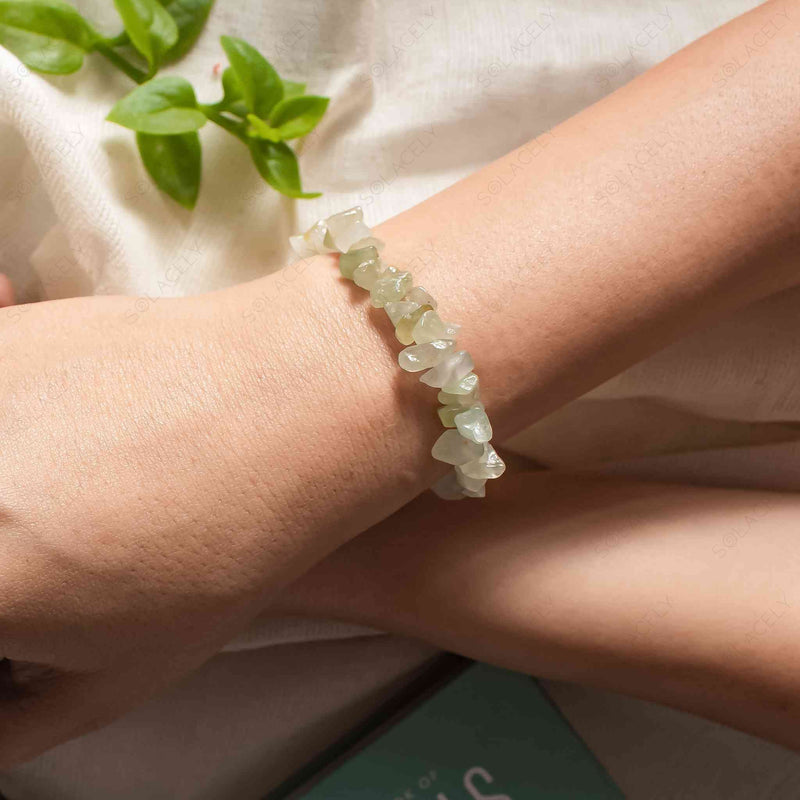
Citrine is the easiest stone in the range to build a combination around. It is quartz at 7 on the Mohs scale, hard enough for rings as well as bracelets, and its warm gold sits well beside almost any colour. This guide covers the pairings people wear and how to choose between them.
Key takeaways
- Citrine is quartz, silicon dioxide coloured by traces of iron, at 7 on the Mohs scale with no cleavage, which makes it suitable for every jewellery format including rings.
- The strongest partners give it something it lacks: green aventurine for luck, pyrite for nerve, black tourmaline for a boundary, amethyst for quiet.
- Citrine runs from a pale champagne lemon through honey to a deep madeira gold. Choose the depth you want to look at every day.
- Ametrine is the natural bicolour where citrine and amethyst occur in a single crystal.
- Citrine pales with long sun exposure and the colour does not come back, so moonlight is the better charge.
- Everything described here is traditional belief and cultural practice.
Why does citrine pair so well?
Two reasons, one practical and one visual. The practical one is durability. Citrine is quartz with no cleavage, breaking conchoidally like glass, which means it survives daily wear in formats that most practice stones cannot manage. It is one of the few you can put in a ring without worrying.
The visual reason is that gold is a connector rather than a competitor. Put citrine beside deep blue, black, green or pink and it lifts the other stone instead of fighting it. That is why it turns up in more mixed strands than almost anything except clear quartz.
Its traditional role helps too. Citrine is the merchant's stone, kept in tills and coin purses for generations and long associated with confidence, enterprise and abundance. Most people pairing it are adding that to something else rather than the other way round. Our citrine guide covers the stone itself, including how the colour range runs and why warming quartz to draw out those golden tones is a long established and entirely stable trade practice.
The twelve combinations at a glance
Read this by what you want the partner to add, since the citrine half stays the same throughout.
| Partner stone | What the pair is kept for | Wearable together? |
|---|---|---|
| Green aventurine | Opportunity that turns up | Yes |
| Pyrite | Nerve to name your price | Desk pair, keep pyrite dry |
| Black tourmaline | Boundaries plus momentum | Yes, matched hardness |
| Amethyst | Drive balanced with quiet | Yes |
| Clear quartz | Intention amplified | Yes |
| Carnelian | Warmth and creative push | Yes |
| Tiger's eye | Confidence for a decision | Yes |
| Smoky quartz | Ambition with grounding | Yes |
| Rose quartz | Self worth and warmth | Yes |
| Lapis lazuli | Confidence plus plain speech | Yes, with a spacer |
| Selenite | Abundance kept clear | No, selenite stays on a shelf |
| Sunstone | Double warmth for a flat week | Yes, with a spacer |
The pairings worth knowing in depth
Four of the twelve account for most of what people actually wear.
With green aventurine
The two money stones, and they do different halves of it. Citrine is momentum, the nerve to send the invoice and raise the rate. Green aventurine is the luck of the thing turning up, traditionally carried into interviews and pitches. Both are quartz family, so they wear together without any care complications at all.
With pyrite
The desk version of the same idea, and the one with the most presence. A pyrite cube next to a citrine cluster is a striking arrangement, and pyrite carries the confidence half in a heavier, more literal way. Keep pyrite off the wrist and out of water, since it reacts slowly with moisture, and the pair lasts indefinitely on a shelf.
With black tourmaline
The working week pairing. Tourmaline holds a boundary and citrine supplies forward motion, and at 7 to 7.5 against 7 the two share a hardness, which is rare and makes this one of the easiest combinations to wear every day. Covered in full in black tourmaline and citrine.
With amethyst
The balancing pair rather than a reinforcing one. Citrine is an active stone and amethyst is a quiet one, so together they suit people whose problem is running hot rather than running flat. There is a lovely piece of geology behind it as well: where the two colours occur together in a single crystal, the trade calls the result ametrine, and both come from the same mineral with different trace conditions.
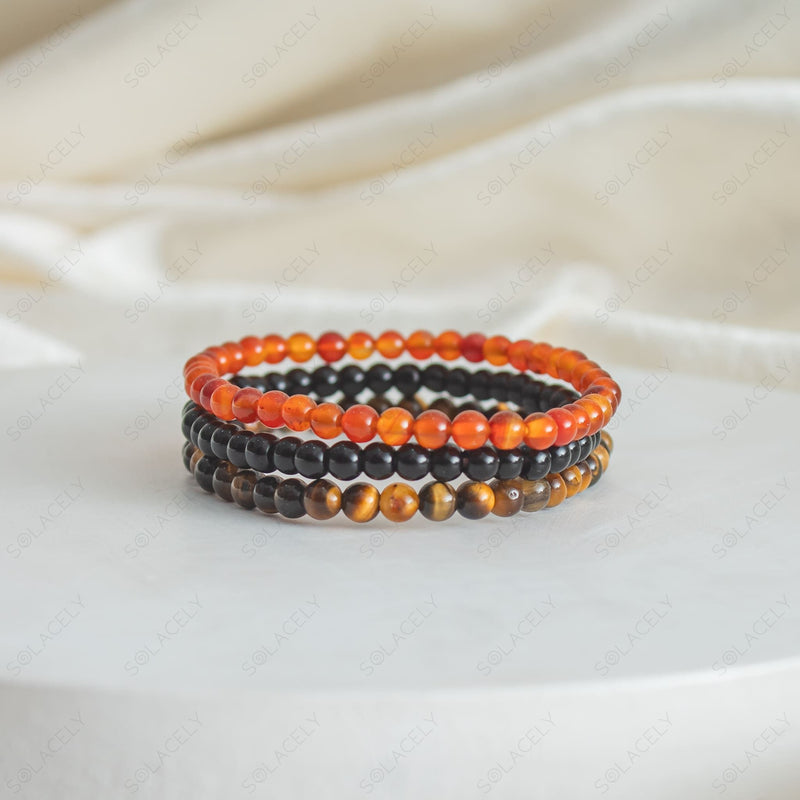
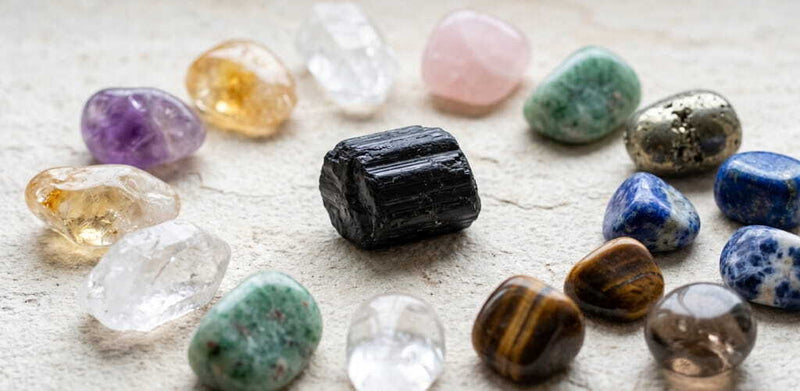
Of the rest, clear quartz is the simplest addition and amplifies whatever intention you have set, carnelian doubles the warmth for a creative stretch, tiger's eye adds nerve for a decision you keep circling, and smoky quartz grounds ambition that has started to feel scattered. For the mirror image of this guide built around the dark stone, see our black tourmaline combinations.
How do you wear a citrine combination?
Citrine's durability means almost every format is open to you, which is unusual.
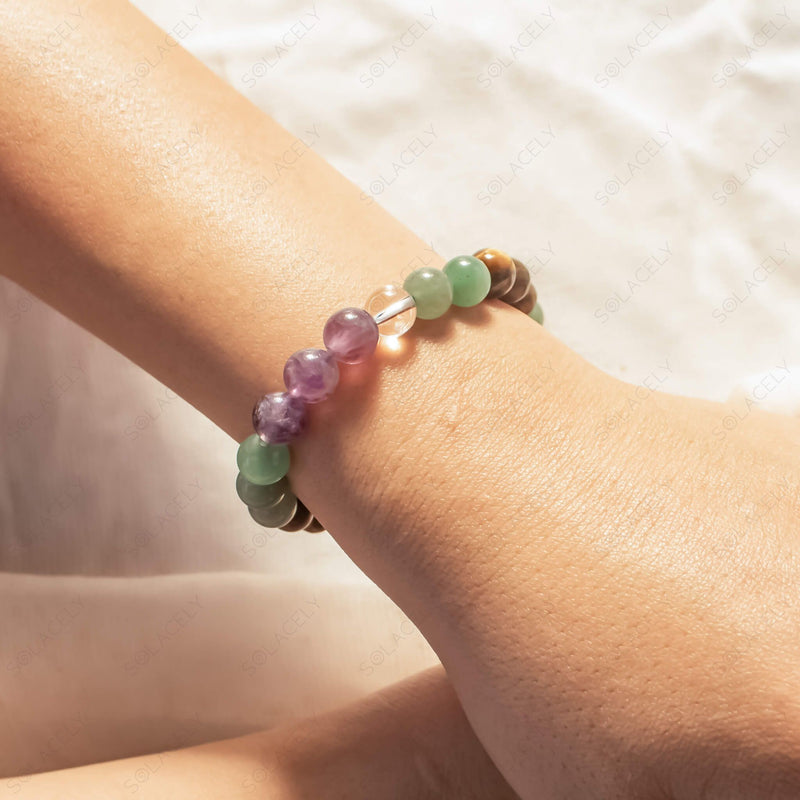
- Alternating bracelet. The most common and the best looking. Add a spacer only where the partner is softer than about 6.
- Ring. Citrine is one of very few practice stones genuinely happy in a ring, so it can be the set piece with a softer partner elsewhere.
- Wallet and desk. A tumble in the coin pocket following the merchant's habit, with the partner on the working surface.
- Pendant pair. Two chains, which keeps a softer partner away from knocks entirely.
Where to keep it matters as much as what you pair it with. Citrine belongs where money decisions actually happen, which for most people now means the desk rather than a till. Set one plain, checkable intention with it and revisit that in a month.
How do you care for citrine and its partners?
Citrine itself is easy. Warm water, a drop of mild soap and a soft cloth, then dry it properly, particularly around bead holes on a strung piece. Skip ultrasonic and steam cleaners, because rapid temperature change is unkind to it and soapy water does the job anyway.
The one real rule is light. Despite its sunny reputation citrine pales with prolonged exposure and the colour does not return, so brief morning light or a night of moonlight suits it far better than an afternoon windowsill. That applies doubly to any pairing with amethyst, which fades on the same mechanism.
Otherwise let the partner set the routine. Selenite and pyrite never go in water, lapis is porous and takes a dry cloth only, and anything softer than citrine gets its own pouch so the quartz does not dull it over the years. Moonlight, smoke, sound or a rest on a selenite plate are safe for every combination on this page.
The properties described here reflect traditional and cultural belief around crystals. They are offered for reflection and wellbeing and are not medical advice, a diagnosis, or a treatment for any condition, and nothing here is financial advice. If you are making a significant financial decision, speak with a qualified adviser. Keep small stones away from young children, and never place crystals in drinking water.
Sources
Written by Chetena Sharma. Reviewed by the Solacely editorial team.
Frequently asked questions
About the author


Written by Chetna Sharma, crystal healing practitioner and co-founder of Solacely. Chetna has worked with healing crystals for over a decade and curates Solacely's protective stone collection.