In crystal tradition a soulmate stone is worn while you get clear about the commitment you actually want. It is kept for readiness: knowing your own terms, staying patient with timing, and being willing to be properly known. Rose quartz, garnet, rhodonite and moonstone are the usual picks, chosen for openness, devotion, repair and cycles.
Key takeaways
- Soulmate practice works on the readiness of the person wearing the stone. Choose for the stage you are actually in rather than the prettiest piece on the tray.
- Garnet has the longest documented link to betrothal jewellery. It is the recognised January birthstone and sits at 6.5 to 7.5 on the Mohs scale.
- The traditional roles differ: rose quartz for openness, rhodonite for forgiveness, moonstone for cycles and the reunion belief, amethyst for discernment.
- Paired bracelets work as a shared cue between two people, which is why couples buy them for anniversaries rather than for first dates.
- A short clarity ritual, one stone and three written columns, keeps the intention specific and gives you something concrete to revisit every few months.
What does a soulmate stone actually mean?
A soulmate stone is one traditionally worn to build readiness for a committed relationship: clarity about what you want, patience with timing, and the willingness to be properly known. It is kept close so that intention stays in view, day after day, while the rest of your life carries on around it.
People reach for these stones at particular moments. After a relationship ends and the next one feels a long way off. Before a date that matters more than the others did. During a long stretch of feeling ready and waiting. Worn that way, the stone gives the intention somewhere to land instead of leaving it to drift.
This post deliberately stays narrow. If you want the broad picture of love stones, covering self-love, heartbreak and general romance, our wider guide to crystals that attract love covers that ground properly. If what you are after is magnetism and social charisma rather than commitment, crystals for attraction is the better fit. Here we stay with soulmate belief, twin flame language and the long partnership.
Twin flame language sits comfortably alongside soulmate practice, and plenty of readers arrive holding both. It describes an intense mirroring bond between two people, one that separates for a season and later reunites. Moonstone attached itself to that story through its older link with cycles and returns, which is why it turns up in twin flame practice so often.
Which crystals are traditionally chosen for soulmate work?
Six stones do most of the work here: rose quartz for openness, rhodonite for forgiveness and repair, garnet for devotion, moonstone for cycles and reunion belief, green aventurine for luck in meeting people, and amethyst for the discernment to choose well. Each belongs to a different stage of the process.
| Stone | Traditionally used for | How it is usually worn |
|---|---|---|
| Rose quartz | Softening guardedness, openness to being known | Bracelet or pendant near the heart, daily |
| Rhodonite | Forgiveness and repair after a specific hurt | Pocket tumble, or a single strand |
| Garnet | Devotion, commitment, staying power | Ring or one strand, kept for occasions |
| Moonstone | Cycles, patience with timing, reunion belief | Pendant or beads, often worn in the evening |
| Green aventurine | Luck in meeting people, saying yes | Bracelet worn when you are out socially |
| Amethyst | Discernment, not repeating an old pattern | Bedside piece, or a right wrist bracelet |
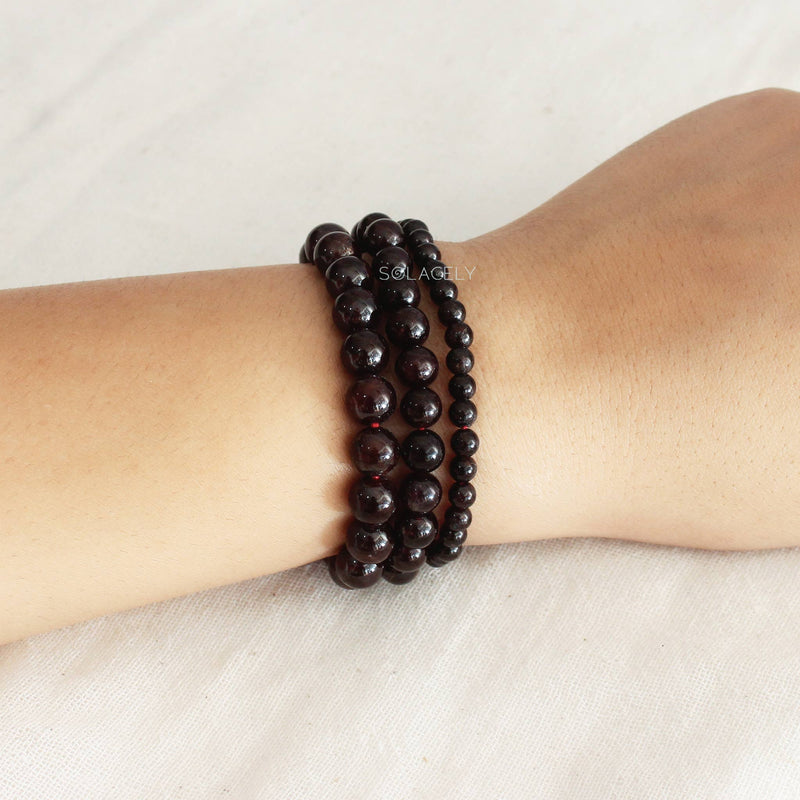
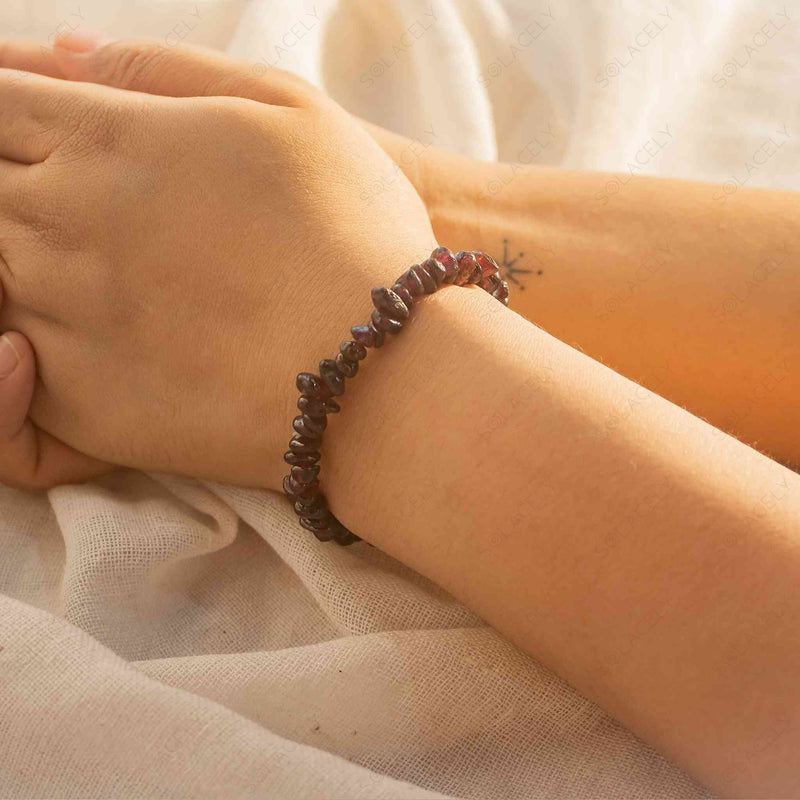
Garnet carries the strongest historical case by a distance. It is the January birthstone and covers a family of species with hardness generally between 6.5 and 7.5 on the Mohs scale. Gemmological reference works describe garnet as a group of silicate minerals that share a crystal structure while varying widely in composition, which is why the family runs from deep red through orange to green. It was set into Egyptian jewellery, cut for Roman signet rings, and used heavily in Victorian betrothal pieces, which is where its association with devotion comes from. Our garnet meaning and properties guide goes deeper.
Moonstone is the stone most often paired with twin flame practice. It is a feldspar whose floating sheen, called adularescence, is produced by light scattering between microscopic layers inside the stone. That shifting glow is why it has long been tied to lunar cycles, and from cycles it was a short step to the idea of separation and return. It is a relatively soft stone, so it wants gentle handling.
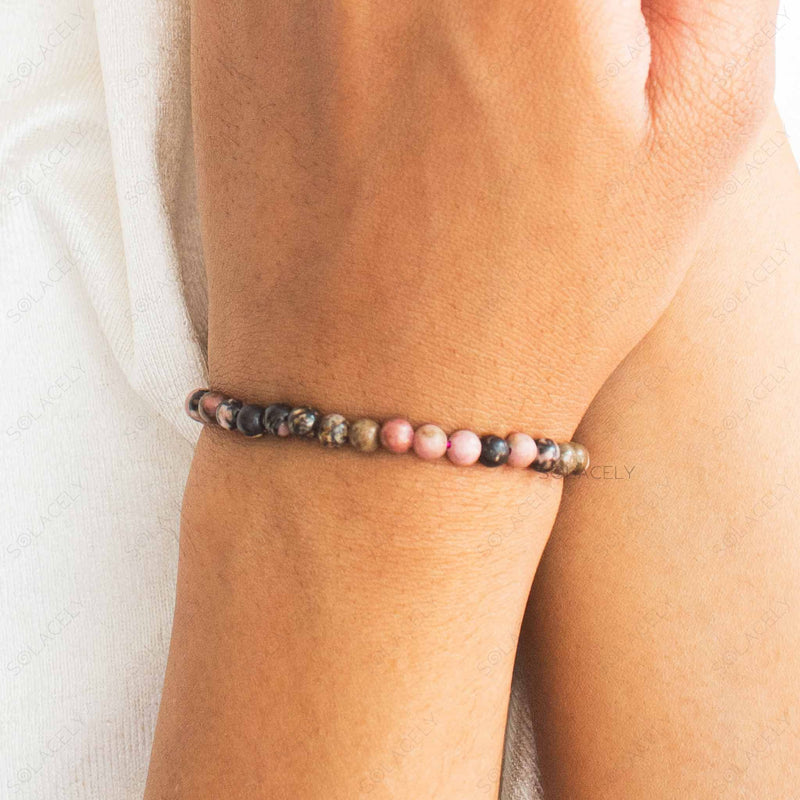
Rose quartz and rhodonite get confused constantly, and they do different jobs. Rose quartz is the opening stone, worn when you have gone guarded and want to soften. Rhodonite is the repair stone, a pink manganese silicate reached for when there is something specific to forgive, whether that is a partner or yourself. If your relationship already exists and has a wound in it, rhodonite is the better fit of the two.
Green aventurine and amethyst are the practical bookends. Aventurine is traditionally a luck stone, worn for chance meetings and for the nerve to accept an invitation. Amethyst is the sober one, associated with clear judgement, and it earns its place because choosing badly is a far more common problem than never meeting anyone.
How do paired stones and couple bracelets fit in?
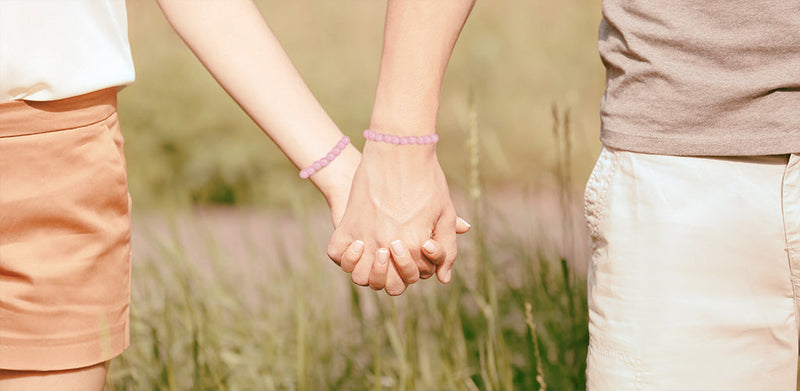
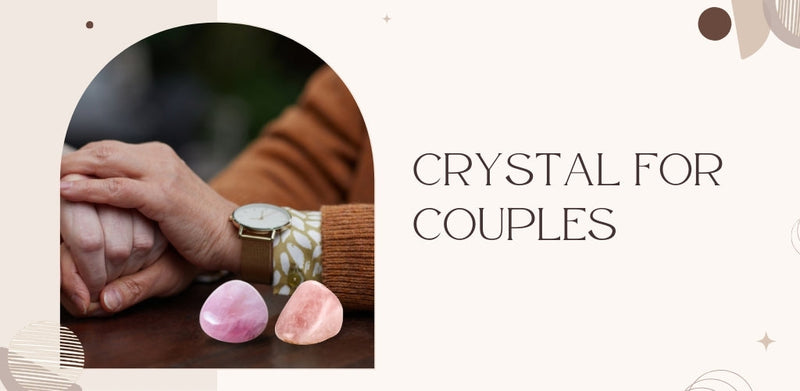
Paired pieces work as a shared, visible agreement between two people who have both opted in. That is their entire mechanism, and it is not a small one. Couples typically buy them for anniversaries, for long distance stretches, or after coming through a rough patch, rather than at the beginning of dating.
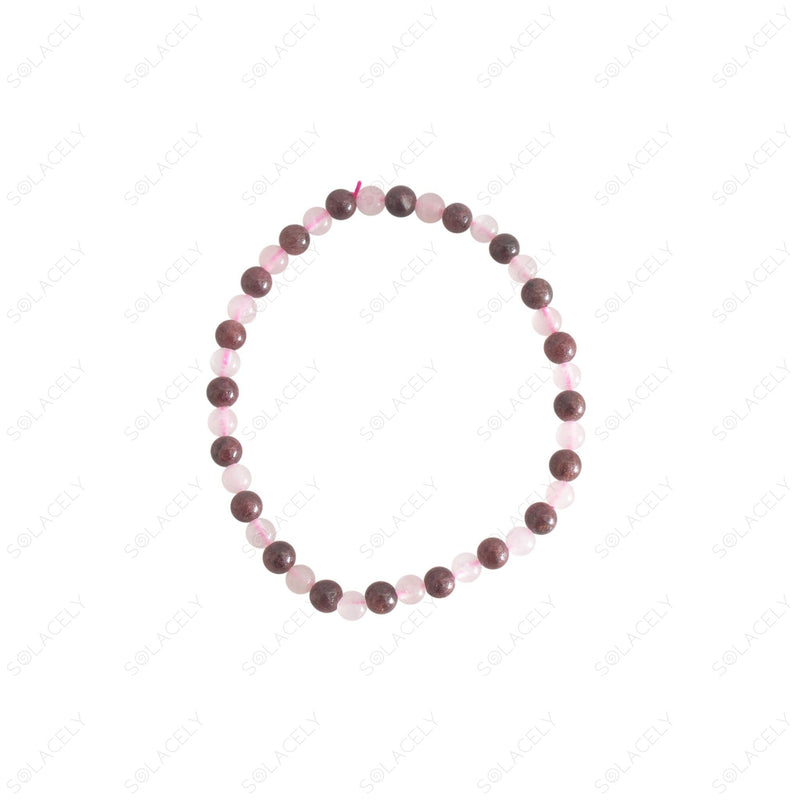
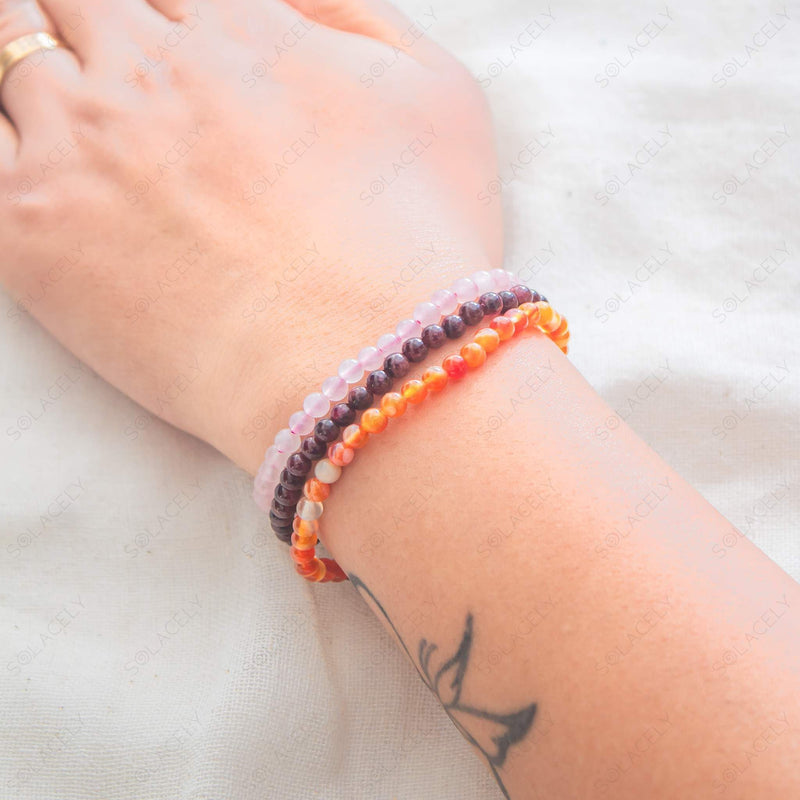
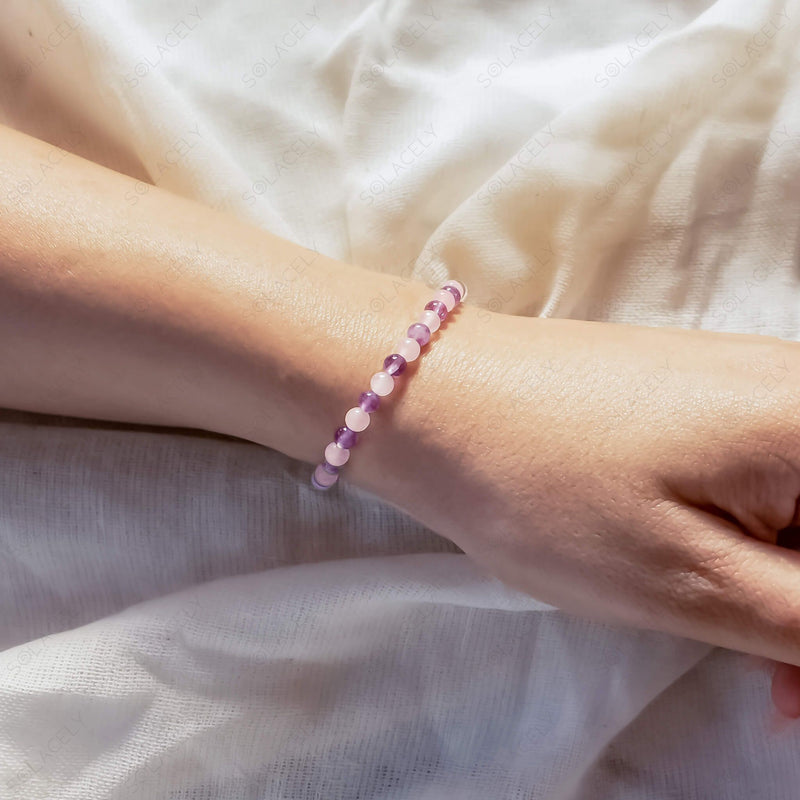
The formats are simple enough. Two identical strands, one each. Two complementary strands, commonly rose quartz for one partner and garnet for the other. Or a split design where each half only reads properly beside the other. Our guide to choosing a couple bracelet covers styles, bead sizes and what survives daily wear.
One caution is worth stating flatly. A paired piece given to someone who has not agreed to what it represents is pressure, not romance. We have found that the pieces still worn years later are the ones both people chose together. If a proposal is next, our notes on crystals for a marriage proposal cover the timing.
A clarity ritual for commitment readiness
The most useful soulmate ritual is not a spell. It is a short written exercise with a stone as the anchor, done once and revisited every few months. It takes roughly twenty minutes, needs one stone and a sheet of paper, and its value is that it forces specificity where wishful thinking usually sits.
- Choose one stone. Garnet if you are working on commitment, rose quartz if you are working on openness, rhodonite if you are working on repair.
- Cleanse it simply. A night on a windowsill, a rinse and a thorough dry, or a few minutes of sound. The method matters far less than doing it deliberately.
- Write three columns. What you will not compromise on, what you can genuinely flex on, and what you are still carrying from before.
- Read the third column aloud. That is the honest one, and it is usually the reason things stall.
- Wear the stone daily for a month. Each time you notice it on your wrist, reread the first column in your head.
Notice that nothing in that sequence asks the universe for a specific person. It asks you to name your terms, which is the part most people skip. The stone becomes a physical bookmark for a decision you already made.
What if the stone does not seem to be working?
Give the intention a second pass. A piece that has quietly faded into the background is usually asking to be reset rather than replaced, and sharpening what you asked for is what does it. In our experience most people set a broad wish at the start, then never return to it once ordinary life picks back up.
Three questions help. First, is the intention specific, or is it closer to "someone, please"? Second, what has shifted in your own week: new places, new conversations, more honesty in the ones you already have? Third, what would the next month look like if this were going exactly the way you wanted?
Then recleanse and reset. Cleanse the piece the way you did the first time, write the new intention down as a single sentence, and put it back on. Many people find the second version lands far more precisely than the first, because a few months of living with the original showed them what they actually meant by it.
There is also a good case for resting a piece for a while. If a bracelet has become tied to a chapter that has closed, cleanse it, box it, and revisit it in a year with fresh eyes. Passing it on to someone who needs it more is equally reasonable, and it is a kind thing to do with a stone.
Do you need to buy something new to restart? Not at all. A stone you already own, recleansed and carrying a clearer intention, is almost always the right place to begin again.
How do you care for a soulmate stone?
Care depends on hardness, and this group varies more than most. Garnet sits at 6.5 to 7.5 on the Mohs scale and handles daily wear comfortably. Moonstone is softer and chips more easily. Rhodonite is softer still. Warm soapy water and a soft cloth suit all three of them.
Anything below about 7 on the Mohs scale can be scratched by ordinary household dust, which is largely quartz. That is the practical reason to take rings off before gardening, washing up or the gym. Store pieces separately rather than letting a garnet strand rub against a moonstone one all week.
Keep perfume, hairspray and lotion off every stone here, and put jewellery on last once everything else has dried. Skip salt water and ultrasonic cleaners across the board. For energetic cleansing, moonlight, sound, or a rest on selenite are the gentle standbys.
How often should you cleanse? Whenever the piece stops feeling like yours. A rough week, a serious argument, the end of a chapter. The tradition sets no fixed schedule, so follow the rhythm that suits the piece and the week you have had.
The properties described here reflect traditional and cultural belief around crystals. They are not medical claims and are not a substitute for professional healthcare. If you are managing a health concern, speak to a qualified practitioner.
Sources
Written by Chetena Sharma. Reviewed by the Solacely editorial team.
Frequently asked questions
About the author


Written by Chetna Sharma, crystal healing practitioner and co-founder of Solacely. Chetna has worked with healing crystals for over a decade and curates Solacely's protective stone collection.