Rose quartz, rhodonite, amazonite, garnet, moonstone and amethyst are the stones couples keep. Rose quartz for warmth, rhodonite for repair after a row, amazonite for the conversation neither of you starts, garnet for wanting each other, moonstone for new chapters, amethyst for a calm house.
Key takeaways
- Six stones: rose quartz, rhodonite, amazonite, garnet, moonstone, amethyst.
- Matching pairs are the weaker choice. Good couple sets pair two different stones.
- Rose quartz belongs in the bedroom, traditionally in twos rather than singly.
- Rhodonite is the repair stone, not the romance one. Keep it for after, not before.
- Buying a pair and keeping one turns a gift into an invitation.
- Keep rose quartz and amethyst off the sunny windowsill. Both pale in strong light.
The six stones
| Stone | Traditionally kept for | Mohs |
|---|---|---|
| Rose quartz | Warmth, open affection, the everyday one | 7 |
| Rhodonite | Repair after an argument | 5.5 to 6.5 |
| Amazonite | Saying the difficult thing kindly | 6 to 6.5 |
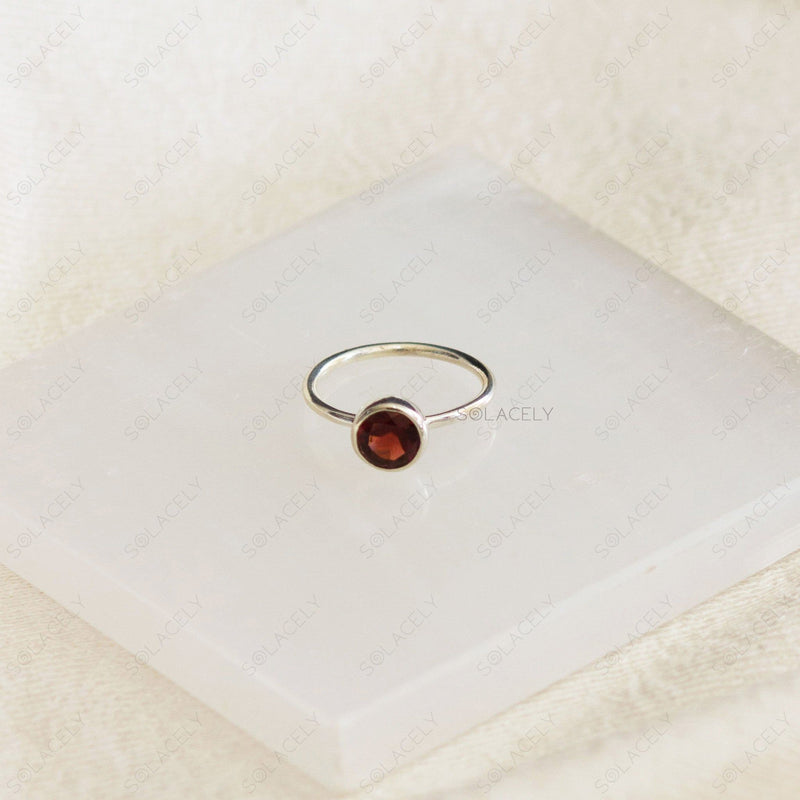
| Garnet | Passion, commitment, wanting each other | 6.5 to 7.5 |
| Moonstone | New chapters: moving in, marrying, trying for a child | 6 to 6.5 |
| Amethyst | A calm house and a settled evening | 7 |
Most couples end up with two of these rather than six. One for the ordinary run of things, which is usually rose quartz, and one for whatever is currently hard.
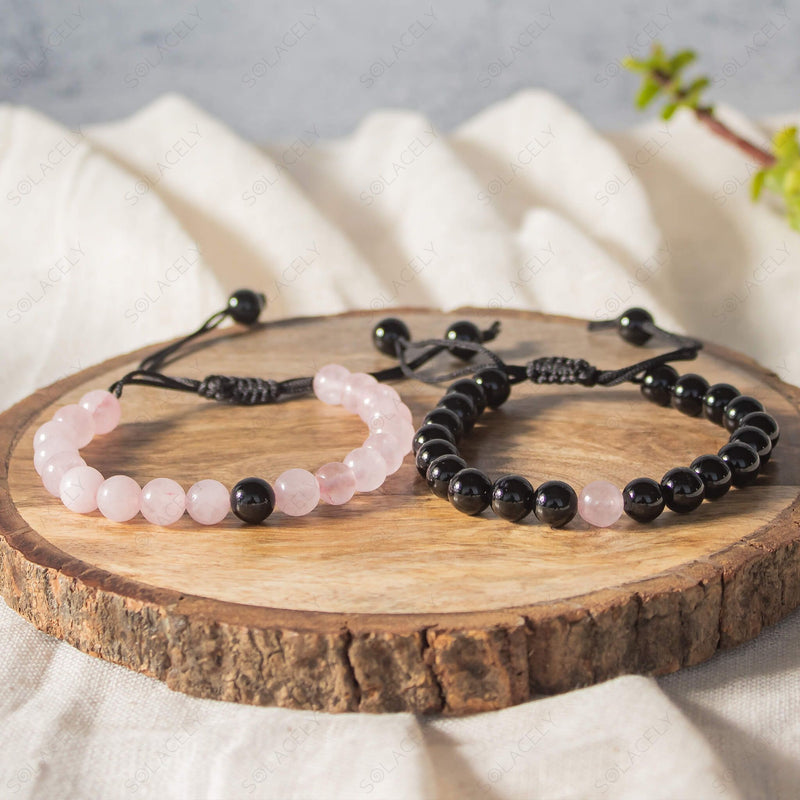
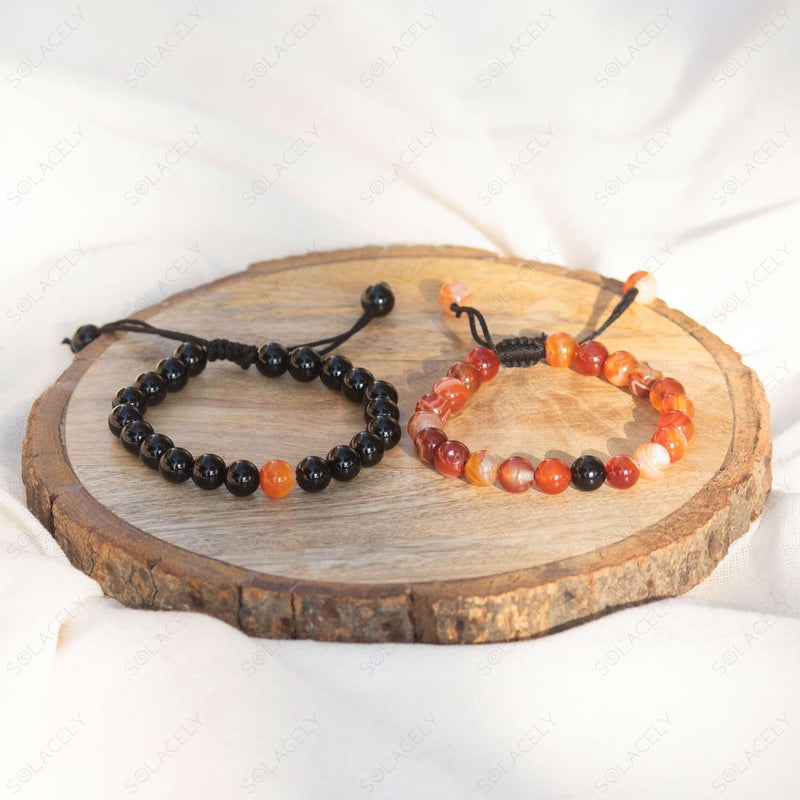
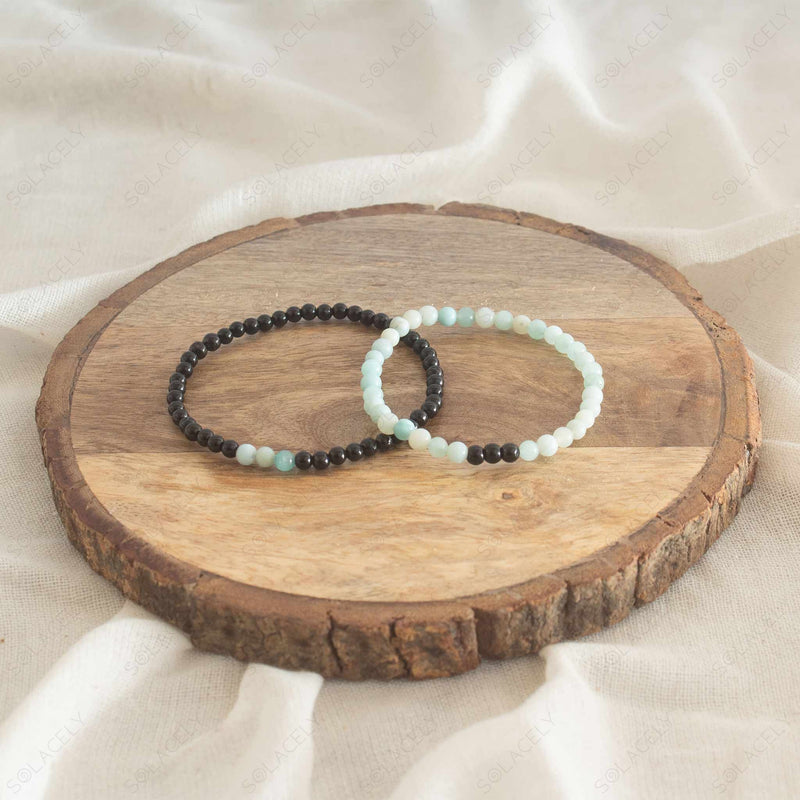
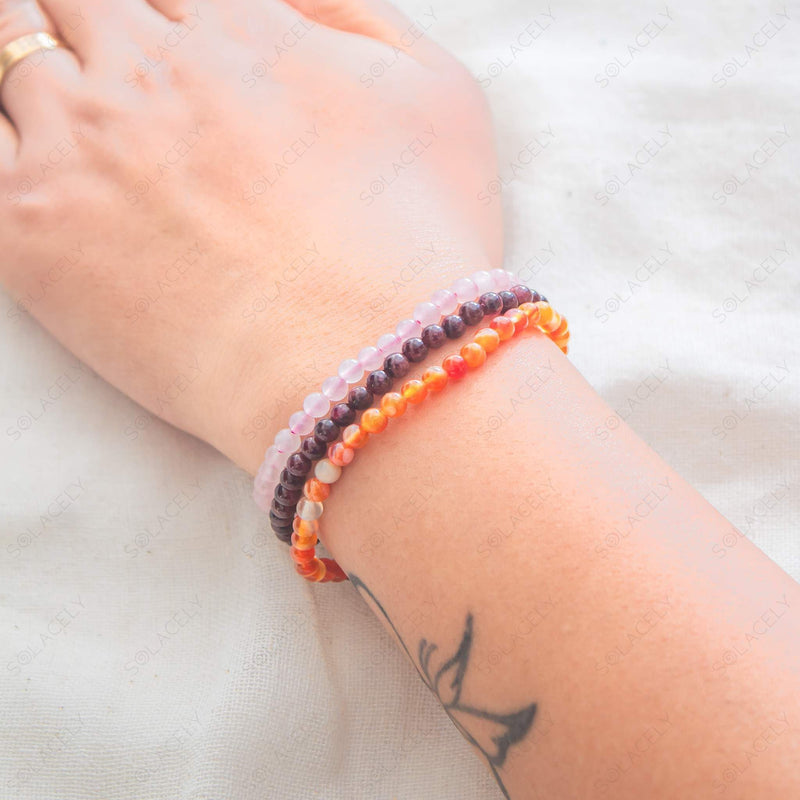
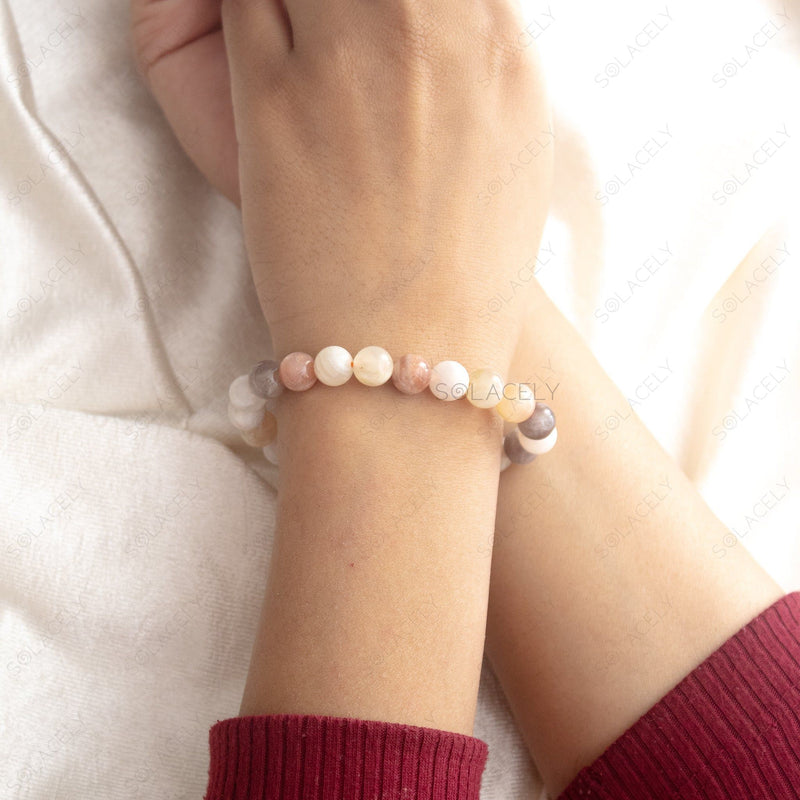
Choosing complementary stones is a thoughtful way for couples to create bracelets that feel connected while still reflecting each person's intentions. Personalised crystal bracelets allow each partner to choose the stones that resonate with them while keeping a shared meaning between the two.
Why two of the same stone is the weaker choice
The instinct with a couple set is to buy two identical bracelets. It looks right, and it is usually not the most useful arrangement.
Couple sets are traditionally built from two different stones on purpose. One partner carries rose quartz and the other black tourmaline. One carries amazonite and the other black tourmaline. The pairing is the point, because the two of you rarely need the same thing on the same day. The person who finds it hard to soften and the person who finds it hard to hold a boundary are not helped by the same stone.
Choose by what each of you actually finds difficult, then wear them as a pair. Our guide to choosing a couple bracelet goes through the common pairings and the sizing question, which matters more than people expect when two wrists are different.
Where they go in the home
Placement is most of the practice, and the traditional arrangement is specific rather than vague.
- Rose quartz in the bedroom, in twos. One on each side, on the nightstands rather than under the pillows where they get forgotten.
- Amazonite where you talk. Usually the kitchen table, which is where the real conversations happen, rather than the living room where the television is.
- Amethyst wherever the evening lands. A cluster on a shelf is enough.
- Garnet in the bedroom too, kept small and out of sight rather than displayed.
The reason placement works is repetition. A stone in a fixed spot becomes a small standing reminder of something you decided when you were calm, which is exactly when you are least likely to need reminding and exactly when it is worth setting up.
The one for after an argument
Rhodonite is the stone worth owning even if you own nothing else on this list, because it is kept for the specific hours most couples handle worst.
Not the argument itself. The part afterwards, when it is over and neither of you wants to be the one to start again, and the silence sets. Rhodonite is the traditional stone for coming back to something without reopening it. Hold it, decide the one sentence you want to say, then say that sentence.
Rose quartz sits alongside it here rather than replacing it. Where rhodonite is for the return, rose quartz is for the softening that has to come first. Crystals for forgiveness covers this ground in more depth, including the harder case where the thing being forgiven is not small.
Buying one as a gift
A crystal given on its own can land oddly. It asks the other person to take up a practice you chose for them, which is a lot to hand over in a small box.
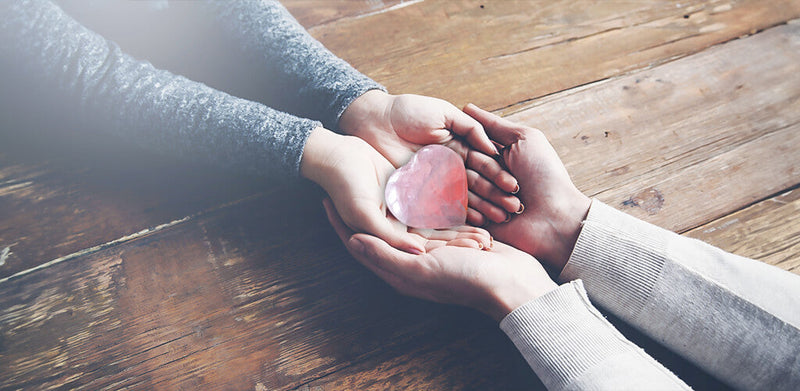
Buy the pair. Give one, keep one, wear yours. That reframes it entirely: not a thing you are asking them to believe in, but a thing you are doing together. It is also the honest version of what a couple bracelet is for.
For anniversaries and proposals, moonstone and garnet are the traditional picks, moonstone for the beginning of something and garnet for the continuing of it. More on the romance side specifically in crystals for love and romance in an existing relationship.
Looking after them
Rose quartz and amethyst are both quartz, both a hard 7, and both will slowly lose colour in sustained direct sunlight. Keep them off the sunny windowsill and they will outlast you.
Rhodonite and moonstone are softer, around 5.5 to 6.5, and moonstone in particular has cleavage that makes it chip if knocked hard. Neither wants to share a bag with keys. Amazonite is similar. Warm water, a soft cloth, dried properly, is the whole of the care routine for all six.
If you cleanse them, doing it together on the full moon is a pleasant enough small ritual and costs nothing. A windowsill overnight, both pieces side by side.
The uses described here reflect traditional and cultural crystal practice. They are not medical or psychological claims, and they are not a substitute for professional support. Crystals are a companion to the work of a relationship, not a replacement for counselling where that is needed.
Sources
Written by Chetena Sharma. Reviewed by the Solacely editorial team.
Frequently asked questions
About the author


Written by Chetna Sharma, crystal healing practitioner and co-founder of Solacely. Chetna has worked with healing crystals for over a decade and curates Solacely's protective stone collection.