Rose quartz is the soft pink variety of quartz that crystal tradition treats as the stone of the heart, used to support emotional healing, self-love, and gentler relationships. In practice, you keep a piece close, hold it during quiet reflection, and let it act as a physical reminder to slow down and be kinder to yourself. It is a calming ritual and a beautiful object, not a medicine, and that honest framing is exactly where its value sits.
Key Takeaways
- Rose quartz is a pink quartz traditionally linked with love, compassion, and emotional healing, and it is associated with the heart chakra.
- The realistic benefit is a calming, intention-setting ritual: holding a stone during slow breathing or reflection gives the mind something steady to rest on.
- Common ways to use it are wearing it, holding it in meditation, placing it by the bed, or keeping a piece on a desk as a self-love cue.
- Rose quartz is quartz, so it rates 7 on the Mohs hardness scale and is durable enough for everyday wear, though it can fade in strong sunlight.
- This is a reflective, belief-based practice, not a treatment. For grief, anxiety, or depression, work with a qualified professional and treat the stone as a gentle extra.
What is rose quartz, and why is it tied to emotional healing?
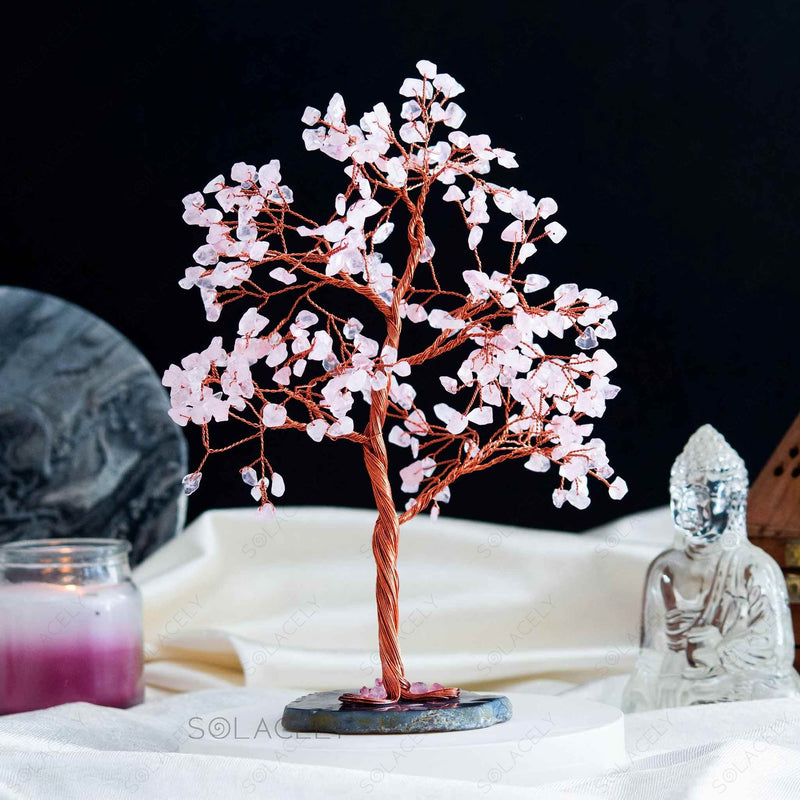
Rose quartz is a translucent-to-cloudy pink member of the quartz family, coloured by trace minerals within the stone. According to the Gemological Institute of America, quartz is one of the most common minerals on Earth and comes in many colours, with rose quartz owing its gentle pink to microscopic inclusions. That soft hue is the whole reason tradition reads it the way it does: pink is the colour we instinctively attach to warmth, tenderness, and care, so the stone became a natural symbol for the heart.
In crystal tradition, rose quartz is called the stone of unconditional love. It is paired with the heart chakra, the energy centre associated with compassion, forgiveness, and connection, both to other people and to yourself. When people talk about using rose quartz for emotional healing, they mean holding that theme in mind: softening self-criticism, easing an old hurt, or simply inviting a bit more gentleness into a hard week.
It helps to be clear about what this is. The chakra and crystal framework is a spiritual and cultural language, not a medical model, and no study has shown a stone moving energy through the body. So think of rose quartz the way you would a meaningful piece of jewellery or a candle you light to mark a quiet moment: a prompt for reflection, chosen for its beauty and its symbolism. If the wider system is new to you, our overview of opening the heart chakra sets the context.
How rose quartz is said to support emotional healing
Traditionally, rose quartz is used to work on the emotional themes the heart centre governs: self-love, grief, anxiety, and the health of close relationships. Practitioners describe it as a soft, steadying presence rather than a dramatic one, which is why it suits gentle, everyday practice more than any grand ritual.
Here is how the tradition frames its four most common uses:
| Emotional theme | How rose quartz is used | What it is really doing |
|---|---|---|
| Self-love | Held during affirmations or kept as a daily reminder | Anchors a habit of kinder self-talk |
| Grief and old hurts | Held in quiet reflection while you sit with the feeling | Gives painful emotions a calm, contained space |
| Anxiety and overwhelm | Held during slow breathing, cool and smooth in the palm | Offers a physical anchor that slows the breath |
| Relationships | Kept in a shared space or carried before a hard conversation | Sets an intention toward patience and empathy |
Notice the pattern in that last column. In every case, the stone is a focus for attention and intention. It does not change your feelings on its own; it gives you a small, tactile way to pause and choose how you want to meet them. That is a modest claim, and it is also a real and useful one.
The honest evidence: ritual, mindfulness, and what crystals cannot do
There is no scientific evidence that rose quartz, or any crystal, heals emotions through its own energy. What does have genuine support is the practice you wrap around the stone. Sitting quietly, breathing slowly, and resting your attention on one calm object is a form of focused meditation, and the U.S. National Center for Complementary and Integrative Health notes that meditation and mindfulness can help many people manage stress and support well-being.
So the useful, non-magical version of rose quartz for emotional healing goes like this: the stone is a cue and an anchor. Holding something smooth and cool in your hand pulls your attention into the present. Repeating a kind phrase while you do it turns a fleeting good intention into a small daily habit. Over weeks, those repeated calm moments can genuinely shift how you feel, not because the quartz did anything, but because you did.
Keeping that honest line matters, because it protects you from the overclaims. Rose quartz will not mend a relationship by itself, dissolve grief, or replace care for a mental-health condition. Treat any promise like that with healthy scepticism. Held as a reflective ritual, though, it earns its place, and it is completely safe. For a broader look at matching stones to intentions, see our guide to crystals for different purposes.
Signs you might reach for rose quartz
People usually turn to rose quartz at moments when the heart feels tender, guarded, or tired. These are not symptoms to diagnose; they are simply everyday emotional cues that make a soft, self-love-themed ritual feel welcome. If any of them sound familiar, the stone is a fitting companion for some quiet reflection.
- You are being hard on yourself. A run of self-criticism or feeling you are never quite enough.
- You are carrying an old hurt. A past heartbreak or disappointment that still tightens the chest when you think of it.
- You feel wound-up and anxious. A busy, racing mind that could use a moment of steadiness.
- You feel guarded. A reluctance to open up, trust, or let people close after a difficult time.
- A relationship needs patience. A stretch where you want to bring more empathy and less reactivity to the people you love.
Reading the list gently is the point. Everyone feels these things, and feeling them does not mean anything is wrong with you. They simply mark where a little tenderness would help, and rose quartz is a pleasant, tangible way to invite it in.
How to use rose quartz for emotional healing
There is no single correct method; the best way to use rose quartz is whichever one you will actually return to. The four approaches below are the most common, and they layer together well. Consistency matters far more than complexity, so pick one or two that fit your day.
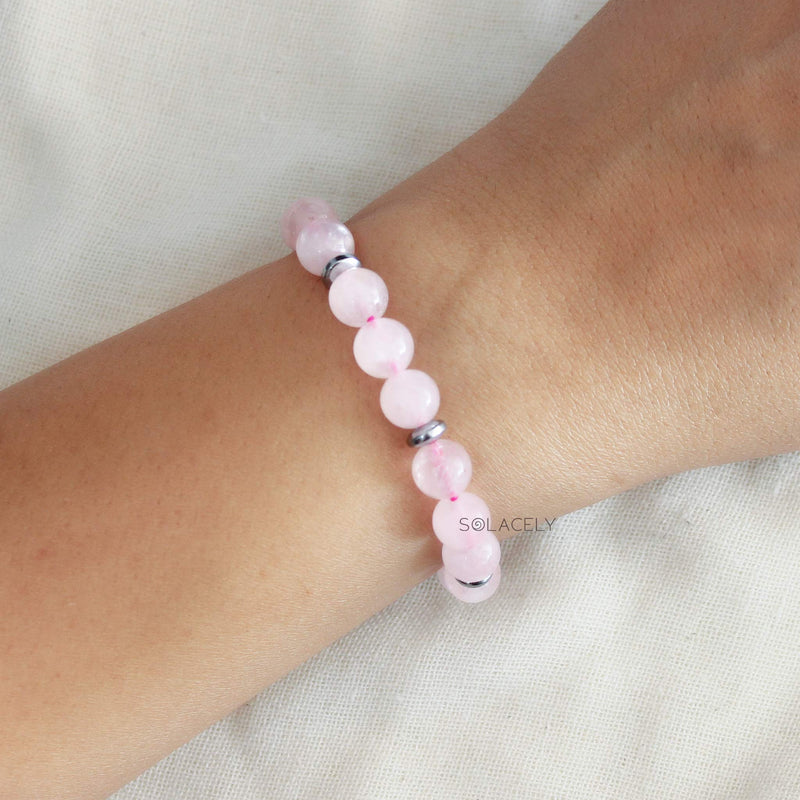
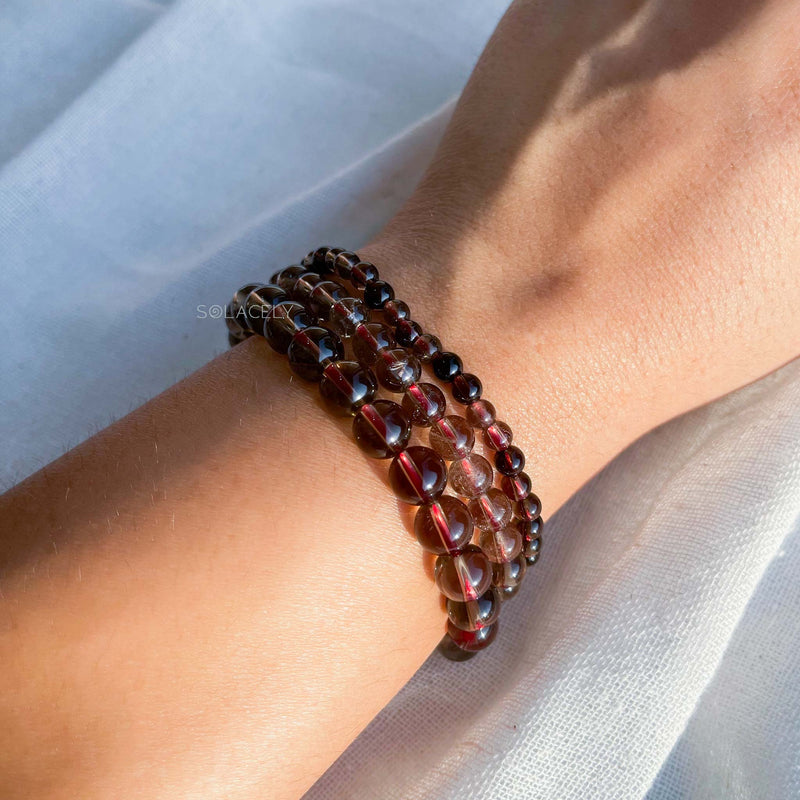
1. Wear it. A rose quartz bracelet or pendant keeps the stone against your skin and in your eyeline, so it works as an all-day reminder of the intention you set in the morning. 2. Hold it in meditation. Sit comfortably, rest the stone in your palm, and breathe slowly, letting each exhale be a little longer than the inhale. When your mind wanders, return your attention to the cool weight in your hand. 3. Place it by your bed. Keeping rose quartz on a bedside table is a traditional way to close the day on a soft note and to make it the first calming thing you see. 4. Keep a piece on your desk. A tumbled stone or a small rose quartz cluster in your workspace is a quiet cue to pause, unclench your jaw, and soften a stressful afternoon.
Whichever you choose, pair it with words. A short, present-tense affirmation, said while you hold the stone, is what turns a nice object into a practice. Lines like I am worthy of love exactly as I am or I let go of what I have been carrying work well. For a fuller set you can adapt, see our collection of heart chakra affirmations.
A simple daily rose quartz practice
A good routine is short, repeatable, and always the same, so it becomes a habit rather than a decision. Five quiet minutes with your rose quartz, done most days, will do far more for your emotional baseline than an occasional long session. Here is a simple sequence to build around.
1. Settle. Sit comfortably somewhere quiet, phone away, with the stone resting in your open palm. 2. Breathe. Take three slow breaths, letting your shoulders drop on each exhale. Feel the smooth, cool surface of the stone. 3. Set one intention. Choose a single line of kind self-talk and say it slowly, two or three times. 4. Rest. Sit for a minute or two with the words and the breath, letting the stone hold your attention. 5. Carry it. Slip the stone into a pocket, or put on your bracelet, so the morning intention travels with you into the day.
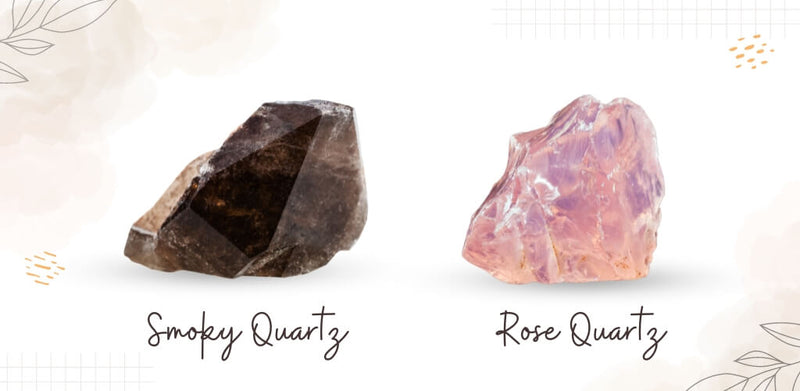
Do it at the same time each day and the ritual itself becomes a cue your body learns to read as a signal to soften. If your mind tends to race and you struggle to settle, pairing rose quartz with a grounding stone can help, which is exactly the idea behind our guide to smoky quartz and rose quartz together.
Pairing rose quartz with other stones
Rose quartz is often paired with a second stone to round out the intention, softening its pure heart focus with grounding, calm, or self-worth. The stones below are the classic companions, each chosen for how its traditional theme complements rose quartz. Keep any pairing simple; two stones with a clear purpose beat a handful with none.
| Pair with | Traditional theme | Good when you want |
|---|---|---|
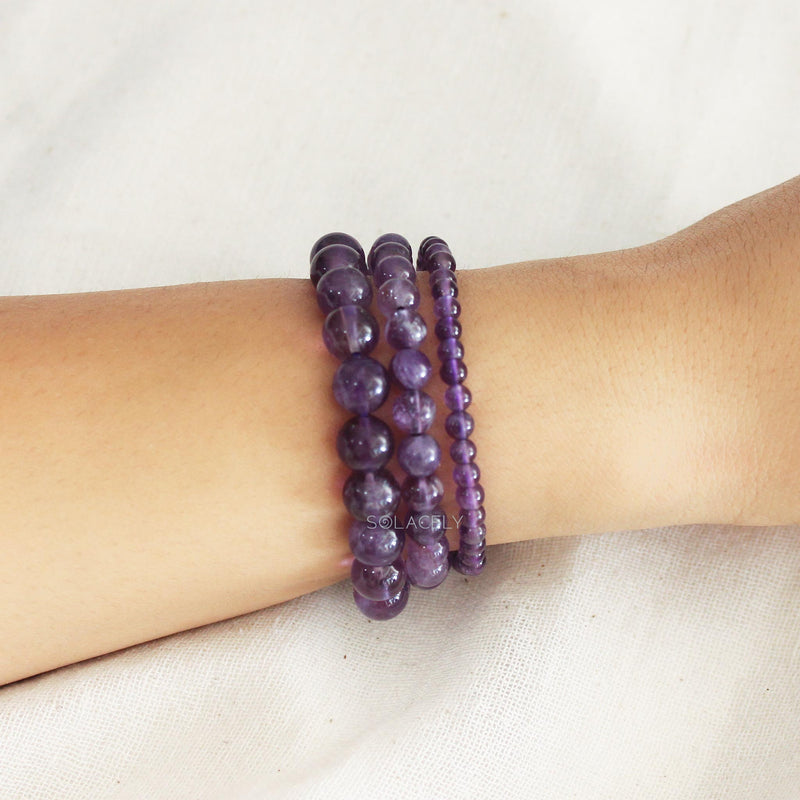
| Amethyst | Calm, clarity | To ease anxiety alongside self-love |
| Smoky quartz | Grounding, release | To feel steadier while opening the heart |
| Green aventurine | Emotional balance, growth | To pair love with gentle optimism |
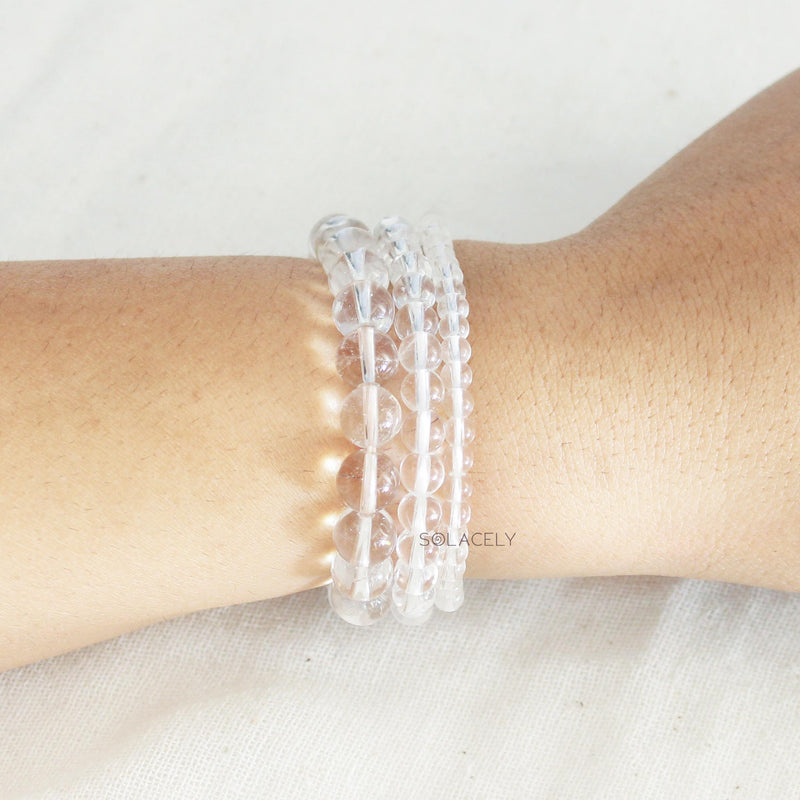
| Clear quartz | Clarity, focus | To keep your intention sharp and simple |
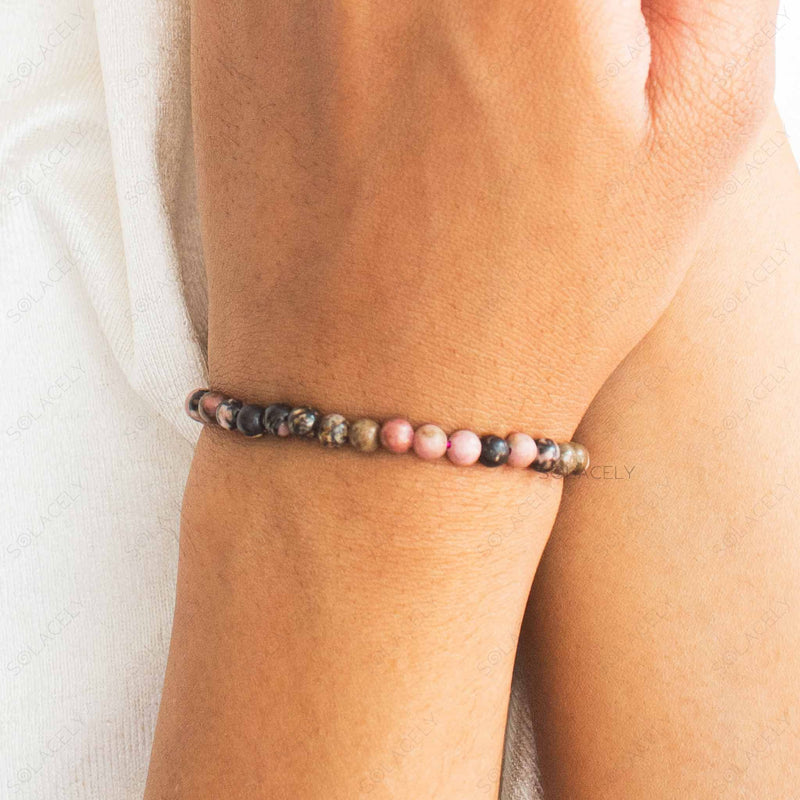
| Rhodonite | Forgiveness, healing old wounds | To work specifically on the past |
To use a pair, simply hold both stones together during your practice, or keep them side by side where you will see them. Green aventurine in particular sits well beside rose quartz as a heart-centred combination, and our note on green aventurine and sodalite covers its calming, balancing associations in more depth. If you would rather work with a full set of heart stones, our guide to crystals for the heart chakra gathers them in one place.
Choosing and caring for your rose quartz
Rose quartz is affordable, widely available, and easy to live with, so the main thing is picking a piece whose colour and shape you genuinely like, since you will want to keep it close. Colour ranges from a barely-there blush to a deeper, more saturated pink, and tumbled stones, raw chunks, spheres, and jewellery all work equally well for emotional practice. Trust the piece you are drawn to.
Caring for it is straightforward. According to Britannica, quartz rates 7 on the Mohs hardness scale, which makes rose quartz tough enough for daily wear and handling without scratching easily. Its one real weakness is light: prolonged, strong sunlight can fade the pink over time, so charge or store it in gentle, indirect light rather than a hot windowsill. Wipe it with a soft cloth, and if you like to cleanse it as part of your ritual, cool running water or a night in soft moonlight are the traditional, stone-safe choices.
Handled kindly, a rose quartz piece lasts a lifetime and becomes more personal the longer you use it. That endurance is part of the appeal, and it is why rose quartz makes such a warm, meaningful gift for someone going through a tender chapter, or simply for yourself.
Sources
- Gemological Institute of America, quartz description and varieties. gia.edu
- Encyclopaedia Britannica, quartz, mineral properties and Mohs hardness. britannica.com
- National Center for Complementary and Integrative Health (NIH), meditation and mindfulness. nccih.nih.gov
Frequently asked questions
About the author


Written by Chetna Sharma, crystal healing practitioner and co-founder of Solacely. Chetna has worked with healing crystals for over a decade and curates Solacely's protective stone collection.