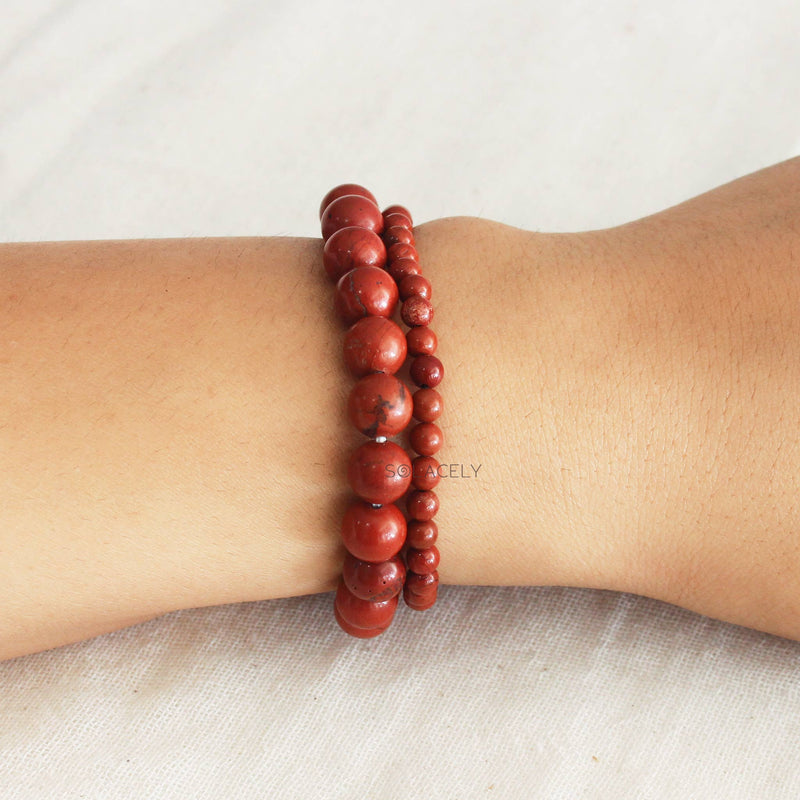
Red jasper is an opaque, deep brick-red chalcedony traditionally kept for grounding, stamina and steady courage. It is the stone people reach for when they need to keep going rather than to start, and its durability makes it one of the most practical stones to wear every day.
Key takeaways
- Red jasper is an opaque chalcedony, coloured deep red by iron, and part of the wide quartz family.
- Traditionally kept for grounding, endurance and steady courage rather than sudden energy.
- It sits at around 7 on the Mohs scale, hard enough for rings, bracelets and daily wear.
- Long associated with the root chakra, which is why it is described as a settling, anchoring stone.
- Its opacity means the colour is rich and even, so it takes a beautiful polish.
What red jasper is
Jasper is an opaque variety of chalcedony, which is quartz made of crystals too fine to see individually. What makes jasper distinct within that family is the sheer quantity of other minerals caught up in it, and in red jasper that means iron, which gives the stone its warm brick to deep blood red.
Because it is opaque rather than translucent, red jasper reads as solid and earthy in a way that most quartz does not. That visual weight is part of why it has always been used for objects meant to last: seals, amulets, carved handles and beads have been made from it for thousands of years.
It is also generously available in good quality, which keeps it affordable. A red jasper piece is one of the few genuinely hard-wearing stones you can buy in a large size without much cost, and that practicality is a real part of its appeal.
Red jasper meaning in crystal tradition
Red jasper is the endurance stone. Where carnelian is kept for the spark of beginning and garnet for warmth and devotion, red jasper is associated with the long middle of things: staying with a task, holding steady under pressure, and not being knocked off course.
It has been called the nurturer, a name that captures its character better than most crystal epithets. The support it is associated with is quiet and unglamorous, the sort that keeps somebody going through a demanding stretch rather than lifting them out of it.
In older practice it was a warrior's stone, carried for courage in the field and set into shields and hilts. That association carried forward into its modern reputation for steady nerve, which is why people reach for it before something they expect to be difficult rather than something they expect to enjoy.
Traditional properties and benefits
The associations gathered around red jasper are consistent and they cluster tightly around stamina and grounding.
- Grounding. Long linked to the root chakra and to feeling settled in the body.
- Endurance. Kept for long projects, demanding roles and sustained physical effort.
- Steady courage. The quiet kind, for situations that require holding rather than charging.
- Focus under pressure. Traditionally carried when calm is needed in a difficult moment.
- Protection. Its long history as a warrior's stone gives it a protective reputation too.
These are traditional associations rather than clinical effects, kept the way people have always kept them: as a physical reminder of an intention already held. For the wider grounding group, crystals for strength covers what sits alongside it.
How red jasper is worn and used
Its durability opens up every format, which is unusual and genuinely useful. Red jasper is one of the few stones you can put in a ring without thinking twice about it.
| Format | Suits | Note |
|---|---|---|
| Beaded bracelet | Everyday wear | The most common format, and very forgiving |
| Ring | Daily wear | At 7 on the Mohs scale it takes knocks well |
| Pendant | Keeping it in view | Shows the even colour and polish beautifully |
| Palm stone | Grounding practice | Its weight and smoothness suit holding |
| Pocket stone | Carrying through a hard day | Hard enough to share a pocket with keys |
The most common practice is simply to wear it through a demanding period and take it off when that period ends, which gives the stone a defined role rather than making it permanent scenery.
Choosing a red jasper piece
Look for even, saturated colour first. Good red jasper has a deep brick red that is consistent across the piece, and the best material has a slightly warm, earthy tone rather than a flat brownish one.
Then look at the polish. Because jasper is opaque and fine grained it takes an exceptionally smooth finish, so a well polished piece feels almost soft to the touch. Run a thumb across it: any grittiness suggests a rushed finish rather than the material itself.
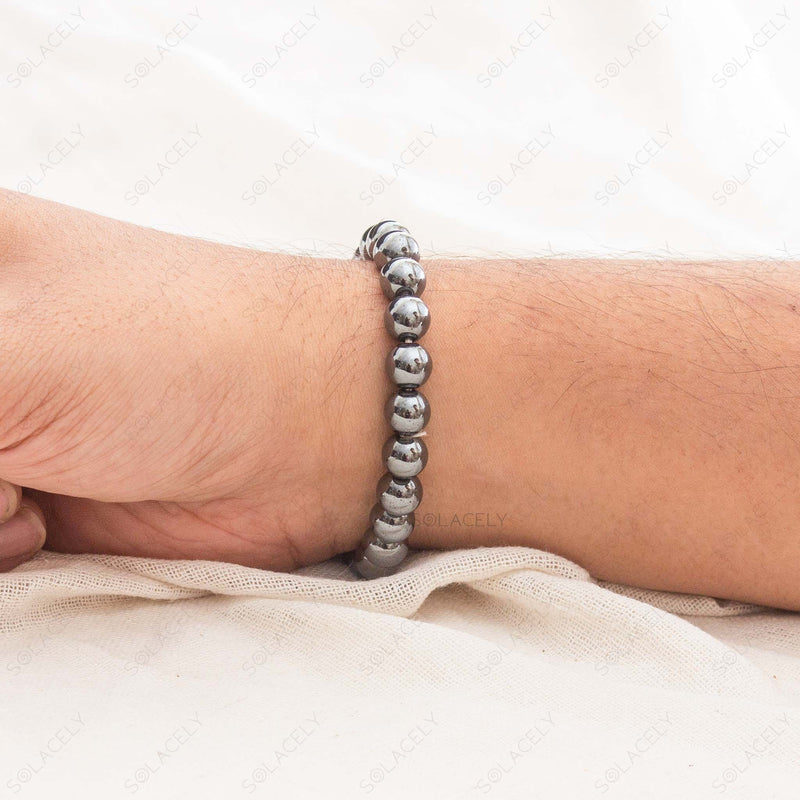
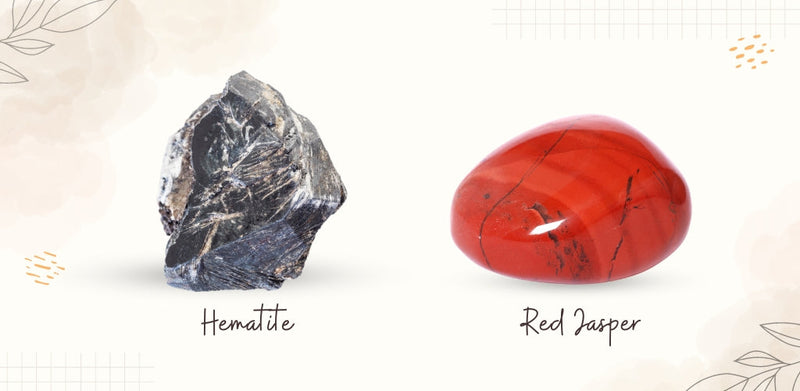
Some red jasper carries interesting patterning, with darker veining or paler inclusions running through it. Whether you want that or prefer a plain, even stone is entirely personal, and both are properly red jasper. If you like the pairing idea, hematite and red jasper covers a natural grounding combination.
Caring for red jasper
Red jasper is one of the easiest stones to look after, which suits a stone kept for endurance. Warm water, mild soap, a soft brush and a full dry is all it needs, and it tolerates that treatment indefinitely.
It is not especially light sensitive, unlike amethyst or citrine, so a shelf near a window will not harm it. It is also hard enough that it will not be marked by most of the rest of a collection, though it will mark softer stones such as malachite or calcite if they share a pouch.
For energetic cleansing it takes almost any method comfortably. Moonlight, sound, a rest on selenite, or a brief spell in daylight all suit it. If you would like the warmer, more forward relative of this stone, carnelian is the natural next step, and crystals for courage covers the broader set.
Red jasper through history
Jasper is one of the oldest worked stones there is, and red jasper in particular turns up across the ancient world. Egyptian craftsmen carved it into amulets, and it was used for seals and signet stones because its fine, even grain takes a crisp engraved line and holds it.
It appears in the classical world as a stone of the soldier and the traveller, set into rings and carried as a token for safe return. That practical, protective use is the direct ancestor of its modern association with steady nerve, and it is one of the better documented continuities in crystal tradition.
The name itself is old, tracing back through Latin and Greek to older Near Eastern words for a spotted or speckled stone. That description fits the material well, since much jasper carries patterning from the minerals caught up in it as it formed.
Red jasper compared with its neighbours
Three warm red stones come up together constantly, and it helps to know which does what, because they are genuinely kept for different things.
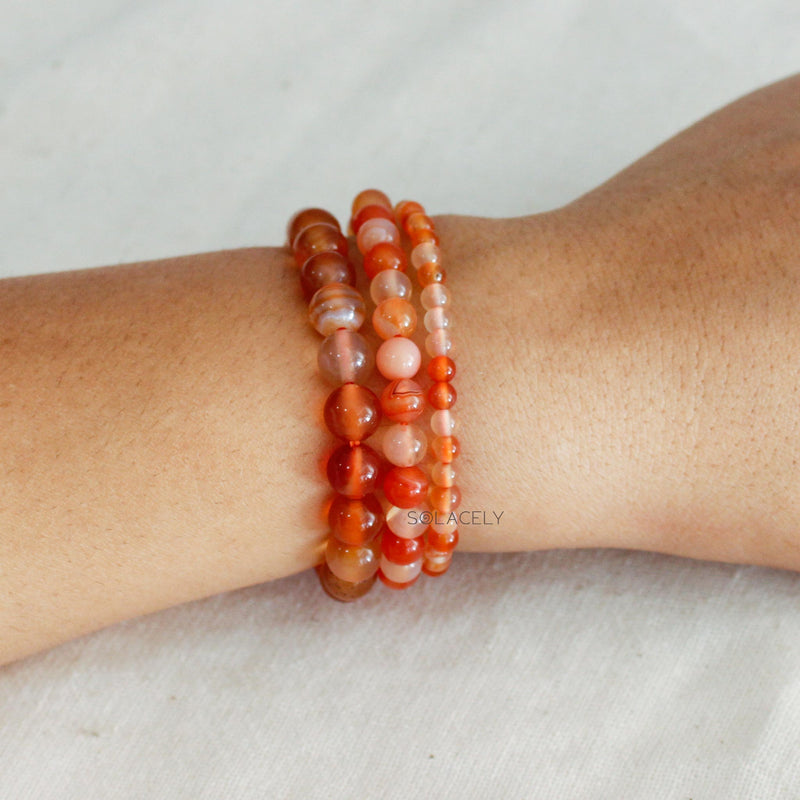
Carnelian is the starter. It is translucent, brighter in tone, and traditionally kept for the spark of beginning something, so people reach for it when the difficulty is getting going at all. Garnet is the warmth: deeper, associated with devotion and commitment, and the one most often given as a gift.
Red jasper is the stayer. It is opaque, earthier and heavier looking than either, and it is kept for the part of the effort that nobody finds interesting. If you already own carnelian and find it slightly too lively, red jasper is very likely the stone you actually wanted.
The properties described here reflect traditional and cultural belief around crystals. They are offered for reflection and wellbeing and are not medical advice, a diagnosis, or a treatment for any condition. If you are managing a health concern, please speak with a qualified healthcare professional. Keep small stones away from young children, and never place crystals in drinking water.
Sources
Written by Chetena Sharma. Reviewed by the Solacely editorial team.
Frequently asked questions
About the author


Written by Chetna Sharma, crystal healing practitioner and co-founder of Solacely. Chetna has worked with healing crystals for over a decade and curates Solacely's protective stone collection.