Black tourmaline is kept for boundaries, grounding and steadiness in draining environments. Its mineral name is schorl, it sits at 7 to 7.5 on the Mohs scale, and it is the most forgiving stone a beginner can own: affordable, tough, and safe with every common cleansing method.
Key takeaways
- Traditionally kept for boundaries, grounding, steadiness in demanding environments.
- Mineral name is schorl, the iron rich member of the tourmaline family and by far the most abundant.
- Tourmaline is pyroelectric, developing a charge as its temperature shifts, which is part of its protective reputation.
- Hardness 7 to 7.5, non porous, and safe with water, sound, smoke and moonlight.
- Three placements cover almost all use: worn, at the threshold, or on a desk.
- Consistency beats quantity. One stone used daily beats six in a drawer.
What black tourmaline is used for
The tradition around black tourmaline is unusually consistent, and it is always about what does not get through. Not about attracting, not about opening. It is the doorman stone.
That framing explains who reaches for it. People in open plan offices. Nurses, teachers and carers. Anyone who arrives home flat after a day of absorbing other people. Anyone about to spend a weekend with relatives they find hard. The consistent thread is high contact with other people's states, and the wish to be less permeable to it.
Note what is absent from that list. Black tourmaline is not the stone people keep for grief, love, creativity or joy. A stone with a narrow tradition is more useful than one that claims everything, and this one knows its range. Our fuller treatment is in black tourmaline meaning and properties.
What black tourmaline actually is
Tourmaline is not a single mineral. It is a family of complex boron silicate minerals that share a crystal structure while varying widely in chemistry, which is why tourmaline occurs in more colours than almost any other gem. Schorl is the iron rich black member, and it makes up the large majority of all tourmaline ever found.
That abundance is the whole reason black tourmaline is affordable. Pink and green tourmaline of gem quality is genuinely rare and priced accordingly. Schorl is everywhere, which is excellent news if what you want is a working stone rather than an investment.
| Mineral name | Schorl |
|---|---|
| Family | Tourmaline, a boron silicate group |
| Mohs hardness | 7 to 7.5 |
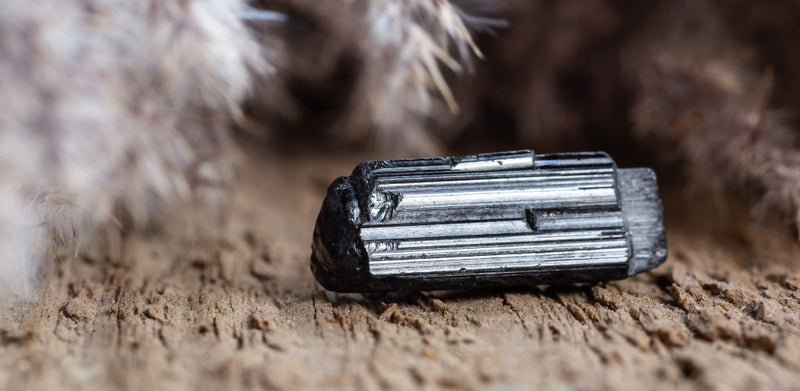
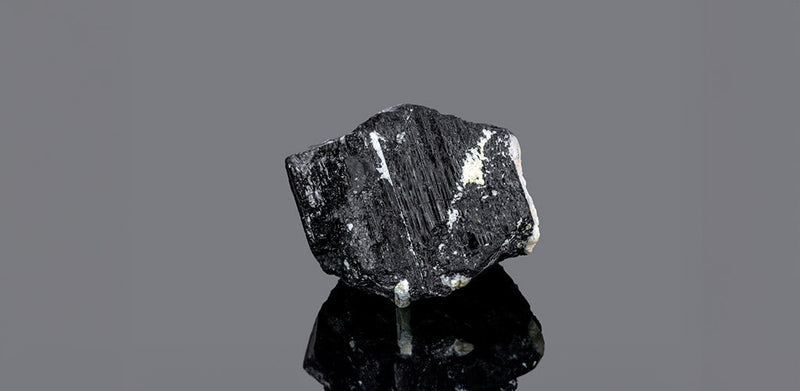
| Appearance | Opaque black, deeply striated prisms |
| Notable property | Pyroelectric and piezoelectric |
| Care | Water safe, avoid ultrasonic cleaning |
The ash puller
Tourmaline has a genuinely unusual physical quality, and it comes with a good story attached.
The stone is pyroelectric, meaning it develops a small electrical charge as its temperature changes, and piezoelectric, meaning it does the same under pressure. Dutch traders in the eighteenth century noticed that a warmed tourmaline would draw ash and dust toward itself across a table, and nicknamed it the ash puller. The effect is real and it is still demonstrated in mineralogy classes today.
That quality is part of how tourmaline gathered its long reputation as a stone that holds a line, and it is why black tourmaline is the piece people keep beside a desk, a monitor or a router when screens are what leaves them drained.
Three ways to use it
Pick one and stay with it. The mistake most people make is buying several pieces and using none of them consistently.
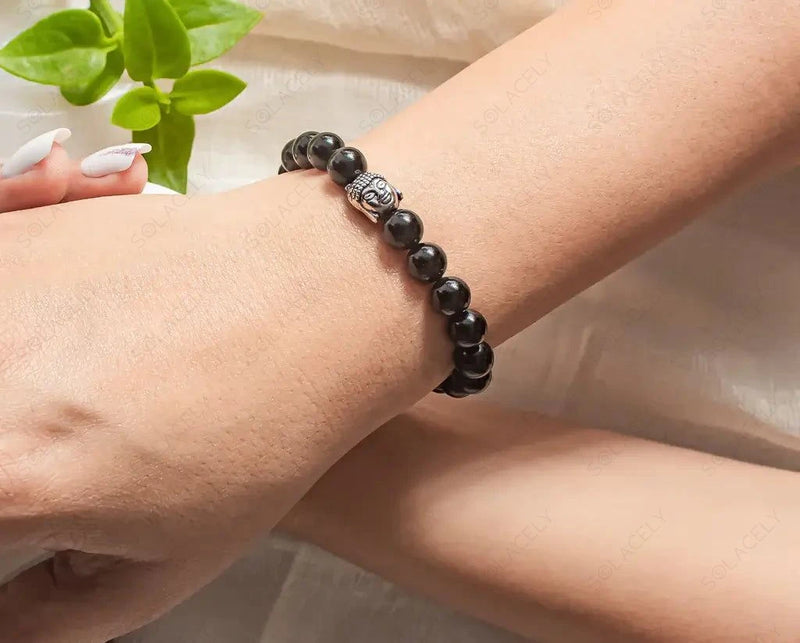
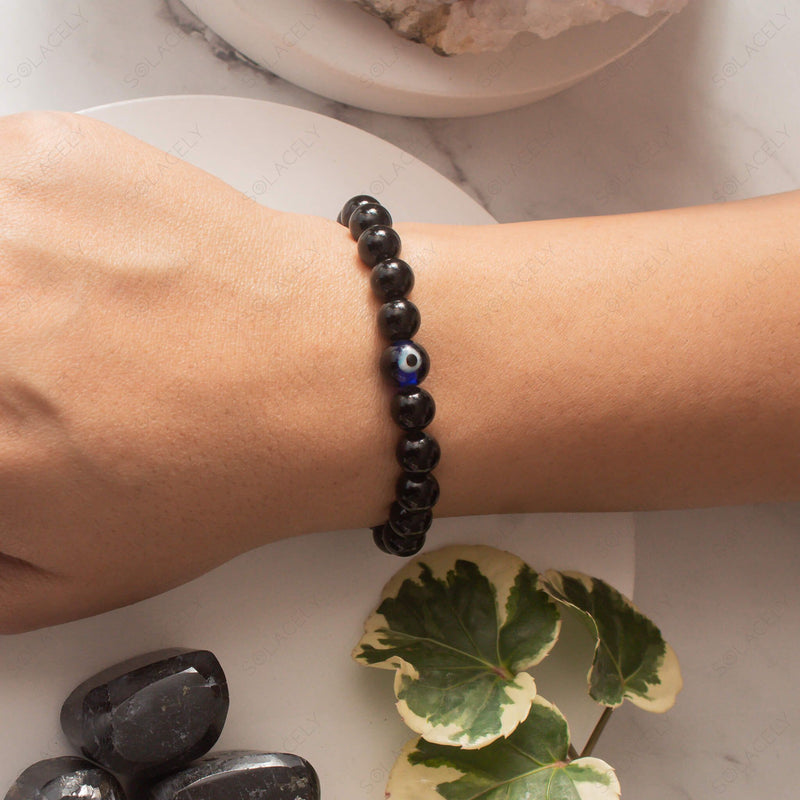
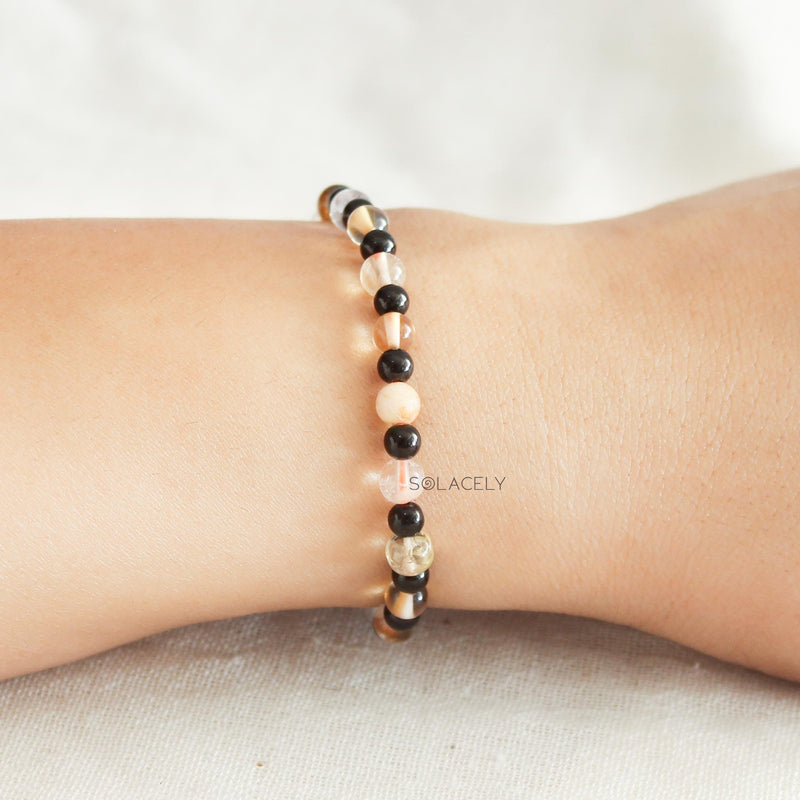
- Worn. A bracelet gives constant contact and needs no remembering. Best if the concern is general rather than tied to a place.
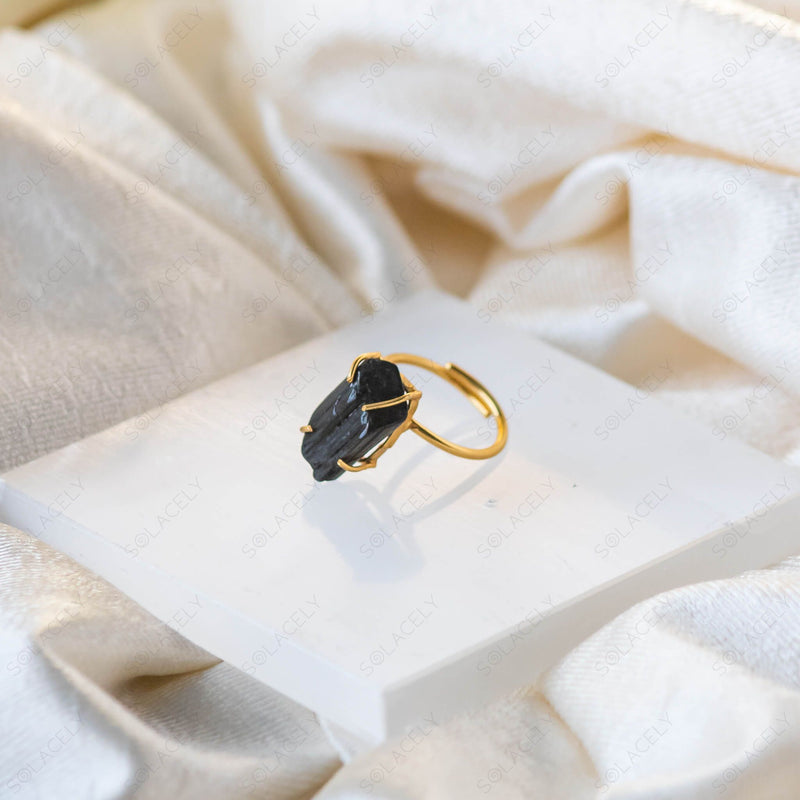
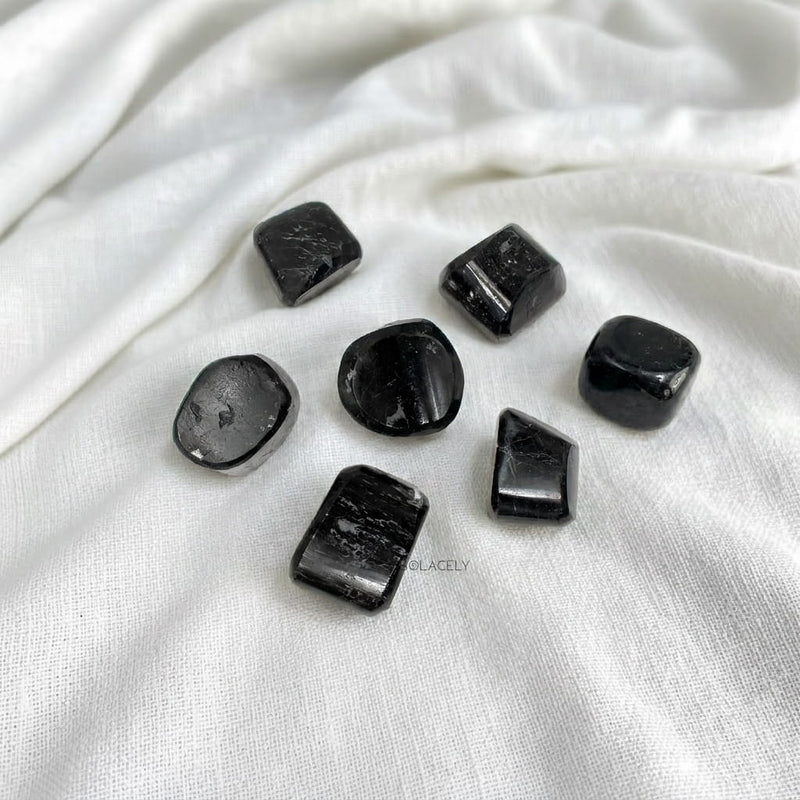
- At the threshold. A raw piece or tumble by the front door. The oldest placement across traditions, and the one most people start with at home.
- On a desk. Positioned between you and whatever the difficulty is. In shared offices this is the most common arrangement, and it doubles as a visible marker of your own space.
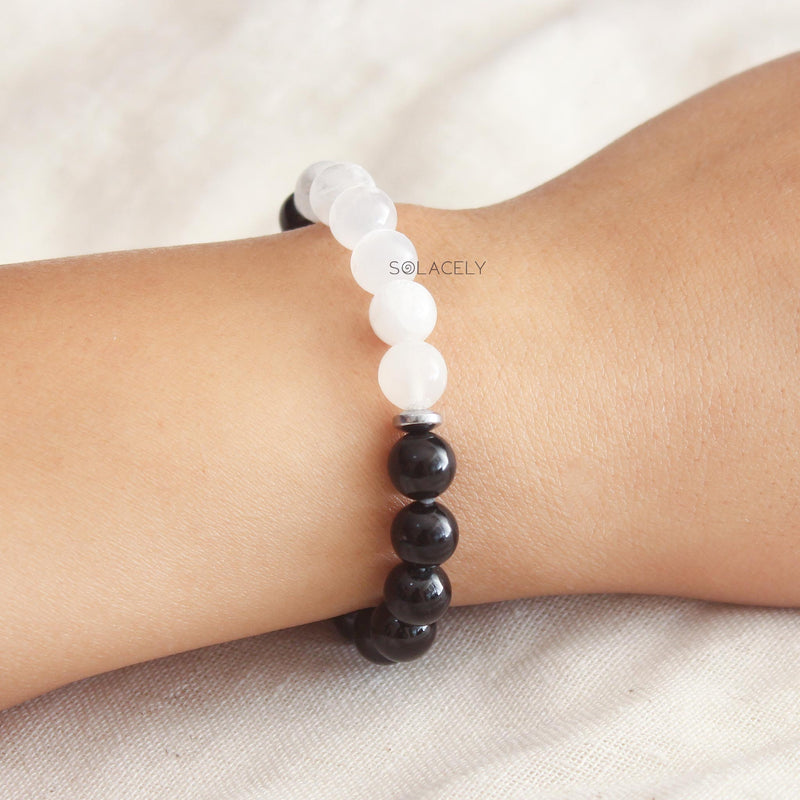
Combinations are covered in black tourmaline crystal combinations. Selenite is the classic partner, and smoky quartz reinforces the grounding side, which we cover in smoky quartz and black tourmaline.
Care and cleansing
Black tourmaline is one of the least demanding stones you can own. It is hard, non porous and chemically stable, so water, sound, smoke and moonlight are all safe. Warm soapy water and a soft brush handle everyday cleaning.
Two small cautions. Avoid ultrasonic cleaners, since tourmaline crystals have deep striations along their length and can be brittle across them. And handle raw specimens gently for the same reason: a knock across the grain can split a prism that would have shrugged off a knock along it.
Who it suits
It suits anyone who wants a first crystal that will not disappoint them. It is affordable enough to be a low risk experiment, tough enough to survive being carried around, and its tradition is specific enough that you can tell whether it is doing something for you.
It suits less well someone looking for warmth, lift or emotional opening. This is a steadying stone by design, and pairing it with something softer is the usual answer. For the negativity focused practice specifically, see black tourmaline for negativity, and for the confidence side, black tourmaline for self confidence.
The uses described here reflect traditional and cultural crystal practice. They are not medical claims and are not a substitute for professional healthcare or advice.
Sources
Written by Chetena Sharma. Reviewed by the Solacely editorial team.
Frequently asked questions
About the author


Written by Chetna Sharma, crystal healing practitioner and co-founder of Solacely. Chetna has worked with healing crystals for over a decade and curates Solacely's protective stone collection.