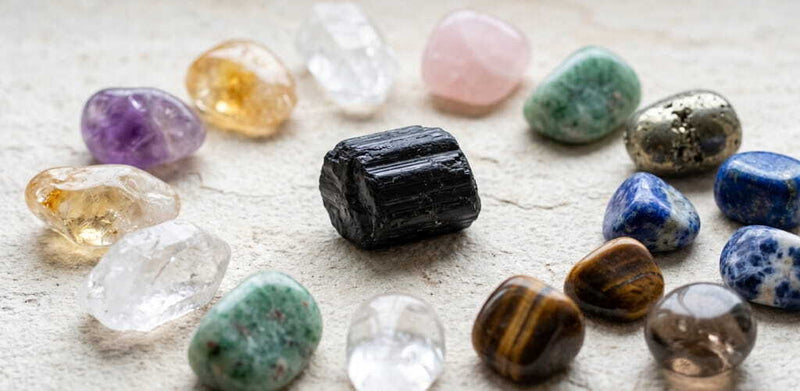
Seven stones carry almost all of protective practice: black tourmaline, black obsidian, smoky quartz, hematite, amethyst, labradorite and selenite. Protection is really six different jobs rather than one, and once you know which job you are doing, the stone choice follows almost automatically.
Key takeaways
- Black tourmaline is the default. If you only ever own one protective stone, it is this one.
- Protection is six jobs, not one: home, wellbeing, emotional, psychic, environmental and travel. Match the stone to the job.
- Start with three or four stones, not seven. Over-collecting before the routine settles is the most common early mistake.
- Selenite is on the list as the passive clearer that keeps the others fresh, rather than as a protective stone in its own right.
- Skip magnetic hematite jewellery. Many pieces sold that way carry rare earth magnets, which are genuinely dangerous if swallowed. Ordinary hematite is the one you want.
- Everything described here is traditional belief and cultural practice.
What does protection mean in crystal practice?
The word does a lot of quiet work. It rarely means physical security, and in practice it covers a few more specific ideas that are worth separating before you buy anything.
The first is boundary marking, a felt line between inside and outside, work and rest, self and everyone else. Almost every tradition puts a physical object at a threshold to do that job, whether that is a mezuzah, holy water, salt or rangoli, and a protective stone sits in the same slot. The second is energy hygiene, the idea that rooms and bodies accumulate residue from arguments, illness and long weeks, and that certain stones take that on. The third is simply a visible signal to the household that this is a deliberate, cared for space.
The fourth is the one people describe most, which is the steadying effect of the ritual itself. Placing a stone, cleansing it, acknowledging it on the way past. That repetition is where practitioners say the practice lives, and it is why the arrangements below are built around moments rather than quantities.
The seven traditional stones
Each has a role and a placement, and they are not interchangeable.
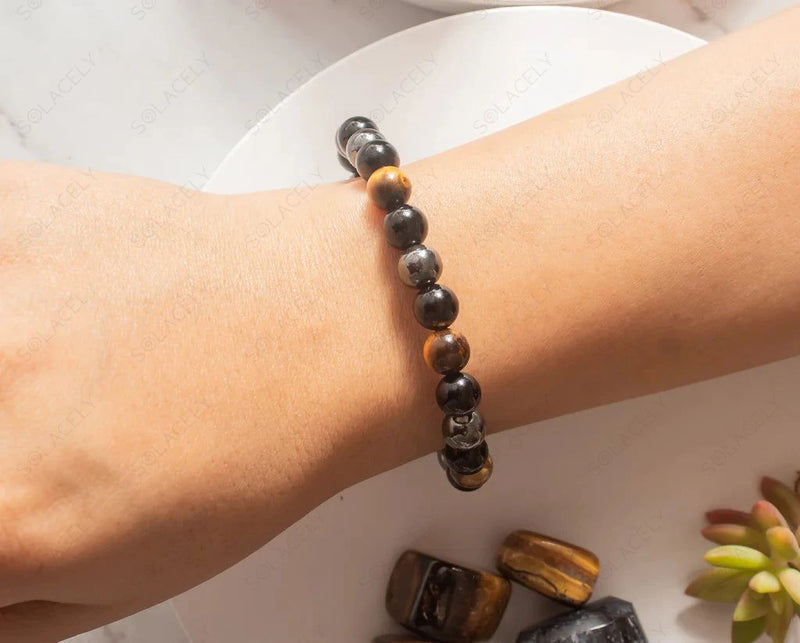
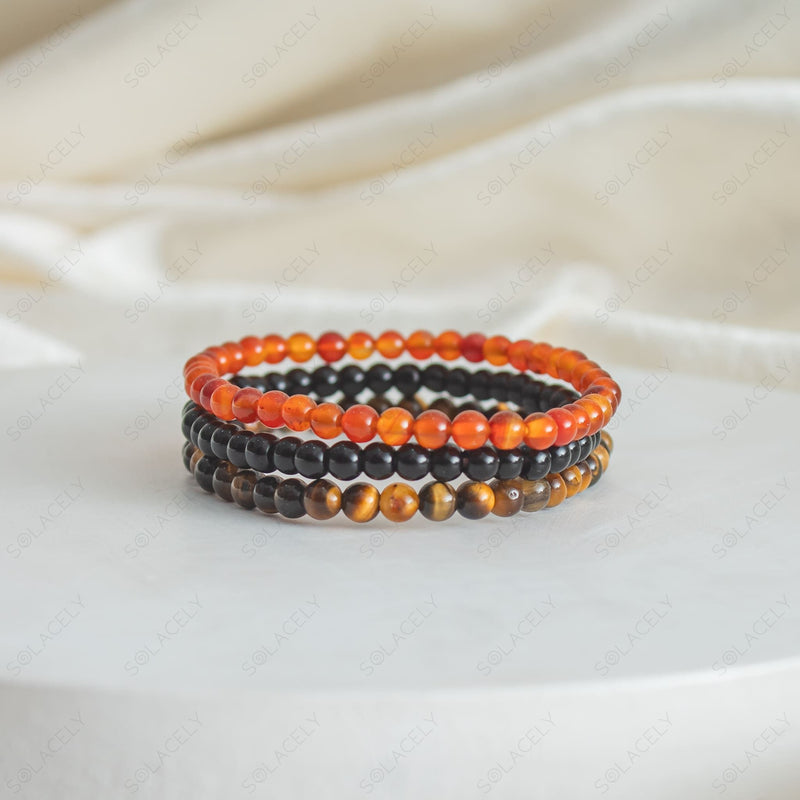
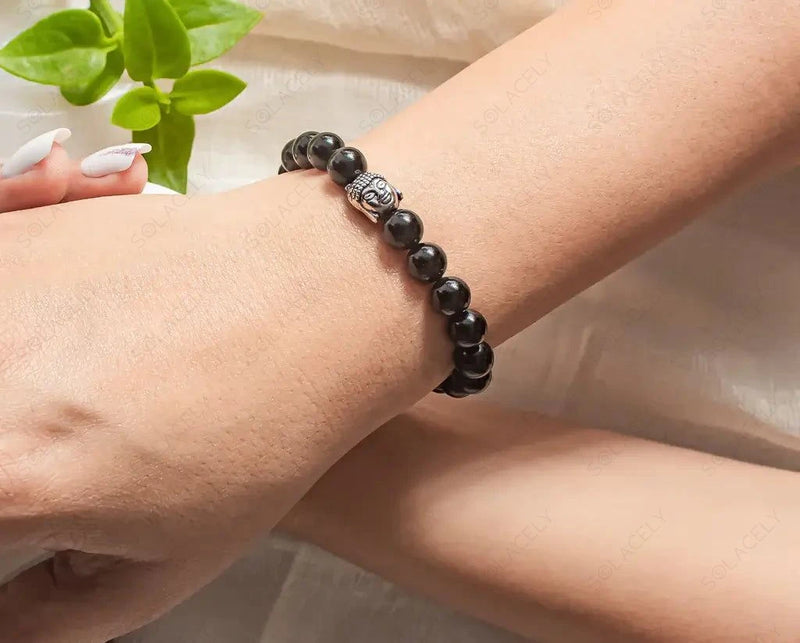
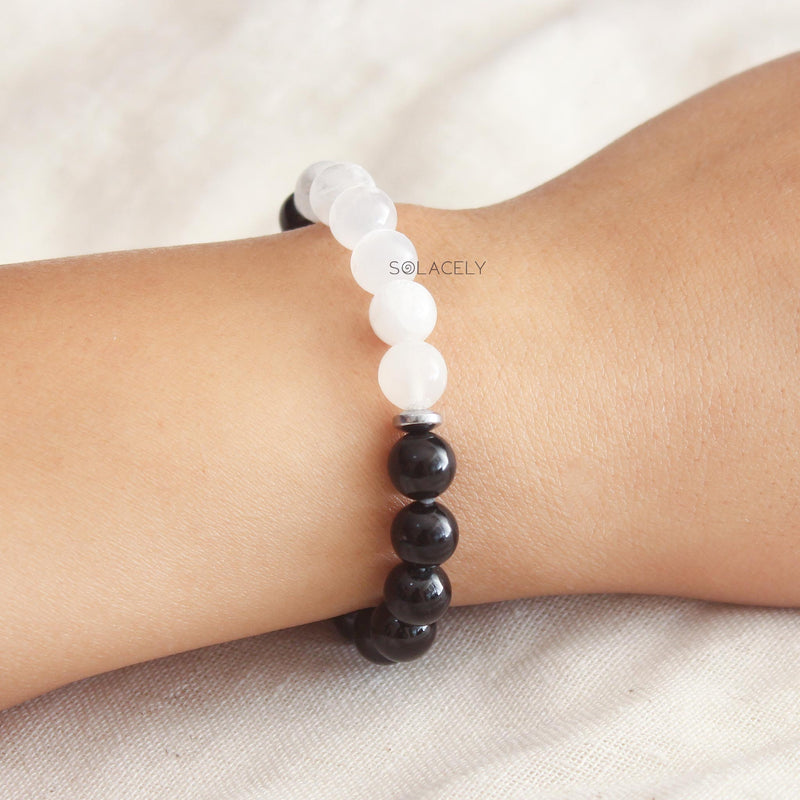
- Black tourmaline. The default. Associated with absorbing and grounding whatever a room is carrying. Two tumbles either side of the front door is the classic placement, with a desk or bedside as the secondary. Our black tourmaline guide covers it in full. Our black tourmaline bracelet is strung for daily wear.
- Black obsidian. Volcanic glass, reflective and sharp, kept for boundary work that needs deliberateness rather than steady absorption. Reserve it for one specific room you want marked.
- Smoky quartz. The quartz family grounding stone, used where tourmaline feels too heavy. Steady and low key, which suits shared rooms and studies.
- Hematite. Iron oxide, dense and cool in the hand. The traditional choice for a household going through a transition, a new baby, a job change, a recent loss.
- Amethyst. The one stone here that is not dark, kept for spiritual and sleep protection rather than environmental work. The standard bedside piece.
- Labradorite. The iridescent feldspar associated with reflecting rather than absorbing, which is why it is the stone recommended to therapists, nurses and teachers.
- Selenite. Technically a clearing tool rather than a protective stone, but it earns its place because the tradition pairs it with every other stone on this list.
The six kinds of protection
Knowing which one you are after is most of the work.
| What you want protected | First choice | Second choice |
|---|---|---|
| Home and threshold | Black tourmaline | Black obsidian, selenite |
| Wellbeing and rest | Amethyst | Smoky quartz |
| Emotional, in shared rooms | Smoky quartz | Hematite, rose quartz |
| Psychic and empath | Labradorite | Black tourmaline, amethyst |
| Around screens | Black tourmaline | Smoky quartz |
| Travel | Black tourmaline, carried | Moonstone, aquamarine |
Home and threshold is where most people start, and two tourmalines at the door with a selenite nearby is the whole kit. Our home protection guide covers the weekly threshold ritual.
Emotional protection is the job of settling a room after a rough patch. Smoky quartz on a coffee table is the usual placement, or a hematite in a small dish in the kitchen for households where the tension shows up over meals.
Psychic and empath work is specific enough to have its own practice, built on labradorite for reflecting and tourmaline for grounding. Our psychic protection guide covers the empath protocol and dreamwork.
Around screens, black tourmaline is the stone people keep beside a desk, a router or a television when the day has been all notifications and open tabs. Tourmaline is genuinely pyroelectric, developing a charge as its temperature shifts, and that unusual property is part of why it picked up such an active reputation. Behind the monitor is the classic placement, and catching sight of it is a fair prompt to get up and stretch.
Travel is the oldest use of all. A tourmaline in a bag is the everyday version, and moonstone is the traditional alternative for night journeys. Keep them in a pocket rather than checked luggage, since carrying is part of the practice.
How to start, without over-collecting
Do not buy seven stones at once. Pick one of these two and add only when a specific need turns up.
The home starter. Two tumbled black tourmaline at the entrance, one small selenite wand on a high dry shelf, one tumbled amethyst at the bedside. Four stones, cleansed weekly, paired with a short threshold ritual.
The carry starter. One tumbled black tourmaline in a pocket, one labradorite pendant or pebble worn through the working day, one small amethyst at the bedside. Three stones, cleansed daily for the two you carry. For something you can keep on you, a black tourmaline bracelet is the simplest place to start.
Both work. The home version suits people whose concern is the space, and the carry version suits people whose concern is other people. If your interest runs towards fortune as well as boundaries, our protection and good luck guide covers the stones that sit at the intersection.
How do you cleanse protective stones?
These are the pieces the tradition treats as working hardest, so they get refreshed more often than anything else you own. Weekly for anything in a fixed placement, daily for anything carried, and the same evening after an argument or a difficult visitor.
| Method | Safe for | Avoid for |
|---|---|---|
| Moonlight overnight | All seven | Nothing |
| Sound, bell or bowl | All seven | Nothing |
| Rest on a selenite plate | All seven | Selenite itself, which needs no clearing |
| Cool running water | Tourmaline, smoky quartz, amethyst | Selenite, hematite |
| Brief sun, under an hour | Hematite, black obsidian | Amethyst and smoky quartz, which pale |
Two care notes worth keeping. Hematite dislikes standing water and can mark around drill holes, so it takes a dry wipe rather than a rinse. And if you keep pyrite alongside these, which many people do for the confidence side of things, handle it dry, keep it on a shelf rather than a wrist, and keep it out of reach of children and pets, since the International Gem Society rates it high on its gemstone toxicity table.
A few safety points worth knowing
None of these are reasons to avoid the practice. They are the things that keep it comfortable.
Skip magnetic hematite jewellery. A good deal of what is sold under that name contains rare earth magnets rather than plain hematite, and swallowed magnets can cause serious internal injury. Ordinary non-magnetic hematite is the one to use, and magnetic products should stay out of any home with small children or pets.
Keep raw black obsidian out of reach. It is volcanic glass and it chips into genuinely sharp shards. Tumbled pieces are the sensible format anywhere a child or an animal might reach.
Any tumbled stone is a choking size for a child under three. Threshold placements at floor level are the ones to rethink in a home with a toddler. A shelf works just as well.
Keep selenite out of the bathroom. It is gypsum, it is slightly soluble, and sustained humidity will take the polish off it long before you notice.
The properties described here reflect traditional and cultural belief around crystals. They are offered for reflection and wellbeing and are not medical advice, a diagnosis, or a treatment for any condition, and they sit alongside the practical things every household needs, including locks, alarms and professional care. If you are managing a health concern, please speak with a GP or a qualified practitioner. Keep pyrite away from children and pets and handle it dry, keep small tumbled stones away from children under three, avoid magnetic hematite jewellery, and never place crystals in drinking water.
Sources
Written by Chetena Sharma. Reviewed by the Solacely editorial team.
Frequently asked questions
About the author


Written by Chetna Sharma, crystal healing practitioner and co-founder of Solacely. Chetna has worked with healing crystals for over a decade and curates Solacely's protective stone collection.