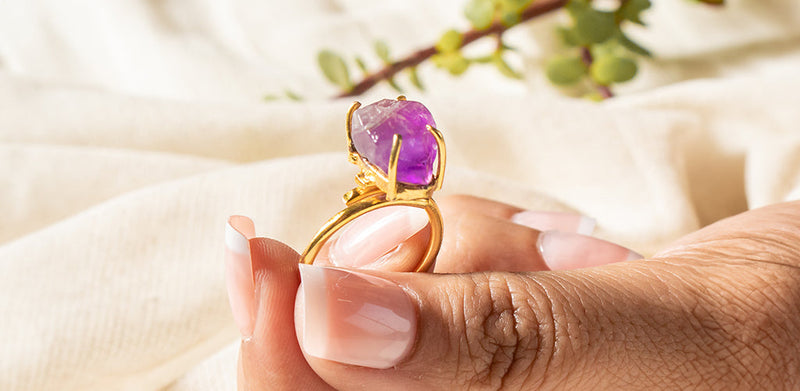
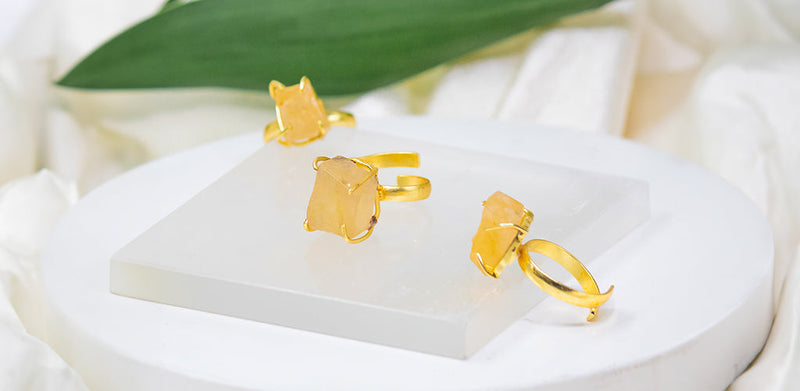
The best crystals for rings are the hard ones: quartz varieties such as amethyst and citrine at 7 on the Mohs scale, plus garnet, tourmaline, aquamarine, spinel, ruby and sapphire. Rings take more abuse than any other jewellery, so hardness and cleavage matter more than colour or meaning.
Key takeaways
- A ring stone should sit at Mohs 7 or above with no easy cleavage. That single filter sorts most stones into the right format.
- The quartz family sits at 7, so amethyst, citrine, rose quartz, clear quartz and smoky quartz all wear well on a finger.
- Topaz is 8 but has perfect cleavage, so it chips on a knock. Hardness and toughness are not the same property.
- Selenite (2), malachite (3.5 to 4), fluorite (4) and turquoise (5 to 6) show their best as pendants, tumbles and display pieces. A bezel setting widens what a softer stone can handle in a ring.
Which crystals hold up in a ring?
Any stone at Mohs 7 or above with no easy cleavage is a safe ring candidate. That covers the quartz family, garnet, tourmaline, aquamarine, spinel, ruby and sapphire. Softer favourites such as malachite, selenite and fluorite show their best as pendants, tumbles or pocket stones rather than on a hand that opens doors all day.
Rings are the harshest test in jewellery. A pendant hangs still against fabric. A bracelet mostly meets sleeves. A ring sits on a moving hand and collides with keyboards, steering wheels, gym bars and door handles. Over a year that adds up to thousands of small impacts.
So the order that works is durability first, then look, then meaning. Buy the other way round and you end up with a scratched, cloudy band within months. If the stone you love is soft, wear it as a pendant instead. An amethyst ring is a meaning-led choice that also survives daily life.
Why does hardness decide what you can wear?
Hardness measures scratch resistance, and it is the best predictor of how a ring stone ages. The Mohs scale ranks minerals from talc at 1 to diamond at 10 by which mineral scratches which. A softer mineral can never scratch a harder one.
The practical line sits at 7, and there is a reason for that number. Ordinary household dust contains fine quartz particles, and quartz is a 7. Anything below 7 gets sanded every time you wipe a surface or push the ring into a pocket. That is why turquoise rings lose their polish while a citrine ring keeps its shine.
Cleavage is the second half of the story, and it trips people up. Cleavage is a mineral's tendency to split cleanly along its internal planes, and it has nothing to do with hardness. Topaz has perfect basal cleavage, which is why a topaz ring rated 8 for hardness can still chip from a single sharp knock on the right angle. Hard is not the same as tough.
Which crystals are safe for everyday rings?
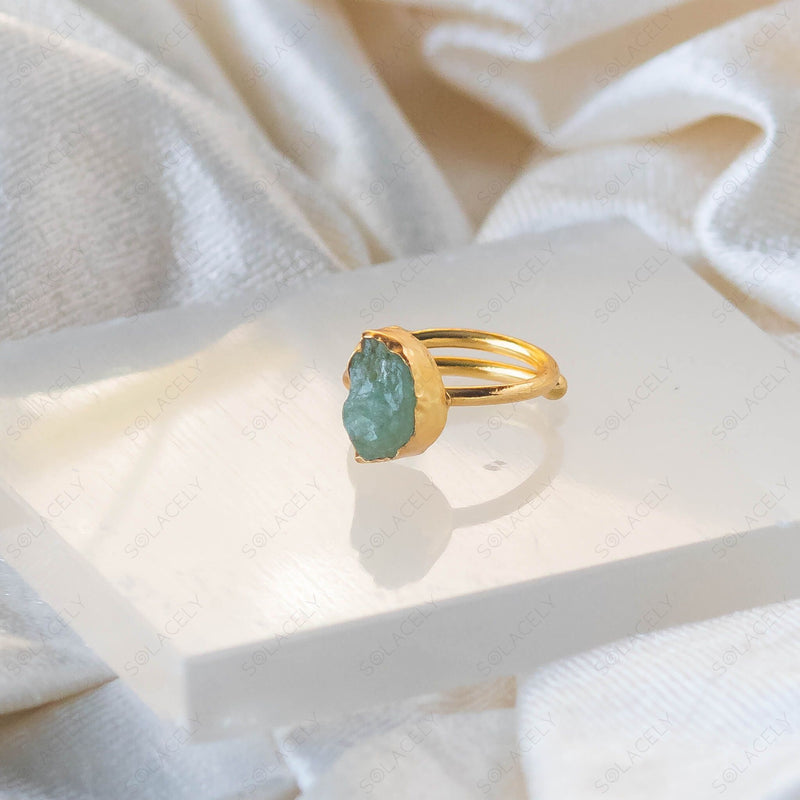
The reliable everyday set is quartz at 7, garnet at 6.5 to 7.5, tourmaline at 7 to 7.5, the beryls including aquamarine at 7.5 to 8, spinel at 8, and corundum, meaning ruby and sapphire, at 9. All of them resist scratching and none splits easily. These are the stones jewellers reach for when a ring has to last.
The quartz family: the sensible default
Amethyst, citrine, rose quartz, clear quartz and smoky quartz are all the same mineral in different colours, and all of them sit at 7 with no cleavage. That combination makes quartz the most forgiving crystal you can set in a ring, and it is common enough to stay affordable.
One caveat: amethyst and smoky quartz can pale with long, direct sun exposure, so a windowsill is not the place to store them. If you want the full spread of colours and varieties, our guide to the types of quartz crystals covers the differences, and citrine rings get their own breakdown.
Garnet, tourmaline and the beryls
Garnet is a group of silicate minerals rather than a single species, and it runs from 6.5 to 7.5 with no meaningful cleavage. That makes it a genuinely tough ring stone despite sitting near quartz on the scale. Almandine and pyrope, the deep reds most people picture, are at the harder end.
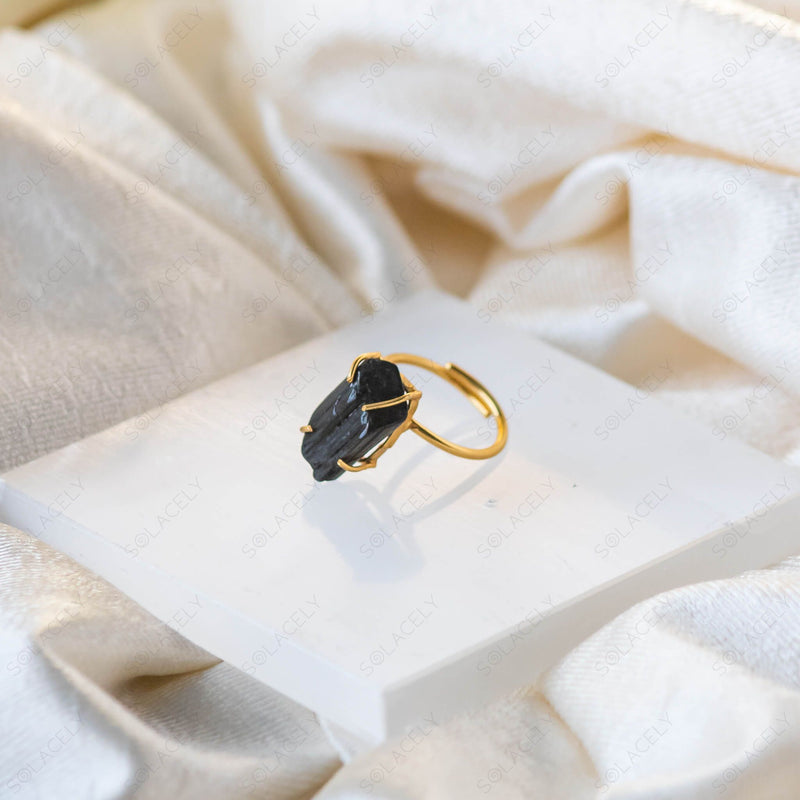
Tourmaline at 7 to 7.5 wears well but is brittle and dislikes sudden heat, so it should come off before hot work. Aquamarine and the other beryls at 7.5 to 8 are excellent, with one condition: heavily included stones are weaker than clean ones, whatever the hardness number says.
Spinel, ruby and sapphire
Spinel at 8 has no cleavage and takes daily wear as well as almost anything short of diamond. Above it sits corundum. Gemmological reference works place sapphire at 9 on the Mohs scale, and ruby is the same mineral in red. For a ring that will be worn every day for decades, corundum is the safest choice on this list.
Which crystals are better suited to pendants than rings?
Selenite at 2, malachite at 3.5 to 4, fluorite at 4, turquoise at 5 to 6, opal at 5.5 to 6.5 and moonstone at 6 to 6.5 all shine in formats other than a ring you never take off. As pendants, tumbles and display pieces they keep their polish for years, because far less reaches them.
Selenite is the clearest example. It is a form of gypsum at Mohs 2, soft enough to mark with a fingernail, and slightly soluble in water. Hand washing alone will dull it, which is why selenite is traditionally kept as a wand, a plate or a pendant. Malachite at 3.5 to 4 also responds to acids, so citrus juice and even sweat soften the polish over time. Worn as a pendant, it meets neither.
Fluorite is the one people fall for, because it looks so good faceted. Fluorite is a Mohs 4 mineral with perfect cleavage in four directions, which means it can split cleanly along any of four planes. That makes it a wonderful carving, tumble or pendant, and a stone to wear on the hand only now and then. Moonstone has a milder version of the same trait: a feldspar at 6 to 6.5 with two directions of perfect cleavage, so it prefers a bezel to exposed prongs.
Turquoise and opal come down to structure rather than splitting. Turquoise is porous and takes in oils, lotions and dyes, so it deepens in tone with long skin contact and is happiest on a chain or in a protective bezel. Opal holds water and can craze, meaning fine surface cracks, if it dries out or meets a sudden temperature change, so it suits an evening ring rather than a gardening one.
| Stone | Mohs hardness | Main weak point | Daily-wear verdict |
|---|---|---|---|
| Ruby and sapphire | 9 | Brittle at facet edges | Excellent |
| Spinel | 8 | None significant | Excellent |
| Topaz | 8 | Perfect cleavage, chips | Good in a bezel |
| Aquamarine and beryls | 7.5 to 8 | Inclusions weaken some stones | Excellent |
| Tourmaline | 7 to 7.5 | Brittle, heat sensitive | Very good |
| Quartz family | 7 | Pales in long direct sun | Very good |
| Garnet | 6.5 to 7.5 | Softer than airborne quartz dust | Very good |
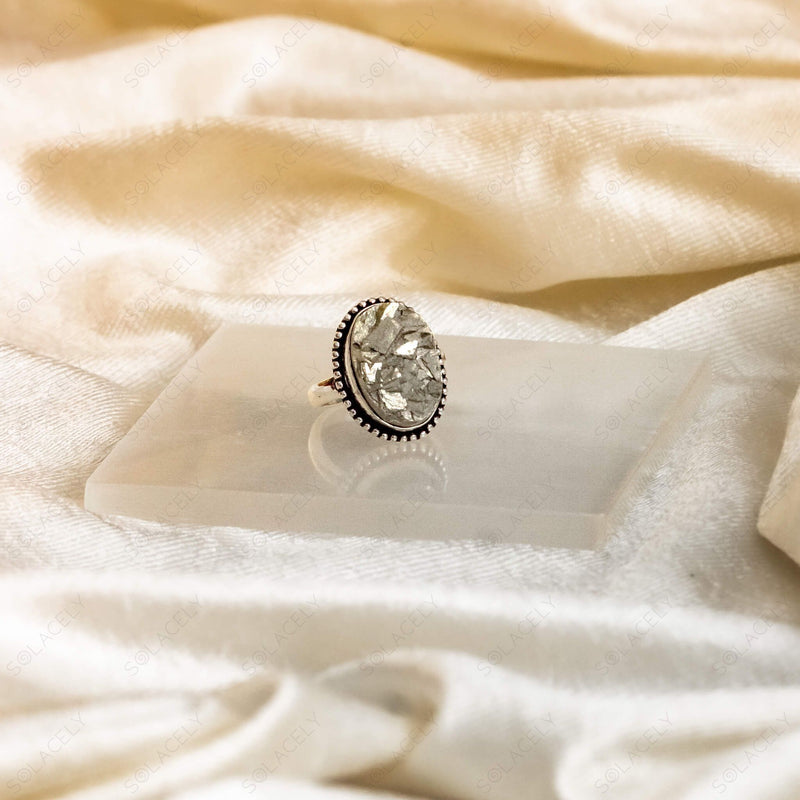
| Pyrite | 6 to 6.5 | Brittle, tarnishes | Occasional wear |
| Moonstone | 6 to 6.5 | Cleaves in two directions | Bezel only |
| Opal and opalite | 5.5 to 6.5 | Crazing, brittle edges | Occasional wear |
| Turquoise | 5 to 6 | Porous, absorbs oils | Occasional wear |
| Fluorite | 4 | Perfect cleavage, four directions | Best as a pendant |
| Malachite | 3.5 to 4 | Soft, responds to acids | Best as a pendant |
| Selenite | 2 | Marks with a nail, water soluble | Best as a pendant |
How does the setting change what a stone can survive?
The setting can move a stone up a category. A bezel wraps metal all the way around the girdle, the widest edge of the stone, and shields the part most likely to chip. Prongs do the opposite: they hold the stone with four or six small claws and leave the edges fully exposed to knocks.
So a moonstone or turquoise cabochon in a low bezel is a reasonable ring. The same stone in a raised prong setting is a repair waiting to happen. Height matters as much as style: a low profile stone gets hit far less often than a tall solitaire.
Cut shape counts too. Cabochons have rounded, blunt edges and take impacts better than faceted stones with thin, sharp girdles. If you want a softer crystal in a ring, a cabochon in a bezel is the combination that works.
Metal is the last variable. Sterling silver scratches and bends more readily than gold or platinum, so a silver bezel can loosen over time. In our experience 14k gold holds a setting better than 22k, which is purer and therefore softer. Platinum is the most forgiving of all.
How should you care for a crystal ring?
Take it off for the gym, gardening, cleaning, swimming and washing up. That one habit prevents most of the damage rings actually suffer, because impact and household chemicals do more harm than ordinary wear. Store rings separately, since a sapphire at 9 will happily scratch every quartz piece in the same box.
Cleaning depends on the stone. Warm water, mild soap and a soft brush suit quartz, garnet, tourmaline, spinel and corundum. Skip water entirely for selenite. Wipe turquoise, opal and malachite with a barely damp cloth rather than soaking them. Avoid ultrasonic cleaners on any stone with visible inclusions, fractures or a treatment.
Metals need their own routine. Pyrite tarnishes and so does silver, so both need a dry cloth and dry storage. If pyrite is your stone, the notes on how to care for a pyrite ring go further. Put your ring on last, after lotion and perfume have dried.
Check the setting itself twice a year. Run a fingernail around the prongs. If you feel a catch, or the stone shifts when you press it, get it tightened before the stone falls out.
The properties described here reflect traditional and cultural belief around crystals. They are not medical claims and are not a substitute for professional healthcare. If you are managing a health concern, speak to a qualified practitioner.
Sources
Written by Chetena Sharma. Reviewed by the Solacely editorial team.
Frequently asked questions
About the author


Written by Chetna Sharma, crystal healing practitioner and co-founder of Solacely. Chetna has worked with healing crystals for over a decade and curates Solacely's protective stone collection.