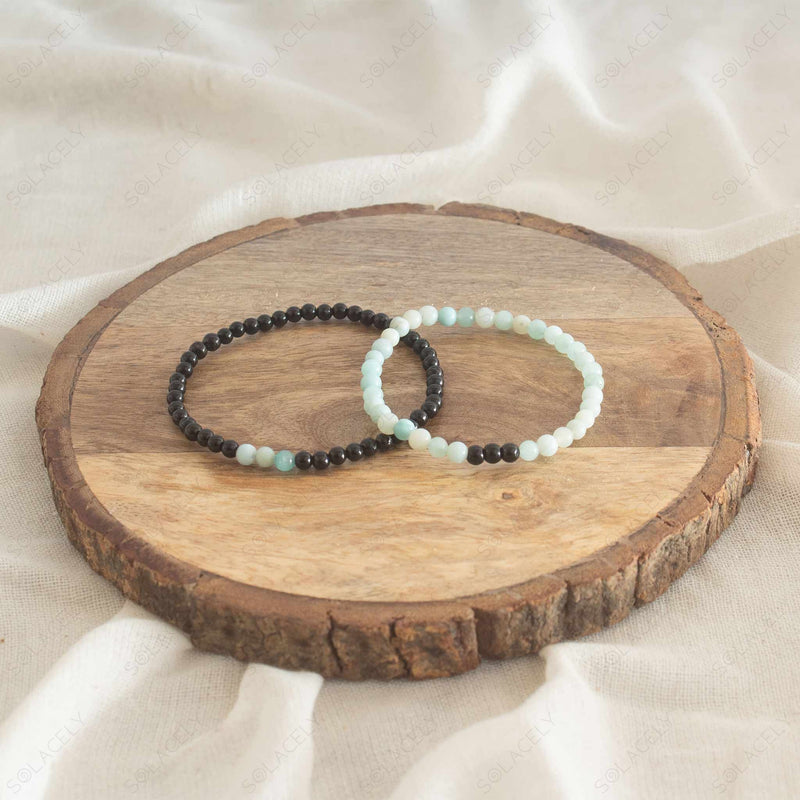
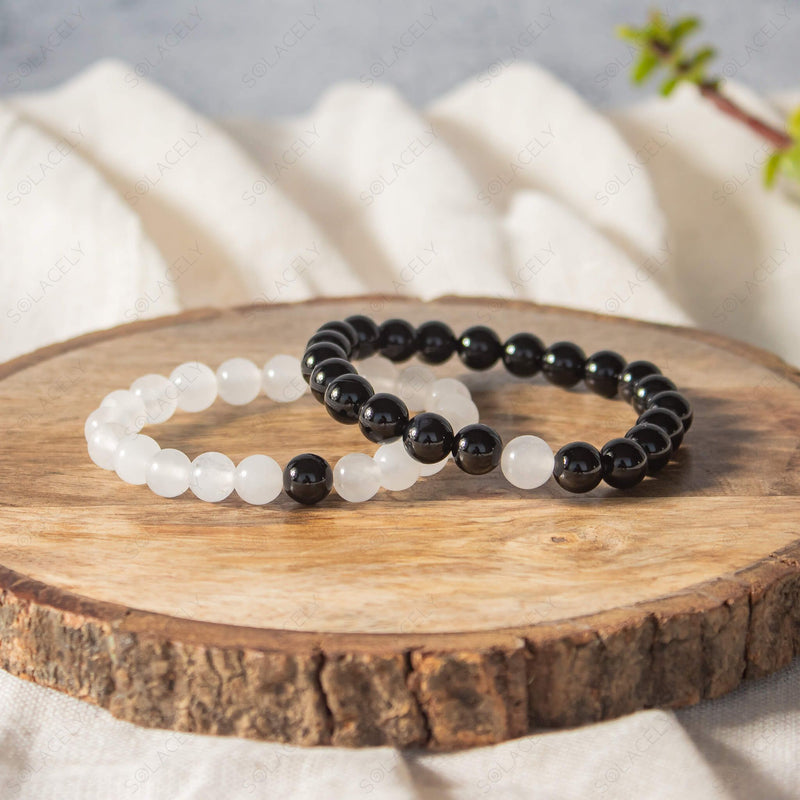
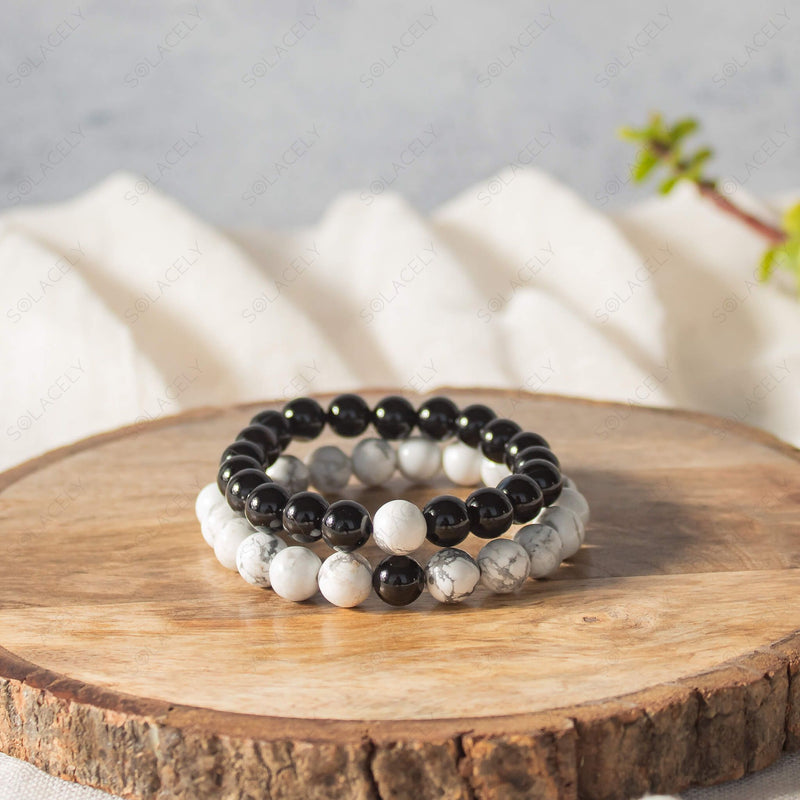
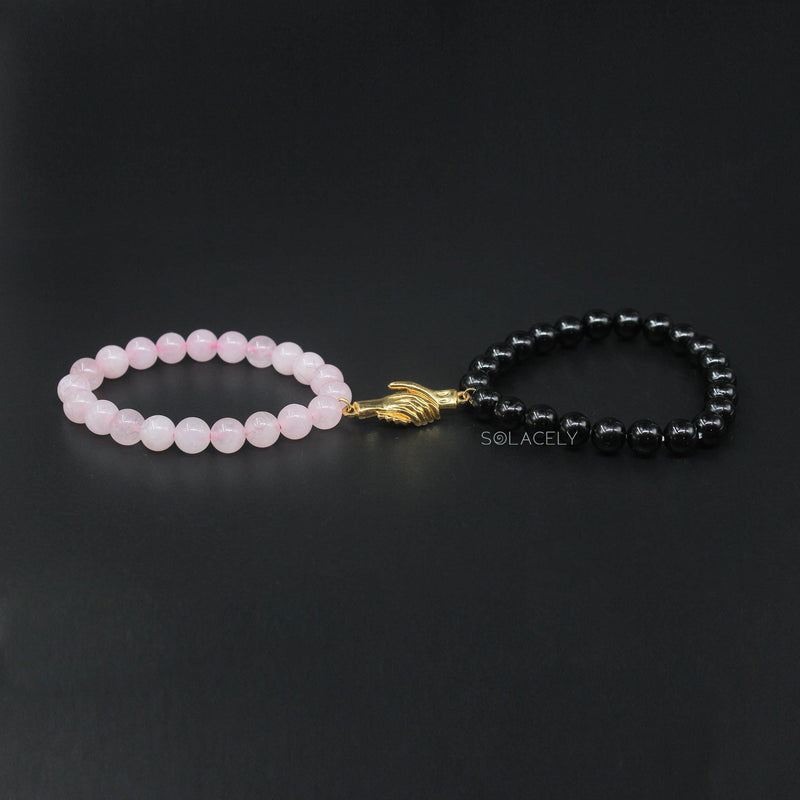
Stylish couples bracelets are pairs chosen for how they look on the wrist and with an outfit, not just for what they symbolise. The trick is coordinating rather than copying: shared metals, a repeated stone, or a common bead size that reads as connected without looking like a uniform.
Key Takeaways
- Stylish pairs coordinate through one shared element, whether a metal, a stone, or a bead size, rather than being fully identical.
- Layering, metal-mixing, and matching to skin tone matter more than the bracelet itself. Two to three bands per wrist is the sweet spot.
- This is the fashion and styling angle. For meaning-led sameness see our matching couple bracelets guide.
- Everyday looks stay neutral and thin. Occasion looks add a silver charm or a bolder stone.
- Style each wrist to its wearer, then link the two with one shared element.
What makes a couple bracelet stylish, not just matching
A stylish couple bracelet is styled for the wrist and the outfit, where fit, finish, and how it layers matter as much as the symbolism. The difference from a plain matching pair is intent: you are choosing bead size, metal, and stacking so the two bracelets look considered, both on their own and side by side. Coordination, not duplication, is the goal.
This post is the fashion-first guide in the couple-bracelet family. If you want the full overview of what these pieces mean and cover, our couple bracelets hub is the canonical starting point. Here, the focus is narrower: how to actually wear them well.
Three ideas separate the sibling guides. This one is styling. Our matching couple bracelets guide covers mirrored and identical pairs where sameness carries the meaning. Our cute couple bracelets guide leans playful and budget-friendly. Knowing which you want saves a lot of scrolling.
Coordinate, do not copy: the one-shared-element rule
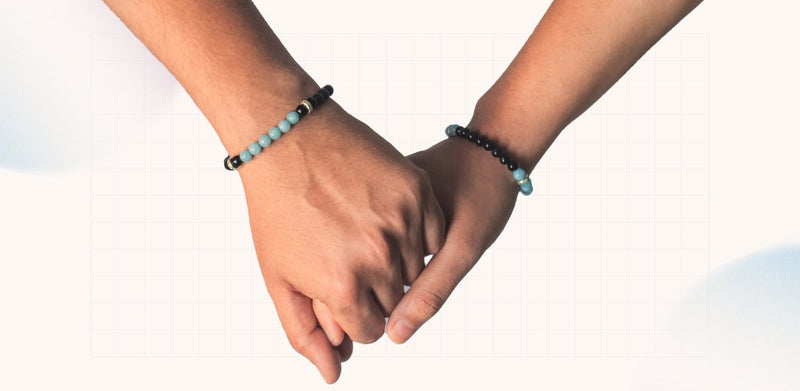
The most stylish couple pairs share exactly one element and let everything else differ. That might be a common metal tone, one repeated stone, or a matched bead diameter. Sharing one thing reads as intentional. Sharing everything reads as a uniform, which is why fully identical sets can look stiff on two different wrists.
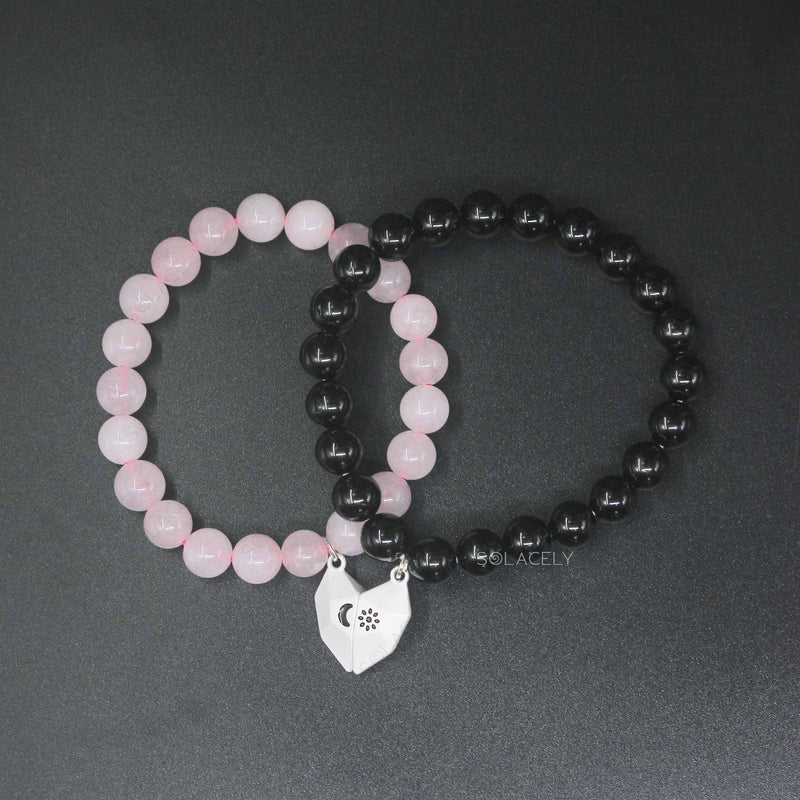
Think of it as a thread, not a mirror. If both bracelets use rose gold spacers but different stones, the metal ties them together. If both use 6mm Rose Quartz but one adds a silver charm, the stone is the link. This is how designers make a pair feel like a set without either person disappearing into the other.
Here is how the shared element usually plays out in practice.
| Shared element | What differs | Reads as |
|---|---|---|
| Same metal tone, silver or rose gold | Stone, bead size | Same palette, own taste |
| Same stone, different bead size | Charm, spacers | Connected, not copied |
| Same bead size, different stone | Colour, metal | A balanced pair |
Layering and stacking without clutter
Good stacking follows a rhythm: vary width and texture, keep the metals consistent, and stop at two or three bands per wrist. A stylish couple bracelet rarely lives alone. It sits in a small stack, so the skill is building a wrist that looks collected rather than crowded. Restraint is what makes a stack look expensive.
Start with an anchor, usually the couple bracelet, then add one thinner band and maybe a watch or a single bangle. Mix textures on purpose: a smooth stone bracelet beside a faceted or metal-link one gives contrast without noise. If everything is the same width and shine, the stack flattens.
Leave a little breathing room. A stack that slides freely looks relaxed, while one packed tight to the wrist looks like it is trying too hard.
- Anchor first. Lead with the couple bracelet, then layer thinner pieces around it.
- One metal family per wrist. Silver with silver, gold with gold.
- Mix textures. One smooth and one faceted band gives contrast without noise.
- Cap it at three. Past that the wrist stops reading clean.
- Echo the order. Stacking in the same sequence on both wrists is a quiet, effective link.
Mixing metals with stones and skin tone
Metal choice is the fastest way to make a pair look styled, and the safest rule is to pick a metal family per wrist while letting the stones carry the colour. Cool skin tones tend to suit silver and white metals, while warm tones flatter gold and rose gold. Most couples look best keeping both bracelets in the same metal family.
Sterling silver is the reliable default because it is neutral and pairs with almost any stone. If your bracelets include metal spacers, a clasp, or a charm, silver is the quality benchmark to look for. Our 925 sterling silver guide explains what the hallmark actually means and why it matters for longevity.
Let the stone do the colour work. Rose Quartz brings a soft blush that reads romantic and pairs beautifully with rose gold, a tone we explore in our pink aura guide. Black Tourmaline and Black Obsidian stay neutral and suit anyone who prefers understated jewellery. Amethyst adds a cool purple that works with silver.
Everyday vs occasion styling
Everyday couple bracelets should be thin, neutral, and durable, while occasion pieces can go bolder with a silver charm or a statement stone. The same pair rarely does both jobs well, so many couples keep a simple daily set and a dressier one. Matching the bracelet to the moment is most of what stylish means in practice.
For daily wear, think 4mm to 6mm beads in a calm stone, worn solo or in a small stack. It should survive a commute, a laptop, and hand-washing without fuss. Neutral stones like Black Tourmaline or a soft Rose Quartz slide under a shirt cuff and never fight your outfit.
For occasions such as a festival, an anniversary dinner, or a wedding, you can scale up. A silver charm, a larger 8mm bead, or a bolder stone reads well against dressier clothes and photographs nicely. A Rose Quartz and silver pair suits a festive palette without competing with heavier jewellery.
| Look | Bead size | Stone | Finish |
|---|---|---|---|
| Everyday | 4mm to 6mm | Black Tourmaline, Rose Quartz | Plain cord, no charm |
| Smart casual | 6mm | Amethyst, Amazonite | One discreet spacer |
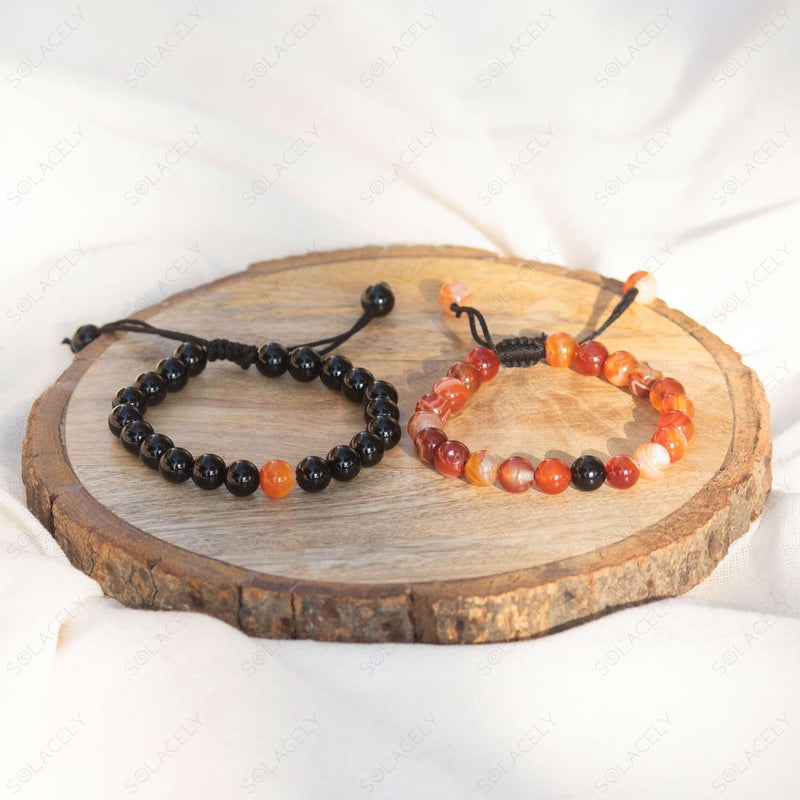
| Occasion and festive | 6mm to 8mm | Rose Quartz, Carnelian | Silver charm or clasp |
Styling for two different wrists
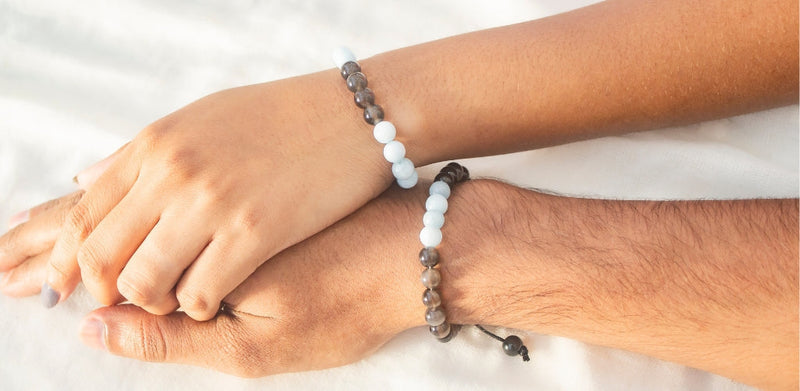
The most flattering couple pairs are styled to each wrist rather than forced to be twins, so one version usually runs larger and darker while the other goes finer or brighter. They still coordinate through a shared metal or stone. This is how a pair looks good on two very different wrists instead of only one.
For a bolder or larger wrist, size up to 8mm beads and lean into darker, matte stones like Black Tourmaline or Black Obsidian. These read neutral and hold up to rough daily wear. Keep the metal minimal, with a single spacer or clasp rather than multiple charms.
For a finer wrist, 4mm to 6mm beads sit better, and you have more room for softer colour or a small charm. The link between the two is the shared element from earlier: the same stone in two sizes, or the same silver in two designs. That is what keeps them a pair without making anyone wear something that does not suit them.
Common styling mistakes to avoid
Most styling misses come from a handful of repeat errors: over-matching, clashing metals, wrong bead scale, or ignoring care so one band ages faster. Each one quietly breaks the styled-pair effect. A little attention at the buying and wearing stage fixes almost all of them.
Over-matching is the big one. Fully identical bracelets on two different wrists often look like a set bought in a hurry rather than a considered pair. Sharing one element and varying the rest almost always looks better.
- Full duplication. Coordinate one shared element instead of copying everything.
- Clashing metal families. Silver on one wrist and yellow gold on the other reads as accidental.
- Wrong bead scale. A 4mm band gets lost on a broad wrist, and an 8mm bead overwhelms a fine one.
- Overstacking. Past three bands the wrist looks cluttered rather than collected.
- Skipping care. One band dulls or the silver tarnishes and the pair visibly drifts.
Caring for stone and silver so the look lasts
Styling only holds if the bracelets stay in good shape, so keep stone beads dry and clean any silver gently before it tarnishes. Perfume, water, and sweat are the usual culprits that dull a pair over time. Consistent, equal care on both bands keeps them looking like the coordinated set you chose.
Wipe stone beads with a soft, dry cloth after wear and keep them off perfume and hand sanitiser, which can degrade the cord and the stone's polish. Take stretch-cord bracelets off before showering, because repeated soaking weakens elastic and is the main reason a band eventually snaps.
Silver needs its own routine. Left alone, it tarnishes and can pull a whole stack down visually. Our how to clean sterling silver walkthrough covers a gentle at-home clean that keeps the metal bright without scratching it. Care for both partners' bracelets on the same schedule so they age evenly.
Choosing a stylish pair as a gift
As a gift, a stylish pair works best when it fits the wearer's existing look, so match their usual metal and how much jewellery they actually wear. Someone who wears silver daily will not switch to gold for a gift. Reading their current style is more useful than picking the flashiest option on the page.
Watch how the person you are buying for already dresses their wrist. Minimal and cool-toned? A thin silver-and-Rose-Quartz pair fits. Bolder and warmer? Size up the beads and lean into a statement stone. The most-worn gift is the one that slots into a routine, not the one that demands a new one.
For weddings and functions, a well-styled couple bracelet also makes a graceful favour. If you are gifting couples at an event, our wedding return gifts for couples guide covers presentation and budgets. And if you want the sweeter, more affordable end of the spectrum instead, our cute couple bracelets guide is the better fit.
Sources
- Gemological Institute of America, Quartz description: gia.edu/quartz
- Encyclopaedia Britannica, Tourmaline: britannica.com/science/tourmaline
- Mindat.org, Quartz mineral data: mindat.org/min-3337.html
Frequently asked questions
About the author


Written by Chetna Sharma, crystal healing practitioner and co-founder of Solacely. Chetna has worked with healing crystals for over a decade and curates Solacely's protective stone collection.