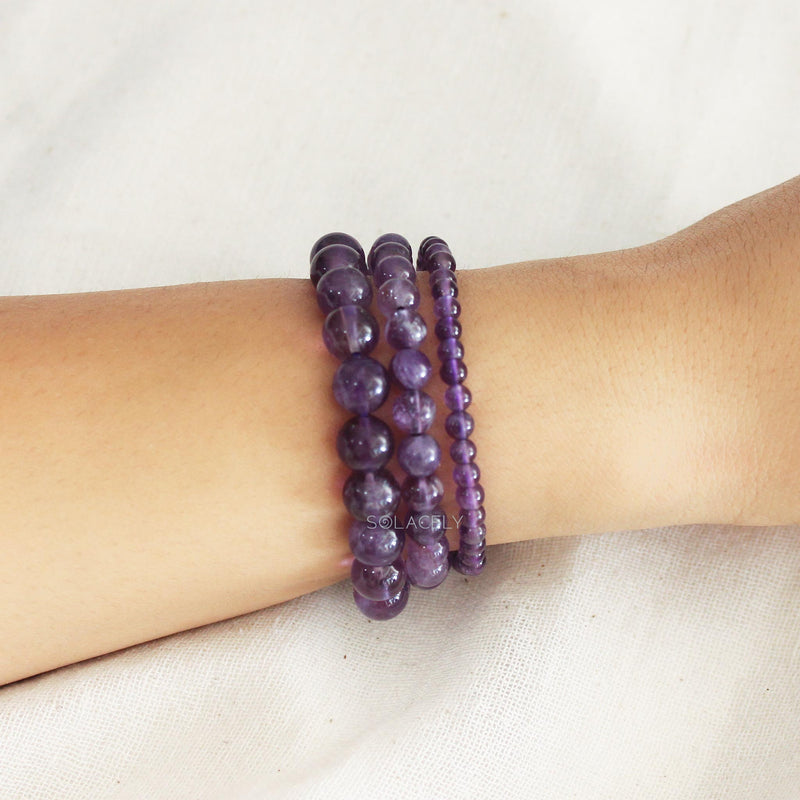
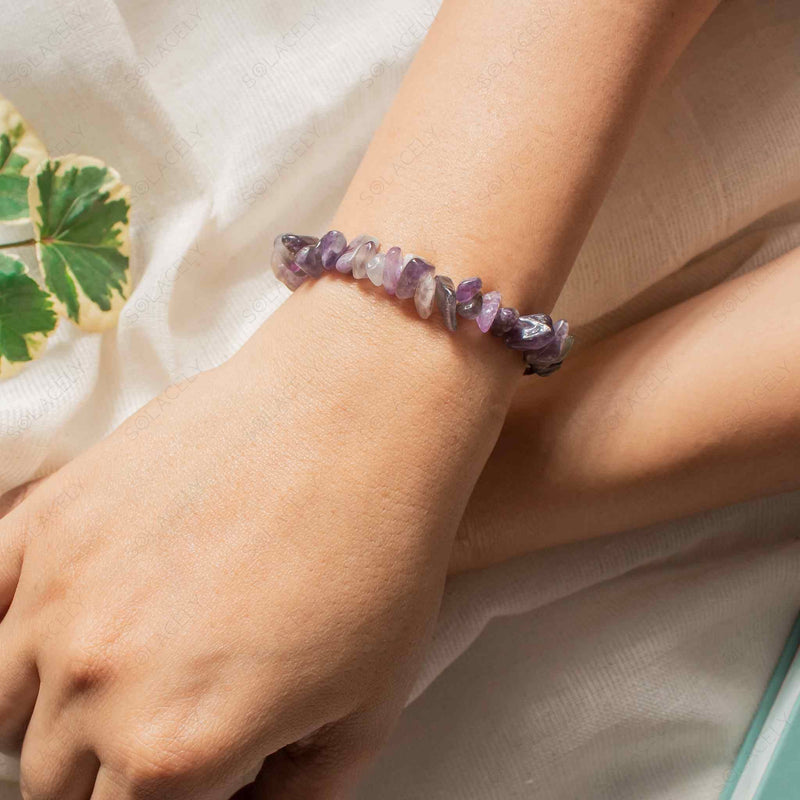
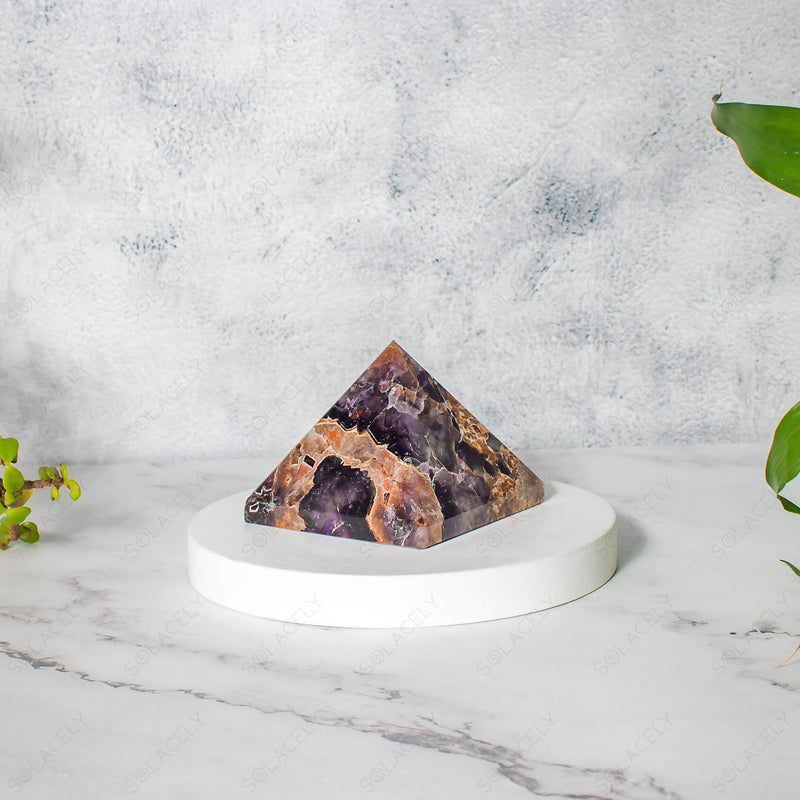
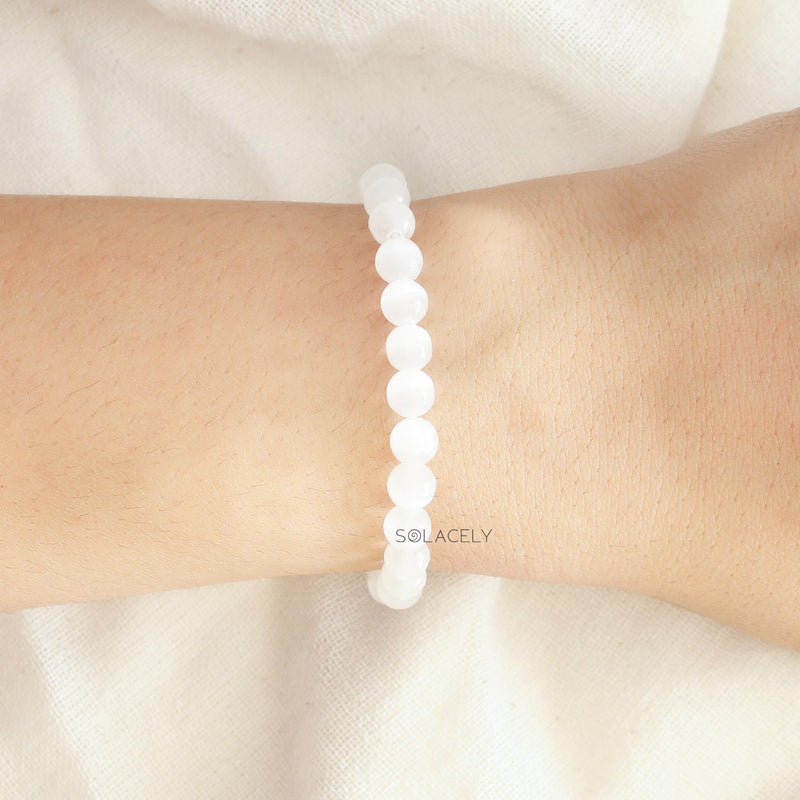
Amethyst and selenite is a maintenance pairing more than an energetic one. Selenite is the stone traditionally used to refresh other crystals, so a plate of it beside your amethyst keeps the whole collection clear. The catch is that selenite is genuinely fragile, and it cannot be looked after like anything else you own.
Key takeaways
- Selenite is a transparent variety of gypsum, sitting at only 2 on the Mohs scale, with a perfect cleavage that splits it into thin sheets.
- Selenite is slightly soluble in water. Never rinse it, never soak it, and keep it out of humid rooms.
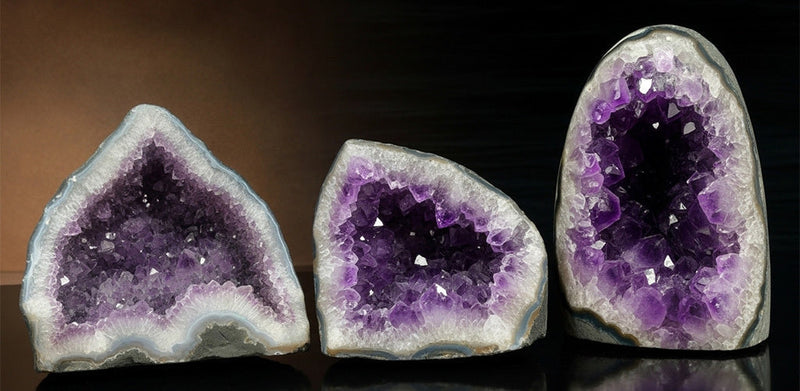
- Amethyst is purple quartz at 7, so it will scratch selenite on contact. The two never share a pouch.
- The most useful form of the pairing is a selenite plate with amethyst pieces resting on it overnight.
- Most wands sold as selenite are satin spar, the fibrous form of the same mineral. Towers, plates and wands all share the same chemistry.
- Everything described here is traditional belief and cultural practice.
Why are amethyst and selenite paired?
Because one looks after the other. Most pairings combine two energetic qualities. This one is closer to a piece of housekeeping, and that is exactly why so many collections end up with it.
Selenite has a long standing role in crystal practice as the stone that clears other stones and needs no clearing itself. Whether you read that as energetics or simply as ritual, the result is the same: a small plate or wand next to your amethyst is the simplest maintenance setup available, and it happens while you are asleep.
There is a symbolic reading too. Amethyst sits at the crown in modern practice, associated with calm and contemplative quiet. Selenite is placed at the crown or just above it, associated with clarity. Together they read as calm and clarify, which suits a meditation corner or a bedside far better than a wrist. Our crown chakra guide covers the wider set.
What is selenite?
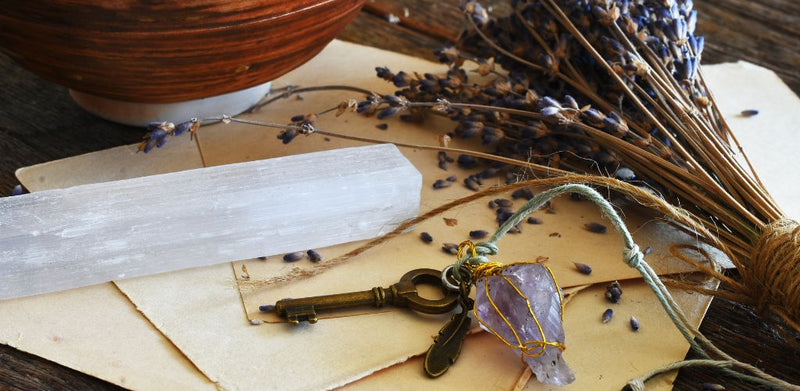
Selenite is one of three commonly named varieties of gypsum, a hydrated calcium sulfate. The three are selenite proper, the transparent crystalline form usually sold as towers, satin spar, the fibrous form that most wands are actually cut from, and alabaster, the massive form used for carving. All three share the same chemistry, and the trade uses the word selenite loosely across all of them.
Geology.com describes gypsum as one of the more widespread sulfate minerals and a notably soft one. At 2 on the Mohs scale it marks with a fingernail, and its perfect basal cleavage is why a dropped wand splits into sheets along its length rather than chipping. Neither of those is a fault in the piece. They are simply what the mineral does.
Morocco supplies most of the selenite on the wellness market today, with more from Mexico and the United States. Our selenite guide covers the formats in detail.
The water rule that matters most
Gypsum is slightly soluble, which makes this the one care instruction to remember above all others. A great many crystal guides recommend rinsing stones under running water as a default. That advice does not apply here.
A selenite wand held under a tap loses its surface polish quickly, and one left in a bowl of water for an afternoon comes out cloudy and chalky. The change is permanent. Sustained humidity does the same thing more slowly, which is why a bathroom shelf is the worst home in the house for a piece and why the damage often goes unnoticed until the shine has gone.
Wipe it with a dry cloth, or a barely damp one blotted immediately, and it will look the same in ten years. For cleansing, smoke, sound and moonlight all work without any moisture at all.
The giant crystals at Naica
Selenite is also responsible for one of the most extraordinary sights in geology, and it is worth knowing about even though none of the material is available to buy.
The Cave of the Crystals lies about three hundred metres below the Naica Mine in Chihuahua, Mexico. It holds the largest natural crystals ever found anywhere, selenite beams up to eleven and a half metres long, roughly a metre thick, weighing something like twelve tonnes each. They grew across at least half a million years from hydrothermal fluid as anhydrite slowly dissolved and gypsum precipitated in its place.
The cave sits at close to fifty eight degrees with almost total humidity, which makes more than a few minutes inside genuinely dangerous without a cooling suit. It was sealed in 2017 to protect what is down there. The wand on your shelf is the same mineral, grown small and slowly, which is a pleasant thing to know while you are using it.
How do you use the pairing?
Four arrangements cover almost everyone, and the first is the reason most people buy selenite at all.
- The charging plate. A flat selenite slab on a shelf or nightstand, with amethyst bracelets, pendants or tumbles laid on it overnight. This is the classic setup and it costs the selenite nothing.
- A wand in the meditation space. Kept beside wherever you sit, working as a passive companion to whatever else is nearby.
- Bedside grouping. A small selenite tower next to a tumbled amethyst. The pair is associated with a quiet head at the end of the day.
- Protected pendants. Selenite cabochons set in a closed bezel do exist and can work, but treat one as a delicate piece and take it off before showering or exercising.
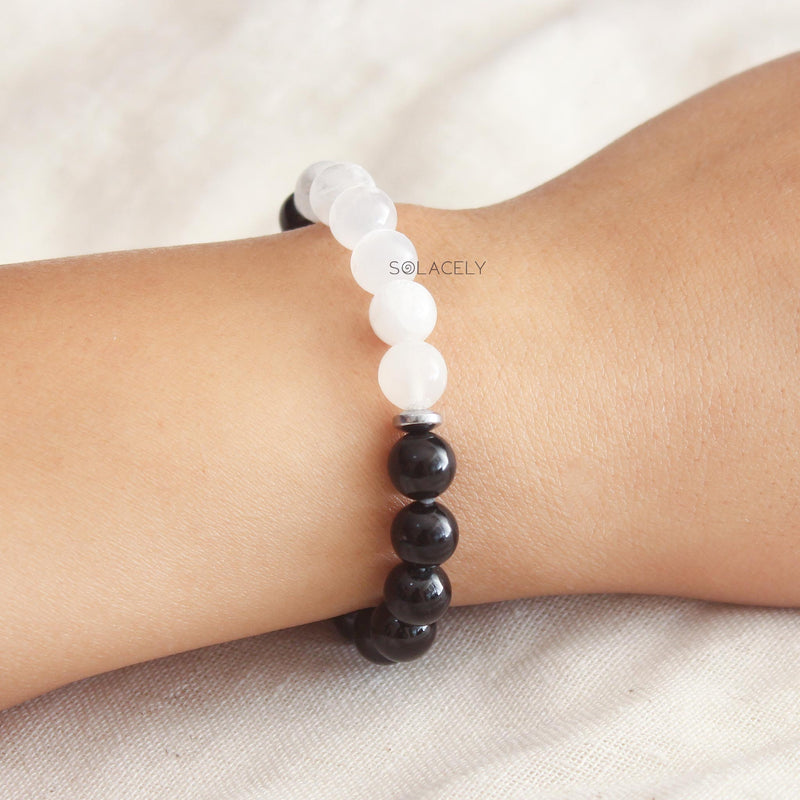
What the pairing is not is a bracelet. A beaded selenite strand worn daily meets sweat, knocks and humidity, which are the three things the stone cannot take. The same logic applies to the darker version of this idea in black tourmaline and selenite.
How do you care for the pair?
Care for both at selenite's standard, which is a good deal more demanding than amethyst's.
Wipe selenite with a dry soft cloth and nothing else. Amethyst on its own is happy with warm soapy water and a soft cloth, but if the two are stored together, give the amethyst the same dry treatment for simplicity. Skip ultrasonic and steam cleaners for both.
Storage is where the damage usually happens. Amethyst at 7 will mark selenite at 2 almost on contact, so even a casual shared pouch costs the selenite its polish within days. Give each piece its own bag or a divided box. Keep both out of prolonged direct sunlight, since amethyst pales with long exposure and the colour does not return. Our amethyst guide covers that in more depth.
For cleansing, the plate does the work for the amethyst. For the selenite itself, smoke, sound or a night of moonlight all suit it, and none of them involve a drop of water.
The properties described here reflect traditional and cultural belief around crystals. They are offered for reflection and wellbeing and are not medical advice, a diagnosis, or a treatment for any condition. If you are managing a health concern, please speak with a GP or a qualified practitioner. Keep small stones away from young children, and never place crystals in drinking water.
Sources
Written by Chetena Sharma. Reviewed by the Solacely editorial team.
Frequently asked questions
About the author


Written by Chetna Sharma, crystal healing practitioner and co-founder of Solacely. Chetna has worked with healing crystals for over a decade and curates Solacely's protective stone collection.