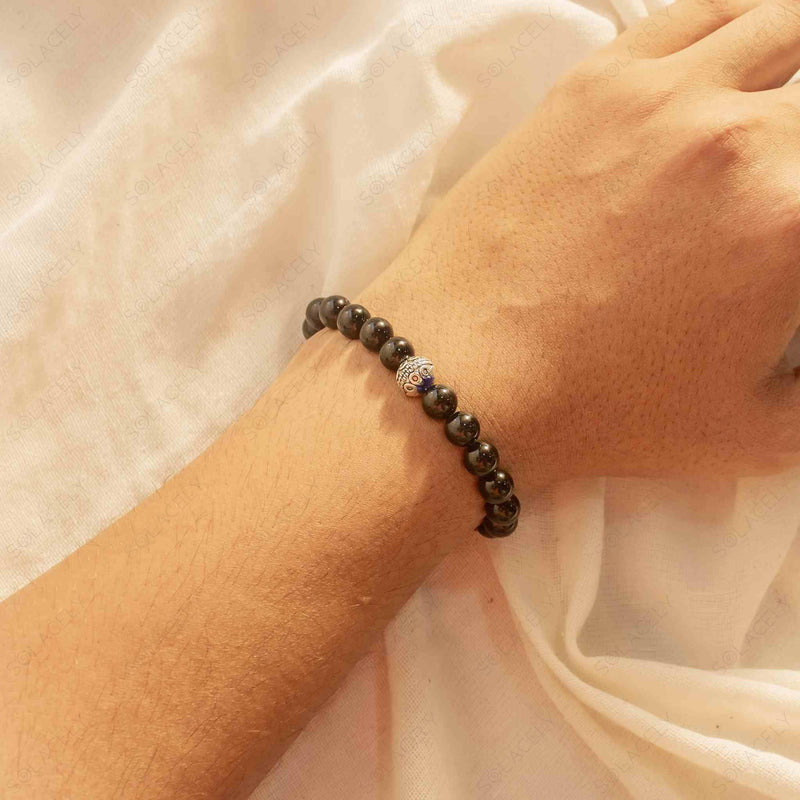
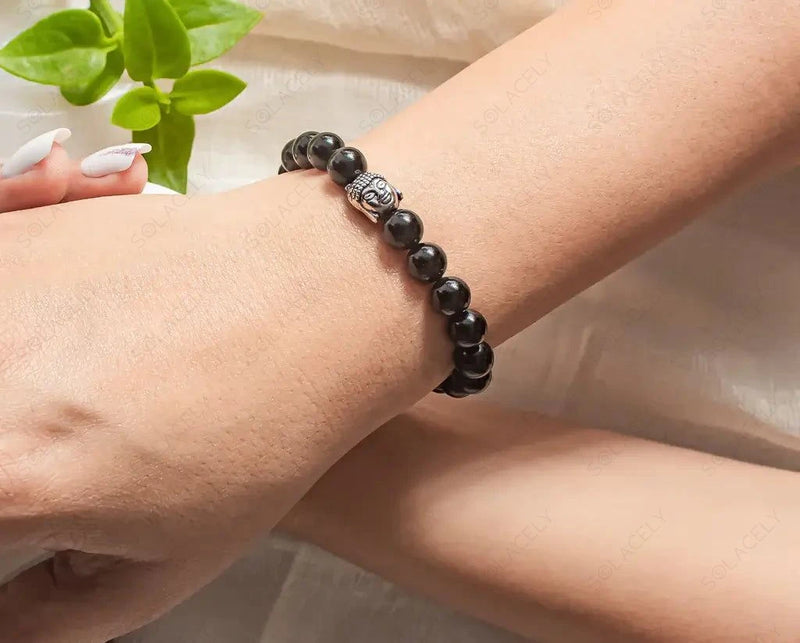
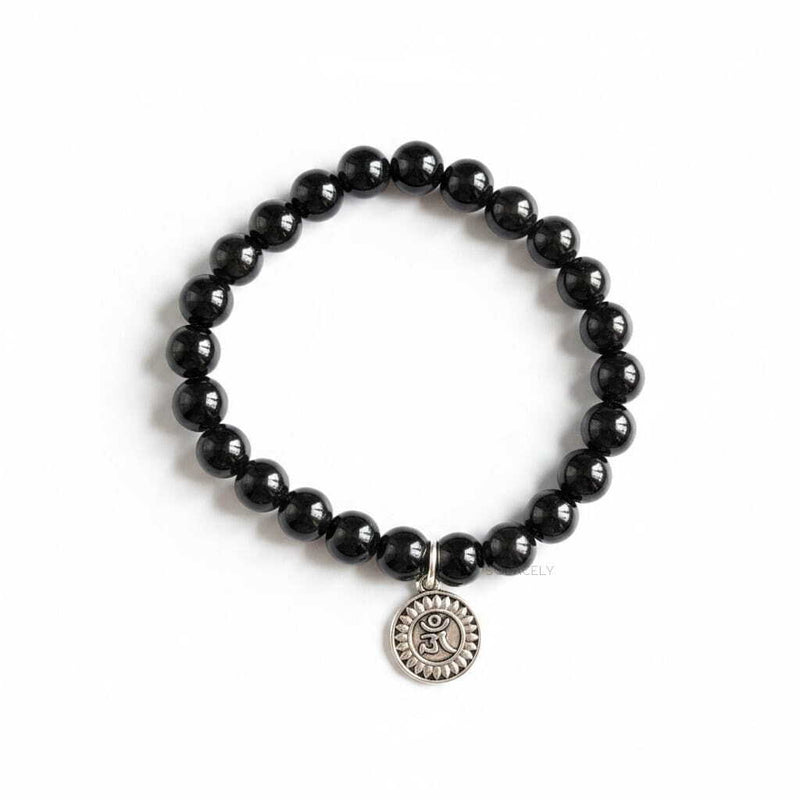
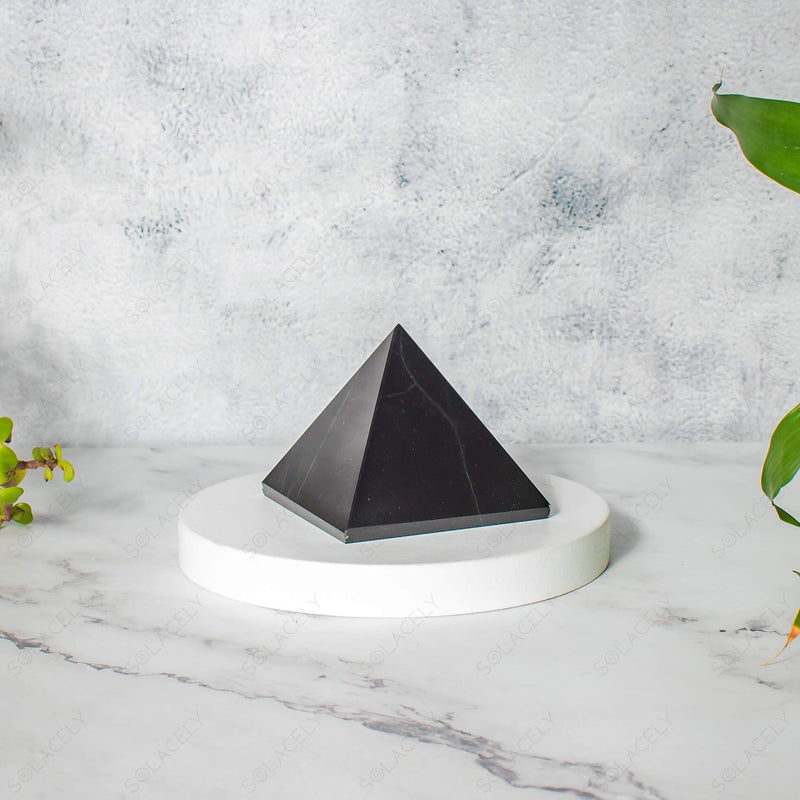
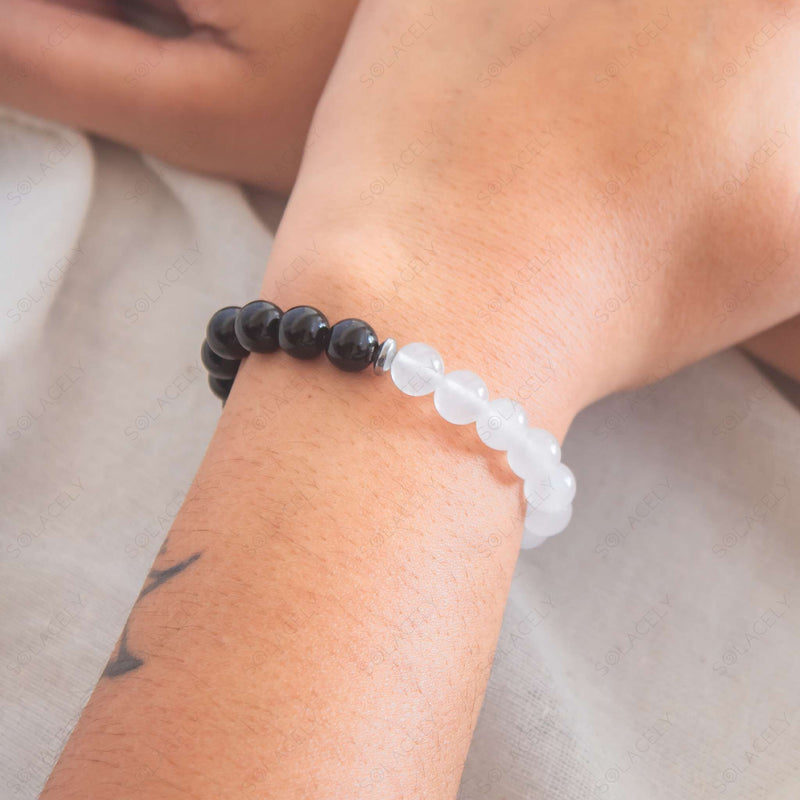
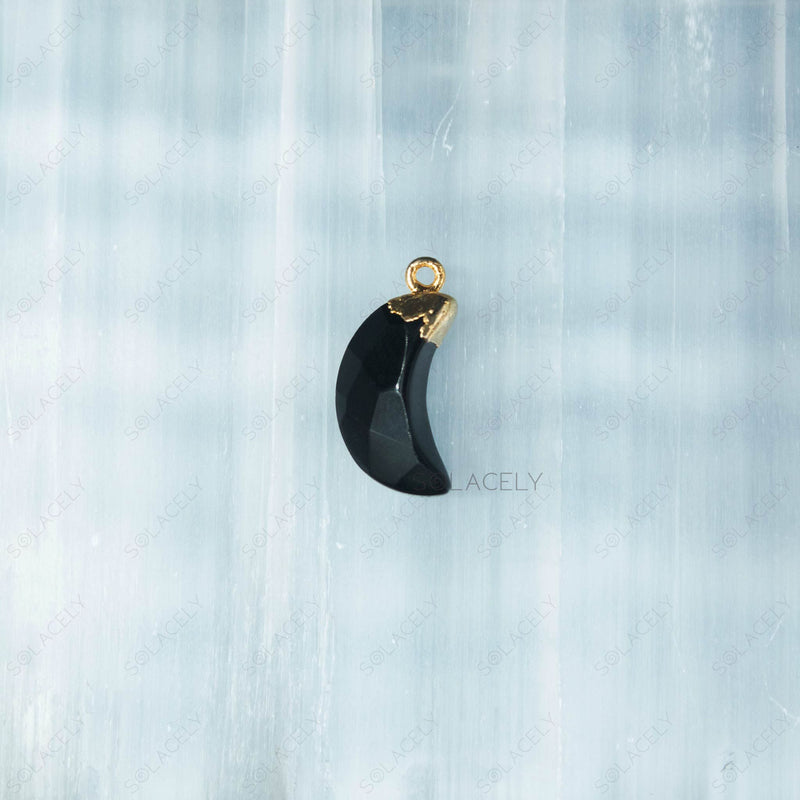
Black crystals are stones that look black or near black, and they come from mineral families with nothing else in common. Black tourmaline is a boron silicate, obsidian is volcanic glass, onyx is banded chalcedony, hematite is iron oxide. Colour is what groups them, and in crystal practice colour is what the tradition runs on.
Key takeaways
- Black crystals share a colour, not a chemistry. Four common ones come from four unrelated mineral families.
- Traditional role is consistently protection, grounding and boundaries.
- Hardness varies a lot: obsidian 5 to 5.5, hematite 5 to 6.5, onyx 6.5 to 7, tourmaline 7 to 7.5.
- Black tourmaline is the best beginner choice: affordable, hard, and needs no special care.
- Obsidian is glass and chips to genuinely sharp edges. Handle raw pieces with that in mind.
- Mix black stones by matching hardness, so the softer beads do not wear first.
Why black crystals mean protection
The symbolism has an obvious physical root. Black absorbs light rather than reflecting it, and every tradition that uses these stones reads them the same way: as taking in and holding rather than radiating outward. That is why black stones turn up at doorways, on desks and in car consoles, and rarely in love, creativity or joy work.
The consistency across unrelated cultures is easy to understand. People did not need to share knowledge to notice that a black stone behaves like a thing that swallows light. The meaning follows the observation. Our guide to crystals for protection covers the practice in full.
The five black stones worth knowing
| Stone | What it is | Mohs | Traditional use |
|---|---|---|---|
| Black tourmaline | Schorl, a boron silicate | 7 to 7.5 | Boundaries, deflection |
| Black obsidian | Volcanic glass | 5 to 5.5 | Facing hard truths, shadow work |
| Black onyx | Banded chalcedony | 6.5 to 7 | Steadiness, self discipline |
| Hematite | Iron oxide | 5 to 6.5 | Grounding, focus |
| Smoky quartz | Quartz, dark brown to near black | 7 | Discharging, settling |
Black tourmaline: the default
If you buy one black stone, buy this. It is hard at 7 to 7.5, affordable because schorl is the most abundant member of the tourmaline family, and it tolerates every cleansing method without complaint. It also carries the most consistent and best documented tradition of any black stone.
Tourmaline has one genuinely unusual quality worth knowing. It is pyroelectric, developing a small charge as its temperature shifts, which eighteenth century Dutch traders noticed when warmed pieces drew ash across a table. That quality is part of how the stone gathered its protective reputation, and it is why black tourmaline is the piece people keep beside a desk or a router. Full detail is in black tourmaline crystal benefits.
Black obsidian: glass, not crystal
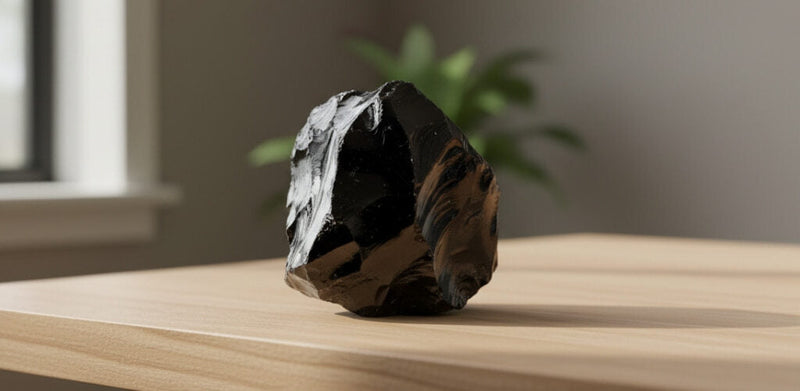
Obsidian is not a mineral at all. It is volcanic glass, formed when lava cools so fast that no crystal structure has time to develop. That single fact explains everything else about it: it is glassy rather than granular, it has no cleavage but fractures conchoidally, and it takes an edge sharper than surgical steel. Ancient toolmakers used it for exactly that reason.
Practically, this makes obsidian the most delicate of the common black stones. At 5 to 5.5 it scratches easily and chips to sharp edges. It is lovely in polished spheres and tumbles and less suited to a bracelet you wear while doing anything physical. See black obsidian versus black tourmaline for the direct comparison.
Black onyx: an old and settled tradition
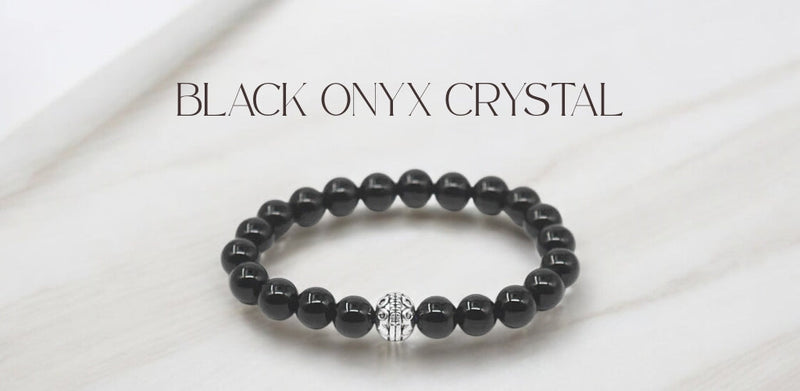
Onyx is chalcedony, a microcrystalline form of quartz, and the black variety has been used in jewellery and carving for thousands of years. Roman and Greek craftsmen cut it for cameos and intaglios precisely because its even colour took fine detail so well.
Enhancing the depth of onyx colour is a traditional part of that craft and has been practised since antiquity. The technique is centuries old, permanent and completely stable, which is why antique onyx pieces still look as they did when they were cut. It is one of the reasons black onyx sits so evenly and polishes so cleanly. More in black onyx meaning, benefits and properties.
Mixing black stones
Wearing several together is common and looks good, because black beads of different textures read as one piece. The thing to check is hardness. Obsidian at 5 to 5.5 sitting next to tourmaline at 7.5 will lose that contest, and after a year the obsidian beads will be visibly duller.
If you want a mixed strand that ages evenly, keep the stones within about a point of each other: tourmaline with smoky quartz, or obsidian with hematite. If you want the mix regardless, put the softer stones where they rub least and accept that they will need replacing sooner.
Care, in one paragraph
Warm water, mild soap, soft cloth, dried properly. That covers all five. Dry hematite thoroughly since it is iron. Keep smoky quartz out of long direct sun, which fades it. Avoid ultrasonic cleaners with obsidian and tourmaline, one because it is glass and one because it can be brittle across its striations. Nothing here needs more than that.
Choosing one
Start with black tourmaline if you want protection and low maintenance. Choose hematite if grounding and focus are the aim and you like a metallic look. Choose obsidian if the work is introspective rather than defensive, and handle it with a little more care. Choose onyx if you want something that reads as jewellery first.
For placement around a home, see crystals for home protection, and for the stone by stone detail on obsidian, black obsidian meaning, properties and benefits.
The uses described here reflect traditional and cultural crystal practice. They are not medical claims and are not a substitute for professional healthcare or advice.
Sources
Written by Chetena Sharma. Reviewed by the Solacely editorial team.
Frequently asked questions
About the author


Written by Chetna Sharma, crystal healing practitioner and co-founder of Solacely. Chetna has worked with healing crystals for over a decade and curates Solacely's protective stone collection.