A love grid puts rose quartz at the centre with rhodonite, green aventurine and clear quartz around it, activated with a quartz point. In crystal tradition it is built for openness rather than for any particular person: self-kindness first, then the readiness to let someone close.
Key takeaways
- Rose quartz at the centre, with rhodonite, green aventurine and clear quartz around it.
- Love grids are traditionally built for openness, not aimed at a named person.
- Bedrooms and the southwest corner are the two traditional placements.
- Pairs of stones are common in this grid, reflecting partnership rather than pursuit.
- Keep rose quartz out of hard sun, which fades the pink permanently.
What a love grid is for
A love grid is built for the state you want to be in rather than the outcome you want to arrive. In crystal tradition that means openness: being ready to receive affection, being kinder to yourself, softening after a period that hardened you, or deepening a relationship you already have.
That framing is not a technicality. Practitioners are consistent that a grid aimed at making one specific person feel something is the version that leaves people disappointed, because it hands the whole intention over to somebody else's choices. A grid about your own openness stays in your hands.
So the intention sentence matters. "Let me be open to meeting someone" or "let me be gentler with myself this month" are both things a grid can hold. Practically, they are also the things that change how you actually move through a month.
It is worth saying plainly that this is the older form of the tradition rather than a modern softening. Grids and charms built around another person's will sit outside what most practitioners are willing to teach, and the ones built around your own readiness are the ones that have been passed down. There is also the plain fact that openness is the thing you can actually work on, and a month spent on it tends to leave you better company regardless of who turns up.
The stones for a love grid
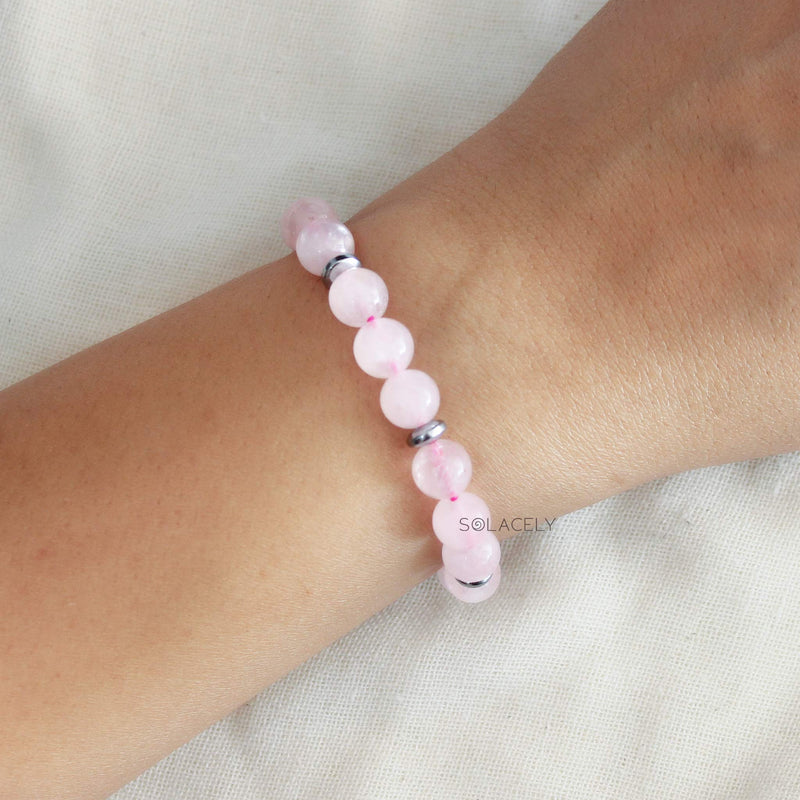
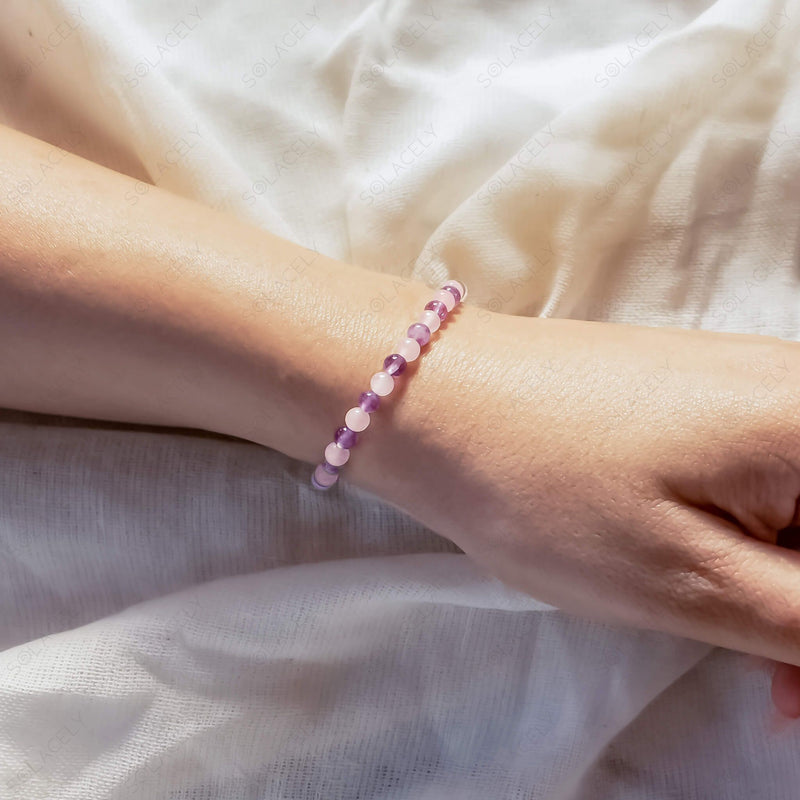
Five cover it. Rose quartz is the centre in almost every version of this grid, and the others each bring a different aspect of the same intention.
| Stone | Position | Traditionally kept for |
|---|---|---|
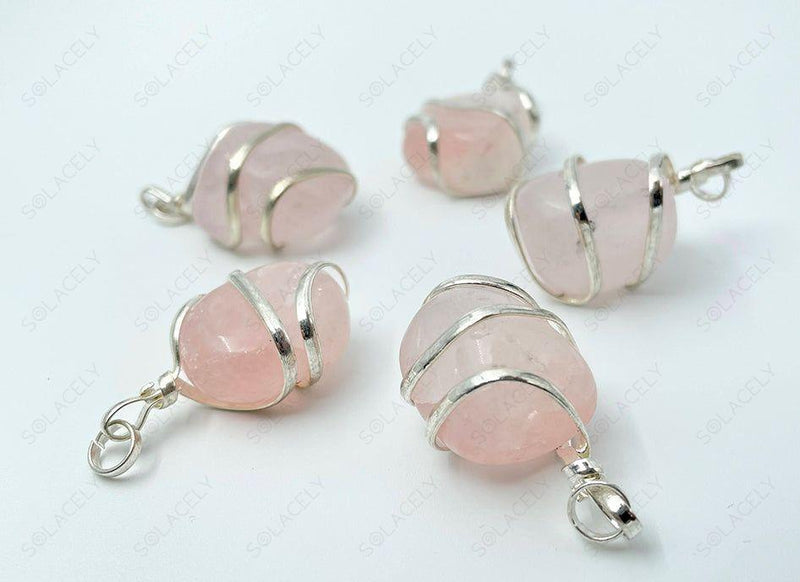
| Rose quartz | Centre | Self-love, tenderness, open-heartedness |
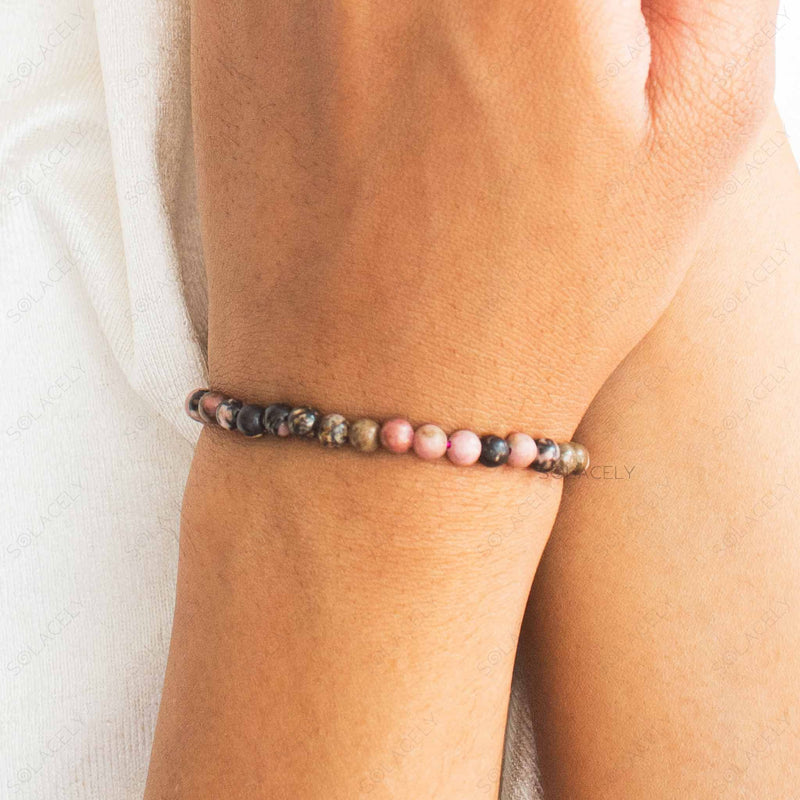
| Rhodonite | Surrounding | Forgiveness and mending |
| Green aventurine | Surrounding | Opportunity and heart-opening |
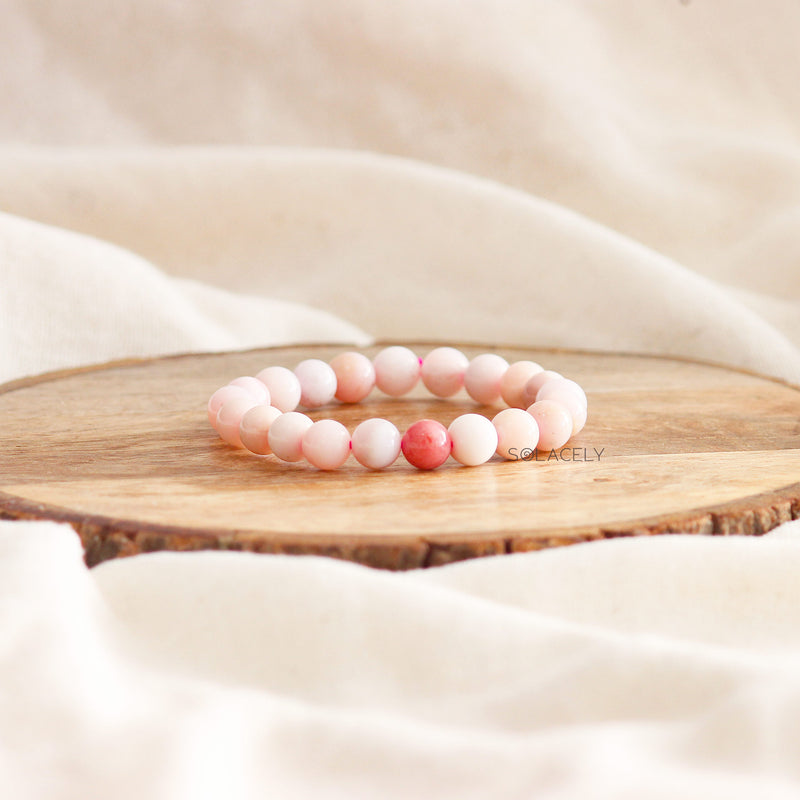
| Pink opal | Surrounding | Gentleness and quiet hope |
| Clear quartz | Activator | Amplifying and connecting the whole |
Rose quartz belongs at the centre because everything else in the grid is a variation on what it stands for. Our guide to rose quartz benefits and properties covers the stone in full.
Rhodonite is the one for mending, traditionally kept where something needs forgiving, whether that is someone else or yourself. Green aventurine sits at the heart chakra too and is kept for opportunity, which is why it appears so often in this arrangement.
How to lay the grid
Cleanse everything first with sound, incense smoke or moonlight, and wipe the surface. Then write the intention in one sentence, framed around your own openness rather than around another person.
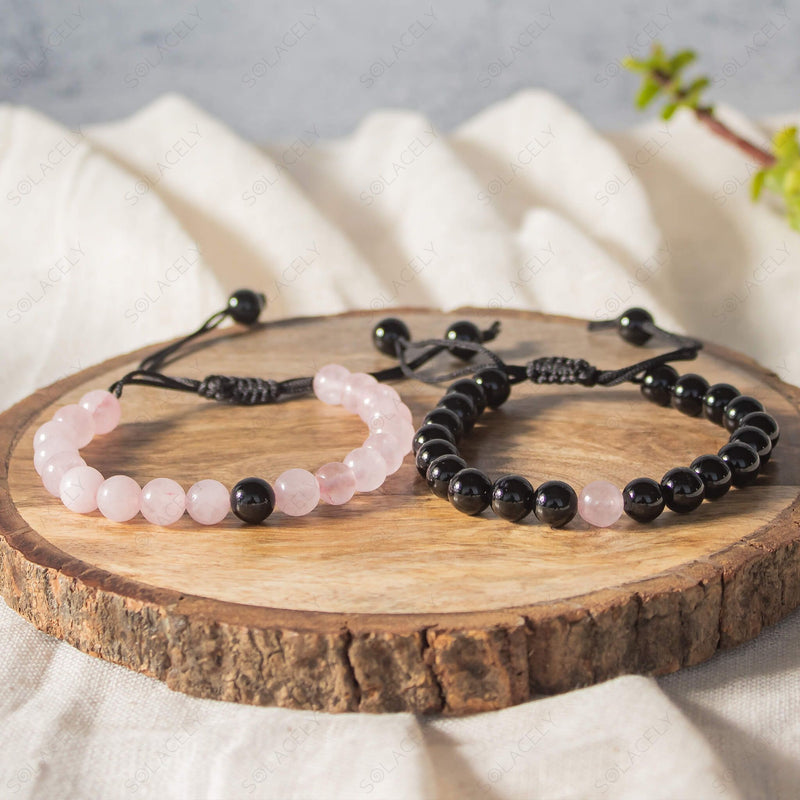
Place the rose quartz at the centre. Lay six stones around it in an even ring, alternating rhodonite, aventurine and pink opal so the pattern repeats twice. Many people lay this grid in pairs rather than singles, two of each stone side by side, which reflects partnership in the geometry itself.
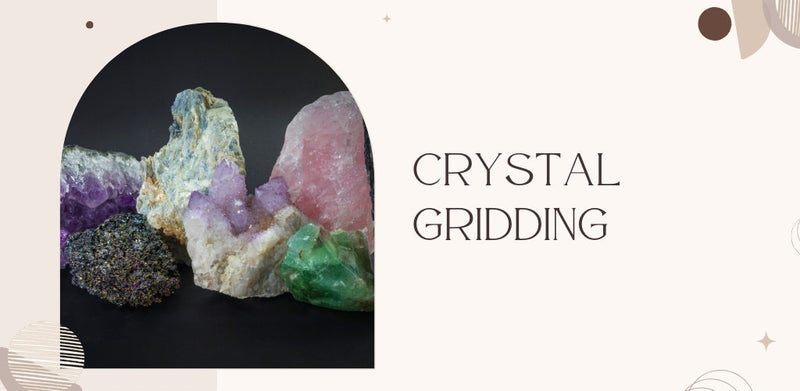
Activate with the clear quartz point, tracing an invisible line from each outer stone into the rose quartz and back out to the next, all the way round. Our fuller guide to crystal gridding covers layouts and activation step by step.
Where to place it
The bedroom is the traditional placement, and within it a bedside table or a dressing table rather than anywhere it will be knocked. If the grid is about an existing relationship, the shared side of the room is the usual choice rather than your own.
In feng shui the southwest corner of a room or a home is the relationship position, and many people put a love grid there instead. Both are traditional, and the practical test is the same as always: somewhere undisturbed that you actually pass every day. A grid tucked behind a stack of books stops being noticed within a week, and a grid you no longer notice has quietly stopped being a grid at all.
Keep it out of long hours of hard direct sun, which fades rose quartz permanently. Away from a window, or on a north-facing sill, suits it better, and moonlight is the traditional charge for this set anyway.
Keeping it going
Leave it up for one lunar cycle, from new moon to new moon, and visit it daily. Standing in front of it for thirty seconds and saying the intention again is the whole of the maintenance, and the consistency matters far more than the length.
Pair it with something you actually do. Say yes to the invitation, message the person you have been meaning to, book the thing you would enjoy. A love grid held alongside a month spent entirely indoors is doing only half the work the tradition describes.
At the end of the cycle, dismantle it deliberately, cleanse every stone and decide whether to rebuild. Our note on rose quartz for attracting love covers the wider practice around this intention.
Caring for the stones
Rose quartz, green aventurine and clear quartz all sit at 7 on the Mohs scale and are easy to look after: warm soapy water, a soft cloth, dried properly. Rhodonite is softer at around 5.5 to 6.5 and marks more easily, so handle it a little more gently.
Pink opal is the softest of the set at around 5.5 to 6, and like all opal it contains water, so keep it away from heat, from very dry air and from prolonged soaking. A soft dry cloth is all it needs.
Rose quartz fades permanently with long hours of hard direct sunlight, so charge the grid in moonlight rather than on a sunny sill. For cleansing in the spiritual sense, sound, incense smoke and moonlight suit every stone here. Our step-by-step on how to cleanse and charge crystals covers each method in order.
Crystal grids are built as part of a long-standing spiritual and cultural tradition. They are not a medical device or treatment, and they do not diagnose, treat, cure or prevent any condition. Nothing here is relationship or psychological advice, and nothing here can or should be used to influence another person's feelings or choices. If a relationship is causing you distress, please speak to a counsellor, a doctor or another qualified professional. Stones should never be placed in drinking water, and small tumbles are a choking risk for babies and young children.
Sources
- Geology.com, Quartz: varieties and physical properties
- Gemological Institute of America, Gem Encyclopedia
Written by Chetena Sharma. Reviewed by the Solacely editorial team.
Frequently asked questions
About the author


Written by Chetna Sharma, crystal healing practitioner and co-founder of Solacely. Chetna has worked with healing crystals for over a decade and curates Solacely's protective stone collection.